Published: June 25, 2025
By Jim Lichtman
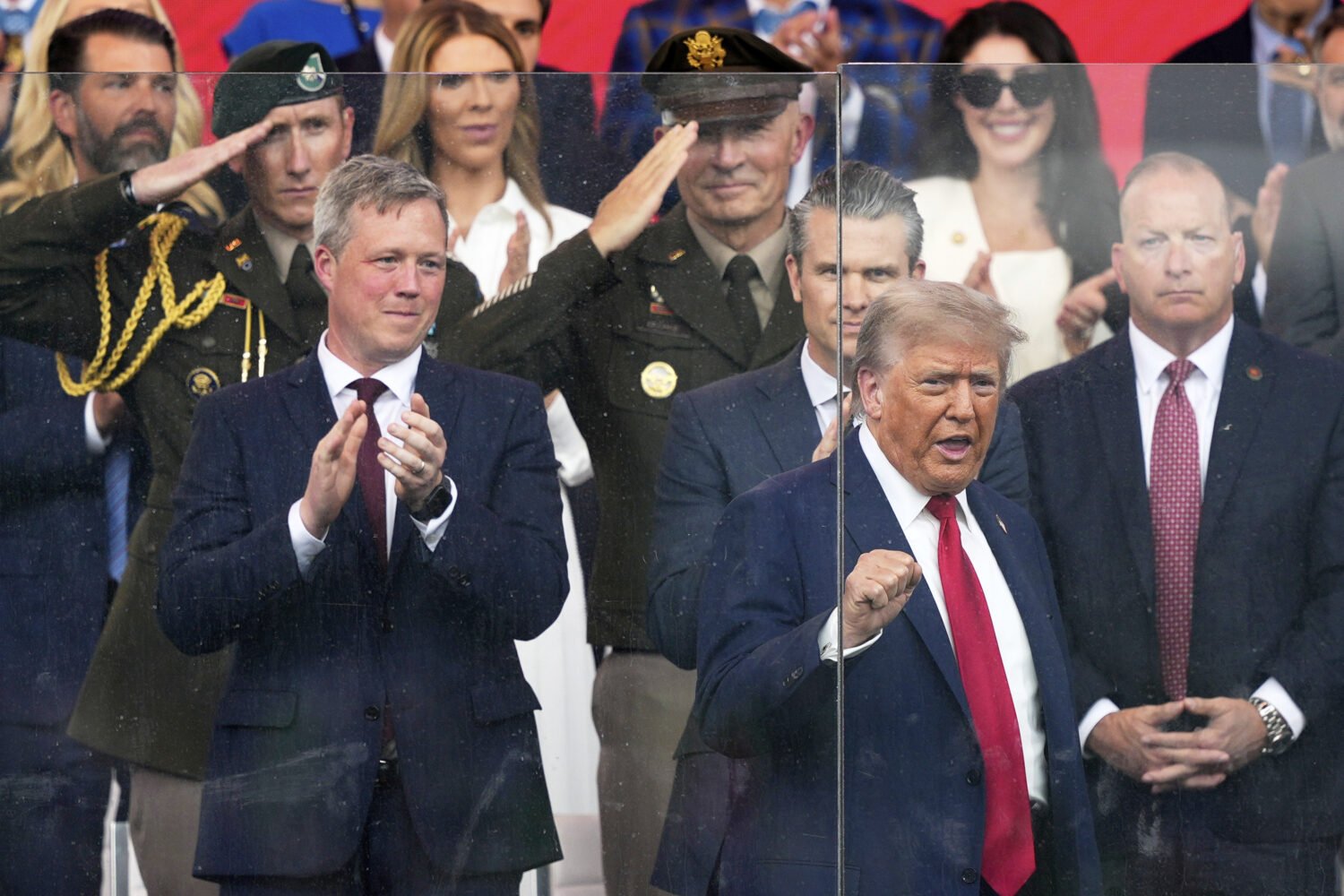
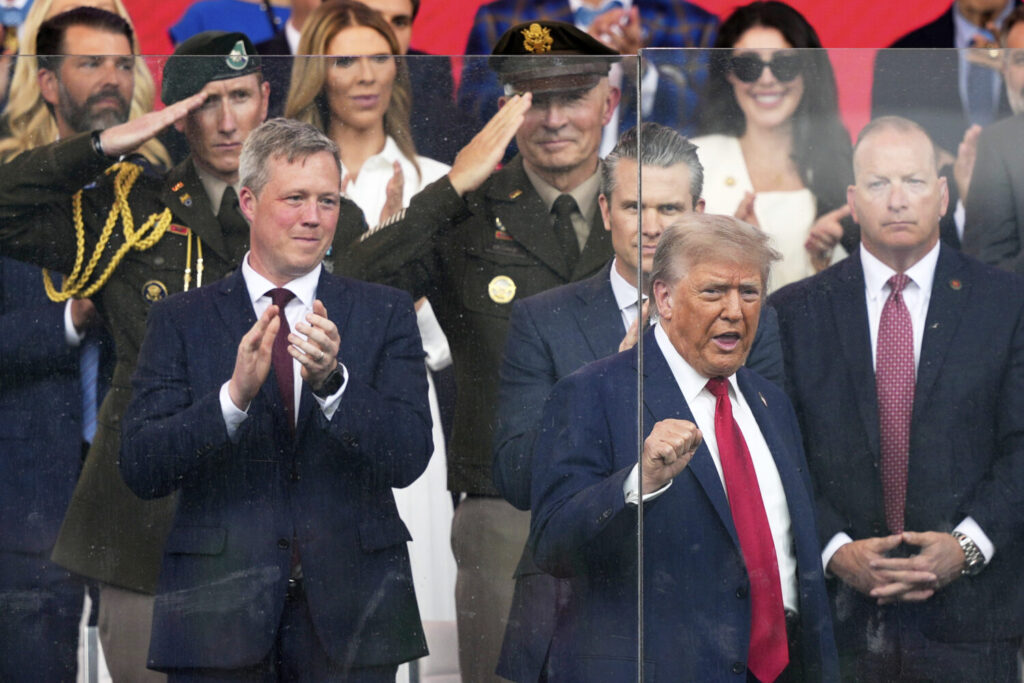
As President Donald Trump celebrated the 250th anniversary of the U.S. military, one soldier was under attack.
At Fort Drum, New York, Maj. Erica Vandal glanced at her phone. A message from her mother: “Just heard about the Supreme Court ruling. That totally stinks! How are you doing?”
The court had just allowed Trump’s ban on transgender troops to take effect, effectively ending the military career Vandal had built over 14 years.
Recently, in a federal courtroom in Massachusetts, another fight was underway. Judge William Young ruled that the administration’s cuts to NIH grants were “void and illegal,” calling out its discrimination against Black communities, women, and LGBTQ individuals. “That’s what this is,” Young said. “Racial discrimination and discrimination against America’s LGBTQ community.”
Two stories, one theme: a government turning its back on the very people it should protect.
For Major Vandal, the ruling cut deep. Raised in a military family, shaped by values of duty, integrity, and sacrifice, she followed her father—an Army three-star—into West Point, artillery, and combat in Afghanistan. In a culture that demands conformity, she lived quietly with a truth she could no longer ignore: she was transgender.
In 2021, President Biden lifted the ban, allowing her and thousands of others to serve openly. But with Trump’s return, that protection vanished. Vandal now faced an impossible choice: accept a payout and leave the Army, or fight a degrading legal battle to prove her worth to a system rigged against her.
This was more than politics. The Pentagon’s new order questioned her honesty and morality—qualities once praised in her officer evaluations. Defense Secretary Pete Hegseth’s crude rally cry—“No more dudes in dresses”—made clear just how far some of our leaders had fallen.
Meanwhile, in Judge Young’s courtroom, the fight for dignity continued. The administration’s cuts weren’t about saving money. They targeted communities already struggling: Black Americans, women, LGBTQ people. The court named what others would not: this was discrimination, plain and simple.
Both rulings reveal a deeper concern: how prejudice, disguised as policy, can unravel lives. It reduces America’s highest ideals—equal justice, dignity for all—to little more than empty words.
And yet, there is courage. Vandal joined a lawsuit to block the military ban. Young’s ruling forced the government, at least for now, to restore funding for those in need. Neither fight is over. But both show the power of standing up even when standing alone.
In the end, what’s at stake is more than careers or funding. It is the character of the nation: whether we allow fear and bigotry to decide who belongs, who serves, who is worthy of dignity.
As Major Vandal told a young trans Navy recruit unsure about suing the military: “I grew up in a military family. I never thought I’d be involved in a case against the military.”
Few ever think they will have to fight their own government for their place in it. But in moments like these, those fights become acts of principle against prejudice, against exclusion. They remind us that the promise of America belongs to all or it belongs to none.
Comments
Recent Commentaries

November 4, 2026
October 20, 2026
Has America Lost Its Way?
October 16, 2026
All The President’s Targets
October 13, 2026
Integrity Doesn’t Require a Megaphone
October 12, 2026
WHOSE PURPOSE DOES THIS SERVE?
October 9, 2026

Choreographer of Disaster
October 5, 2026
I Am Not a Politician, and I Have No Partisan Loyalties
October 2, 2026
A Man of Incorruptible Integrity
September 29, 2026

HUMAN VALUES: NOT SPECIFIED
September 23, 2026
You Can’t Do That.
September 21, 2026
Read More Articles
The Latest... And Sometimes Greatest
I AM SICKENED
Tonight, protesters are surrounding the Kennedy Center, the living memorial to John F. Kennedy and the heartbeat of Washington’s cultural life. They are there because...
September 18, 2026
The Courage to Defend a Principle
In 1998, at the height of the Clinton-Lewinsky scandal, Secret Service Director Lewis Merletti was driving to work when a radio report stopped him cold....
September 17, 2026
The Better Angels Among Us
By all appearances, we are becoming less the land of the brave than the land of resentment. Every day is Groundhog Day: same arguments, same...
September 14, 2026
We Remember
On September 11, 2001, nearly 3,000 people were killed in terrorist attacks in New York, at the Pentagon, and aboard Flight 93 in Pennsylvania. More...
September 11, 2026
Mister Roberts!
One of my favorite movies is Mister Roberts, the 1955 comedy-drama set aboard the USS Reluctant in the Pacific during World War II. Henry Fonda...
September 8, 2026
Where’s the Character
In 1984, Wendy’s ran a television commercial featuring the redoubtable Clara Peller, staring at an enormous hamburger bun. Inside was a burger patty smaller than...
August 7, 2026