Published: April 29, 2026
By Jim Lichtman
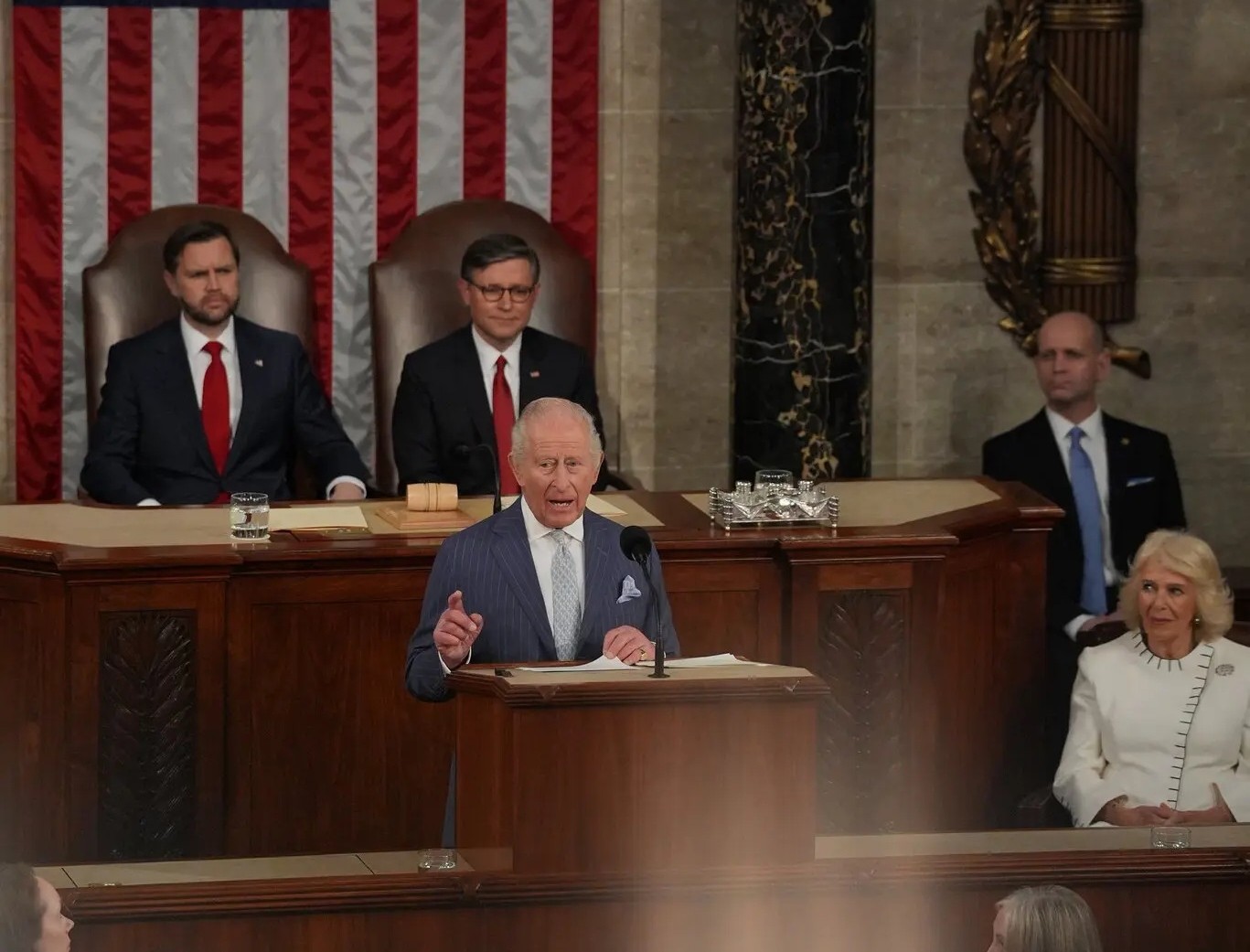
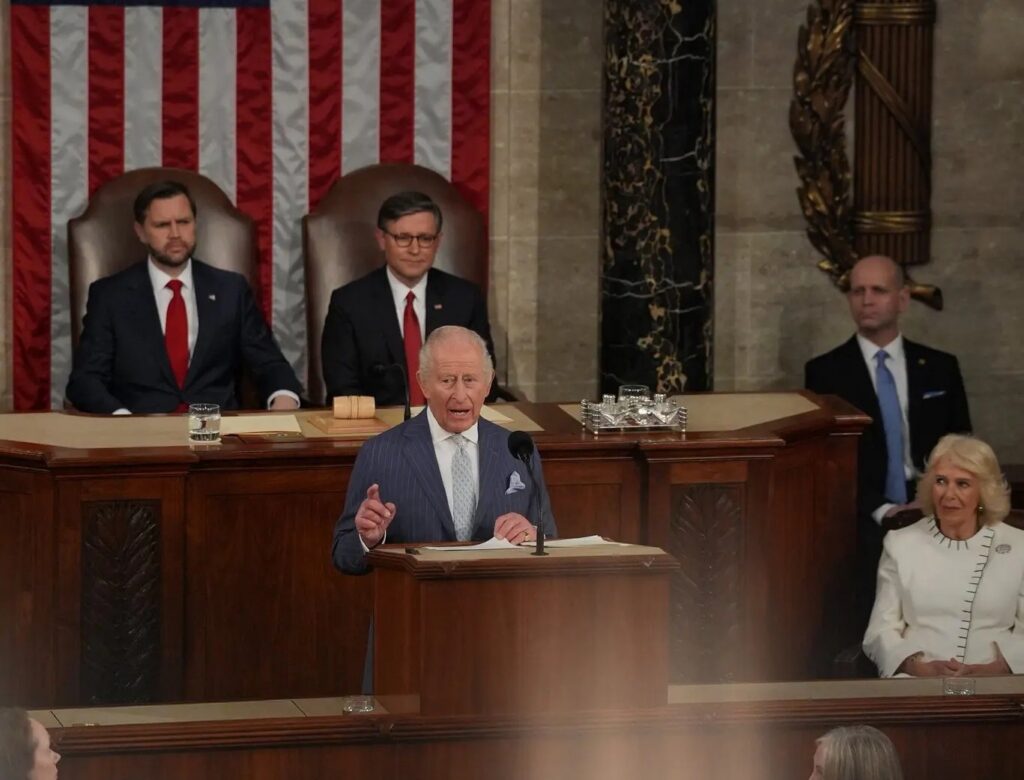
Britain’s King Charles III spoke to a chamber that, for a moment, set aside party labels—Democrat and Republican—and listened not as factions, but as participants in a relationship that has endured for more than two centuries.
What stood out in Charles’s address was not grandeur, but restraint. Not proclamation, but purpose. And beneath it all, a quiet ethical framework worth noting. Not imposed. Not argued. Simply present.
Service Above Self—
Charles returned to duty, not as a slogan, but as a standard. Leadership, in his telling, is not about command. It is about care.
“I have been struck by the countless acts of kindness… the very essence of our national character.”
There is an ethical clarity here we often overlook: public office is not a platform for self-expression; it is a commitment to something larger than oneself. When leaders forget that, institutions don’t fail all at once, they erode from within.
Unity in a Divided World—
He spoke to a truth we know but too often resist—that division is easy, and unity requires effort.
“We must seek those common bonds which unite us, rather than those differences which divide us.”
This is not naïve. It’s vital. A democracy cannot function if its citizens see each other as adversaries first and neighbors second. Unity is not agreement; it is the discipline to remain in conversation.
Environmental Responsibility—
Here, Charles was less ceremonial and more direct.
“The impact of climate change can no longer be ignored… it is a challenge we must face together.”
This is where ethics meets consequence. Stewardship is not an abstract virtue—it is measured by what we preserve, and what we leave behind. Future generations will not judge our intentions—only our decisions.
Gratitude and Humility—
He acknowledged the weight of the role he now carries.
“I am deeply aware of the responsibilities and duties which I now inherit.”
“My life will, of course, change as I take up my new responsibilities.”
Humility in leadership is not weakness; it is discipline. It is restraint in the face of power. It is the recognition that authority does not confer infallibility. In a time when certainty is often performed, humility is a form of honesty.
Continuity with the Past—
He anchored himself in his mother’s example.
“The example of my beloved mother will guide me.”
Continuity is not about resisting change. It is about remembering what is worth carrying forward. Institutions endure not because they remain unchanged, but because they remain grounded.
There was nothing dramatic in Charles’s remarks, and I believe that was the point. At a time when volume too often replaces substance, his message was rooted in something we would do well to strive to recover: the idea that leadership, at its core, is a moral responsibility.
The relationship between Britain and the United States has never been perfect. But it has endured because, at critical moments, both have returned to first principles: service, unity, responsibility, and humility.
Those are not relics of the past. They are the test of the present, a test more urgent than ever.
Let’s hope his audience… on both sides of the aisle and down the block, indeed all of us, were listening.
Comments


Recent Commentaries
Integrity Doesn’t Require a Megaphone
October 12, 2026
WHOSE PURPOSE DOES THIS SERVE?
October 9, 2026

Choreographer of Disaster
October 5, 2026
I Am Not a Politician, and I Have No Partisan Loyalties
October 2, 2026
A Man of Incorruptible Integrity
September 29, 2026

HUMAN VALUES: NOT SPECIFIED
September 23, 2026
You Can’t Do That.
September 21, 2026
I AM SICKENED
September 18, 2026
The Courage to Defend a Principle
September 17, 2026
The Better Angels Among Us
September 14, 2026
Read More Articles
The Latest... And Sometimes Greatest
We Remember
On September 11, 2001, nearly 3,000 people were killed in terrorist attacks in New York, at the Pentagon, and aboard Flight 93 in Pennsylvania. More...
September 11, 2026
Mister Roberts!
One of my favorite movies is Mister Roberts, the 1955 comedy-drama set aboard the USS Reluctant in the Pacific during World War II. Henry Fonda...
September 8, 2026
Where’s the Character
In 1984, Wendy’s ran a television commercial featuring the redoubtable Clara Peller, staring at an enormous hamburger bun. Inside was a burger patty smaller than...
August 7, 2026
It Was Important Then. It is Important Today
Freedom of speech in America is under attack, not only when people are denied the right to speak, but when lies, intimidation and the deliberate...
August 3, 2026
When Political Identity Replaces Ethical Judgment
The political and cultural landscape has become a minefield of conflicting beliefs, many now rooted less in public policy than in personal identity. One of...
July 31, 2026
Principles Matter.
A few nights ago, I was watching The Way We Were, a film I’ve seen more times than I can count. This time, a single...
July 28, 2026