Published: May 29, 2026
By Jim Lichtman
There was a time—not very long ago—when public service required sacrifice.
In 2006, when President George W. Bush nominated Hank Paulson, then C.E.O. of Goldman Sachs, to be Treasury Secretary, Paulson owned roughly $500 million in Goldman stock. That was not a technical problem. It was a direct conflict.
As Treasury Secretary, Paulson could make decisions affecting Goldman Sachs—and therefore his own fortune. Richard Painter, then the chief ethics lawyer in the White House, told him what the law required: DIVEST.
Paulson did.
That was not heroic. It was the minimum standard.
The principle was simple: when you enter government, you do not carry your private fortune into public office and ask the country to trust that your decisions will remain untouched by self-interest. You separate yourself from those interests because democracy depends not only on avoiding corruption, but on preserving public confidence.
That principle is now treated as an inconvenience.
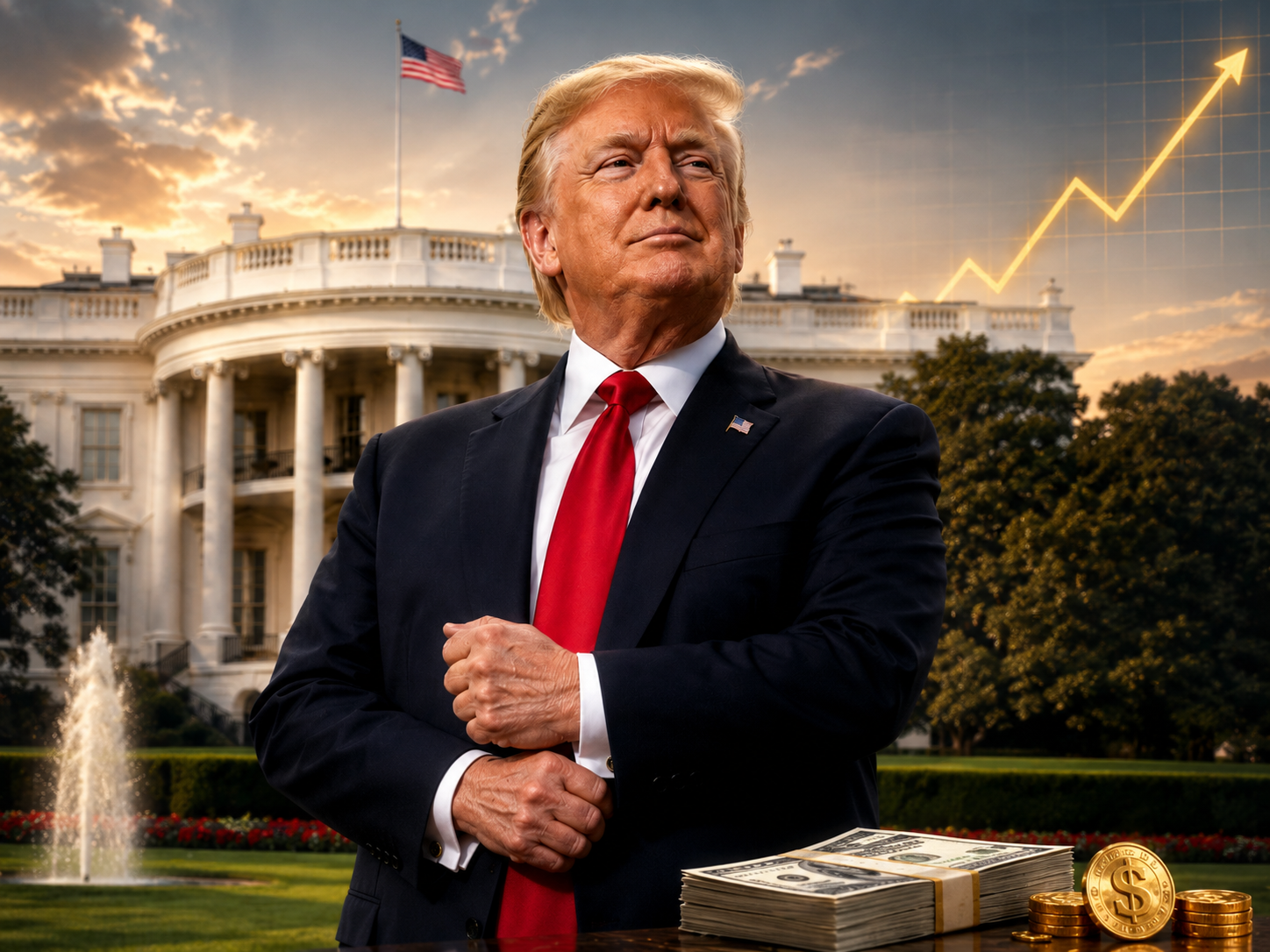
According to John Cassidy’s reporting in The New Yorker, financial firms acting for Donald Trump made “more than thirty-six hundred stock trades” in the first three months of this year, with a total value estimated “between two hundred and twenty million and seven hundred and fifty million dollars.” Some involved companies directly affected by the Trump Administration. The Trump Organization says the trades were handled by “third-party financial institutions” and that Trump and his family had “no advance notice” and “provide no input” into investment decisions. Even if true, the larger problem remains: the President is financially tied to companies whose fortunes can rise or fall based on government action.
For decades, presidents understood that the office required more than technical compliance. The President is exempt from certain conflict-of-interest laws, but previous presidents acted as though the ethical burden still applied. They placed assets in blind trusts or conflict-free vehicles because the presidency is not a family business. It is a public trust.
Trump has not merely ignored that understanding. He has reversed it.
His wealth sits in a “revocable trust” managed by his sons, while the family operates in industries that intersect with federal policy, foreign governments, and regulatory power. For Trump, the line between public duty and private gain has not merely blurred, it’s gone.
Cassidy points to an even more troubling matter: the Justice Department’s settlement of Trump’s $10 billion lawsuit against the I.R.S. The agreement reportedly includes immunity for Trump, his family, and his businesses from tax claims or charges arising from ongoing audits. Former I.R.S. Commissioner Danny Werfel said he knew of “no precedent” for the agency agreeing “in advance to permanently forgo examination of previously filed tax returns for a specific person or business.”
That should stop every citizen cold.
The I.R.S. is not supposed to be an instrument of presidential convenience. The Treasury Department is not supposed to provide financial favors to the President. The Constitution’s domestic-emoluments clause was designed to prevent this kind of self-dealing.
The Founders understood human nature. They knew power would attract temptation. That is why they built guardrails—not because they assumed every president would be corrupt, but because no one entrusted with public power should be allowed to profit from it unchecked.
Ethics is not a decorative mission statement of democracy on a wall. It is the foundation that allows citizens to believe decisions are being made for the country, not the officeholder.
What makes this moment so dangerous is not merely the money involved. It is the normalization of the conduct. We are being asked to accept a presidency in which private gain is excused, and public office is treated as another asset in a personal portfolio.
That’s not leadership.
That’s not service.
That is the conversion of public trust into private opportunity.
And once a nation accepts that, it loses more than money. It loses confidence that government belongs to the people at all.
Comments
Leave a Comment
Recent Commentaries
November 4, 2026
October 20, 2026
Has America Lost Its Way?
October 16, 2026
All The President’s Targets
October 13, 2026
Integrity Doesn’t Require a Megaphone
October 12, 2026
WHOSE PURPOSE DOES THIS SERVE?
October 9, 2026

Choreographer of Disaster
October 5, 2026
I Am Not a Politician, and I Have No Partisan Loyalties
October 2, 2026
A Man of Incorruptible Integrity
September 29, 2026

HUMAN VALUES: NOT SPECIFIED
September 23, 2026
You Can’t Do That.
September 21, 2026
Read More Articles
The Latest... And Sometimes Greatest
I AM SICKENED
Tonight, protesters are surrounding the Kennedy Center, the living memorial to John F. Kennedy and the heartbeat of Washington’s cultural life. They are there because...
September 18, 2026
The Courage to Defend a Principle
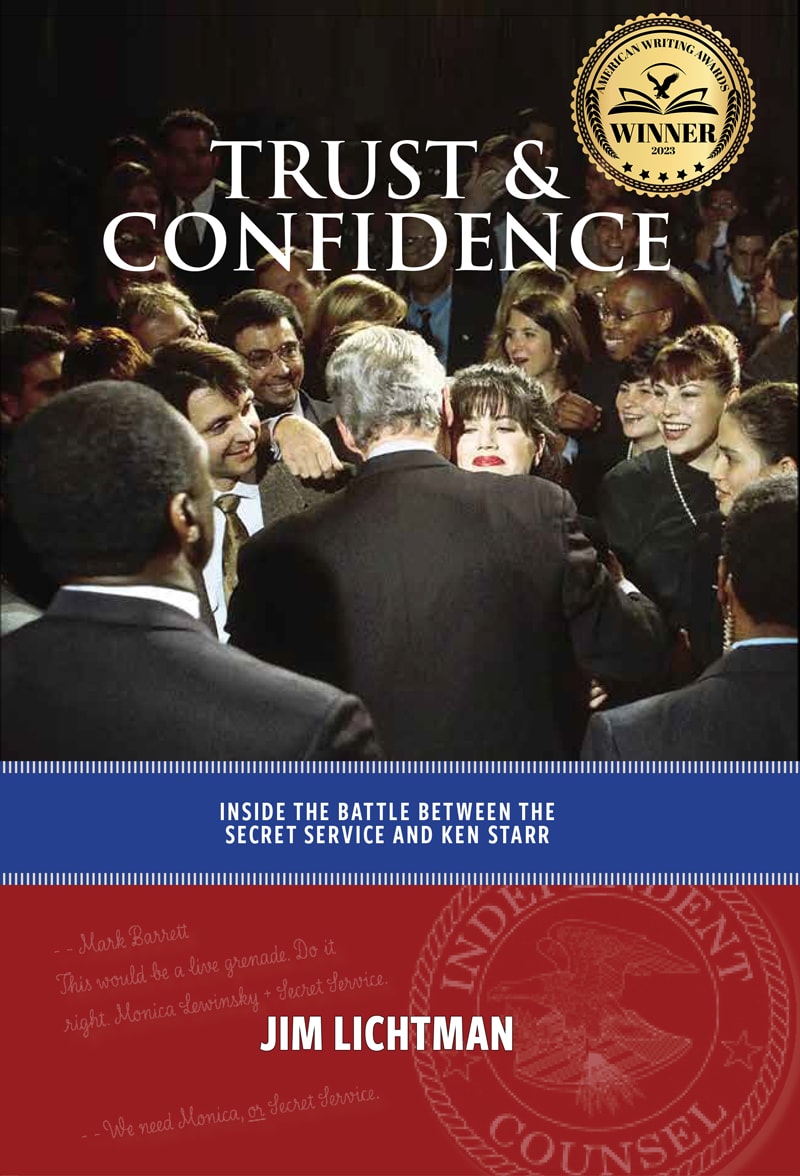
In 1998, at the height of the Clinton-Lewinsky scandal, Secret Service Director Lewis Merletti was driving to work when a radio report stopped him cold....
September 17, 2026
The Better Angels Among Us
By all appearances, we are becoming less the land of the brave than the land of resentment. Every day is Groundhog Day: same arguments, same...
September 14, 2026
We Remember
On September 11, 2001, nearly 3,000 people were killed in terrorist attacks in New York, at the Pentagon, and aboard Flight 93 in Pennsylvania. More...
September 11, 2026
Mister Roberts!
One of my favorite movies is Mister Roberts, the 1955 comedy-drama set aboard the USS Reluctant in the Pacific during World War II. Henry Fonda...
September 8, 2026
Where’s the Character
In 1984, Wendy’s ran a television commercial featuring the redoubtable Clara Peller, staring at an enormous hamburger bun. Inside was a burger patty smaller than...
August 7, 2026
Oh my gosh this is so sobering! I just keep asking myself, how could this have so bad so quickly?
“For Trump, the line between public duty and private gain has not merely blurred, it’s gone.” I hope I can sleep tonight…