Published: May 1, 2026
By Jim Lichtman
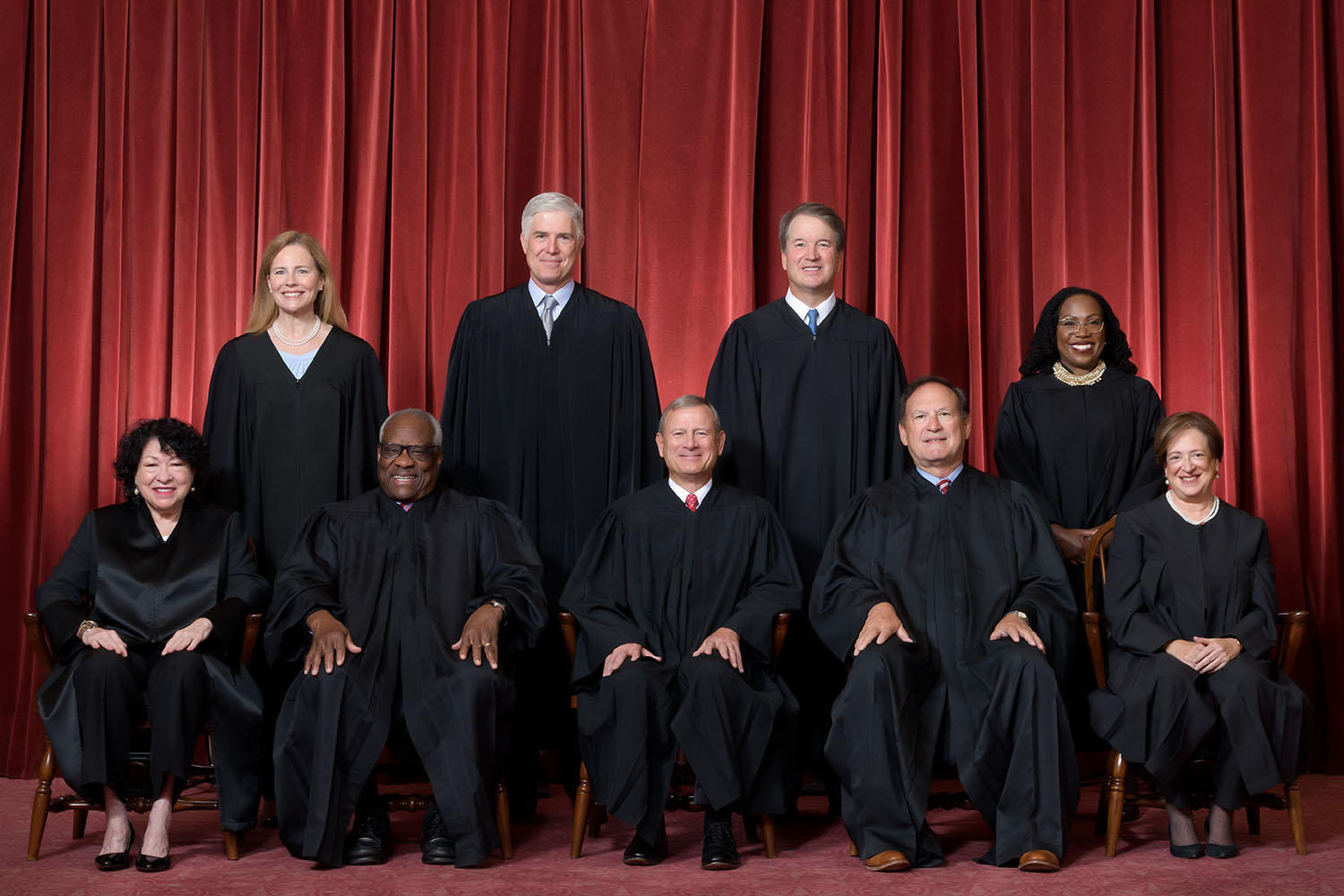
Credit: Fred Schilling, Collection of the Supreme Court of the United States
As distilled from an email update from Michael Waldman, President and CEO of the Brennan Center for Justice.
On Wednesday, the Supreme Court struck down what remains of the Voting Rights Act. Soon, it will rule on the president’s birthright citizenship executive order, one that, as Waldman writes, “could upend what it means to be an American.”
That is not simply a legal question. It is an ethical one.
Waldman notes that “a chorus of voices has emerged questioning the Court’s credibility.” He points to criticism from across the spectrum, including Juan Williams, who cited allegations of corruption and wrote that “a reckoning is overdue.”
The concern is not noise. It’s a red flag.
“The Supreme Court is a branch of government. Nothing more, nothing less,” Waldman writes. “We want it to…stand up, with independence, for the rule of law. But we cannot rely on the Court to do that. Its power depends on its credibility—credibility it must earn.”
That last line matters.
Because institutions do not fail all at once. They weaken gradually when confidence begins to slip. An NBC News poll now shows public trust in the Court at an all-time low. For a body that depends not on force, but on faith, that is a dangerous place to be.
“At a time when democracy has never been more tested,” Waldman writes, “we need a strong, trusted Court to uphold the rule of law and defend our institutions.”
The good news, he adds, is that “there are solutions that could greatly bolster trust.”
What follows is not rhetoric. It is a framework—practical, and rooted in a basic premise: accountability is not the enemy of independence; it is its foundation.
Here are Six Steps Toward Restoring Trust, as put forth by Miriam Rosenbaum and Emily Whitehead of the Brennan Center.
- Term Limits for Justices
End lifetime tenure. Establish 18-year terms with regular appointments.
No office in a democracy should carry unchecked, generational power. - Enforceable Ethics Standards
Replace voluntary guidelines with a binding code—investigations, transparency, and real consequences.
The principle is elementary: no one should be the judge of their own conduct. - Reform the Shadow Docket
Limit emergency rulings to actual emergencies. Require written, signed explanations.
Courts do not merely decide—they must explain. - Fast-Track Congressional Response
Allow Congress to respond swiftly when rulings undermine laws or rights.
In a democracy, elected representatives—not unelected judges—write policy. - Fix the Confirmation Process
Guarantee hearings and votes. End procedural obstruction.
Fairness is not optional; it is the Senate’s constitutional duty. - Increase Transparency
Allow cameras in the courtroom. Let the public see the process.
Because justice, to be trusted, must be visible.
This is not a radical agenda. It is a corrective one.
Waldman and his colleagues describe it as a set of reforms to “strengthen our democracy.” That’s exactly right.
The Court does not stand apart from the country. It stands because of it. And when trust begins to falter, the answer is not to look away. It is to repair what sustains it.
Comments

Recent Commentaries
Integrity Doesn’t Require a Megaphone
October 12, 2026

WHOSE PURPOSE DOES THIS SERVE?
October 9, 2026

Choreographer of Disaster
October 5, 2026
I Am Not a Politician, and I Have No Partisan Loyalties
October 2, 2026
A Man of Incorruptible Integrity
September 29, 2026

HUMAN VALUES: NOT SPECIFIED
September 23, 2026
You Can’t Do That.
September 21, 2026
I AM SICKENED
September 18, 2026
The Courage to Defend a Principle
September 17, 2026
The Better Angels Among Us
September 14, 2026
Read More Articles
The Latest... And Sometimes Greatest
We Remember
On September 11, 2001, nearly 3,000 people were killed in terrorist attacks in New York, at the Pentagon, and aboard Flight 93 in Pennsylvania. More...
September 11, 2026
Mister Roberts!
One of my favorite movies is Mister Roberts, the 1955 comedy-drama set aboard the USS Reluctant in the Pacific during World War II. Henry Fonda...
September 8, 2026
Where’s the Character
In 1984, Wendy’s ran a television commercial featuring the redoubtable Clara Peller, staring at an enormous hamburger bun. Inside was a burger patty smaller than...
August 7, 2026
It Was Important Then. It is Important Today
Freedom of speech in America is under attack, not only when people are denied the right to speak, but when lies, intimidation and the deliberate...
August 3, 2026
When Political Identity Replaces Ethical Judgment
The political and cultural landscape has become a minefield of conflicting beliefs, many now rooted less in public policy than in personal identity. One of...
July 31, 2026
Principles Matter.
A few nights ago, I was watching The Way We Were, a film I’ve seen more times than I can count. This time, a single...
July 28, 2026