Published: May 8, 2026
By Jim Lichtman
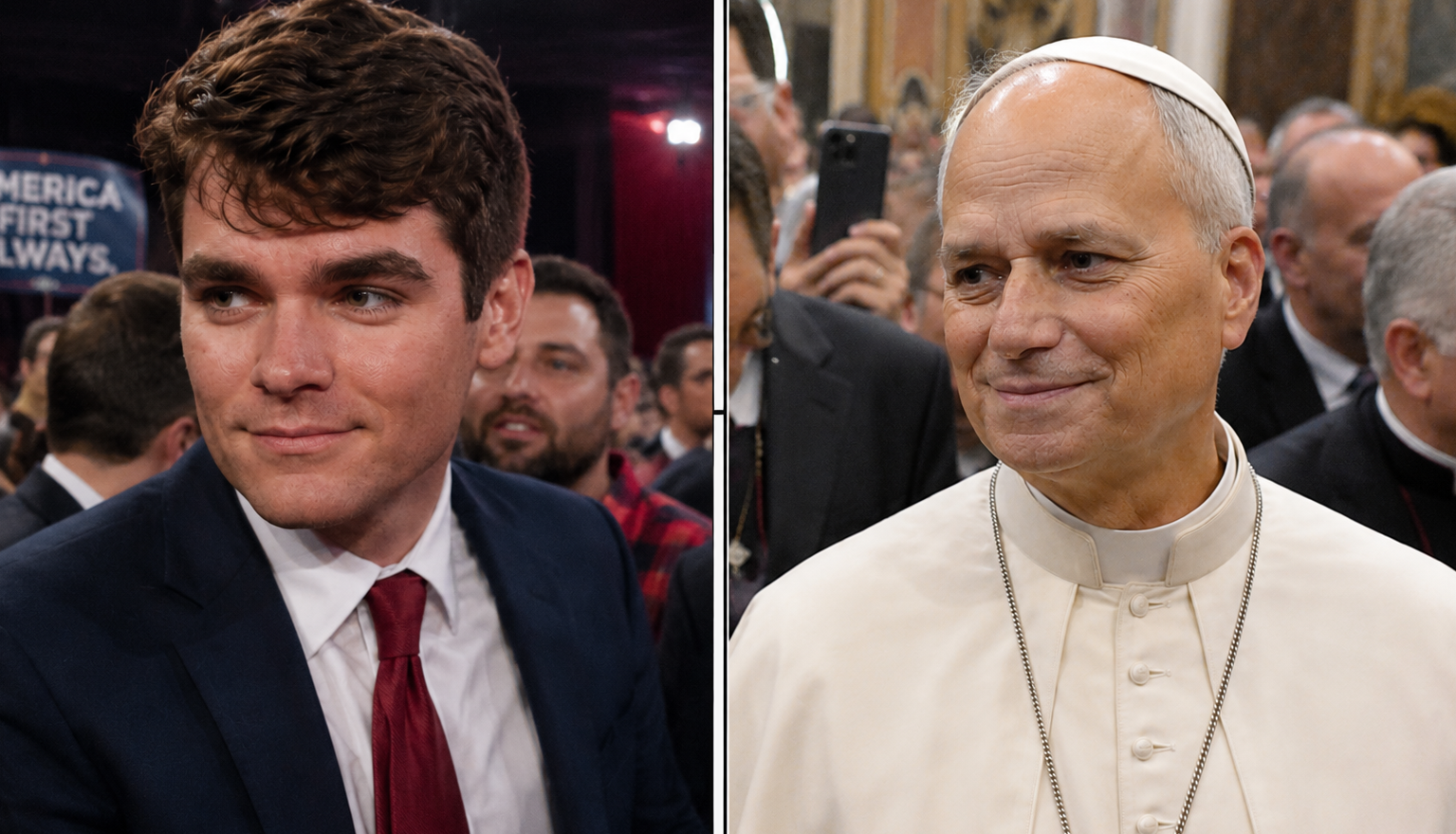
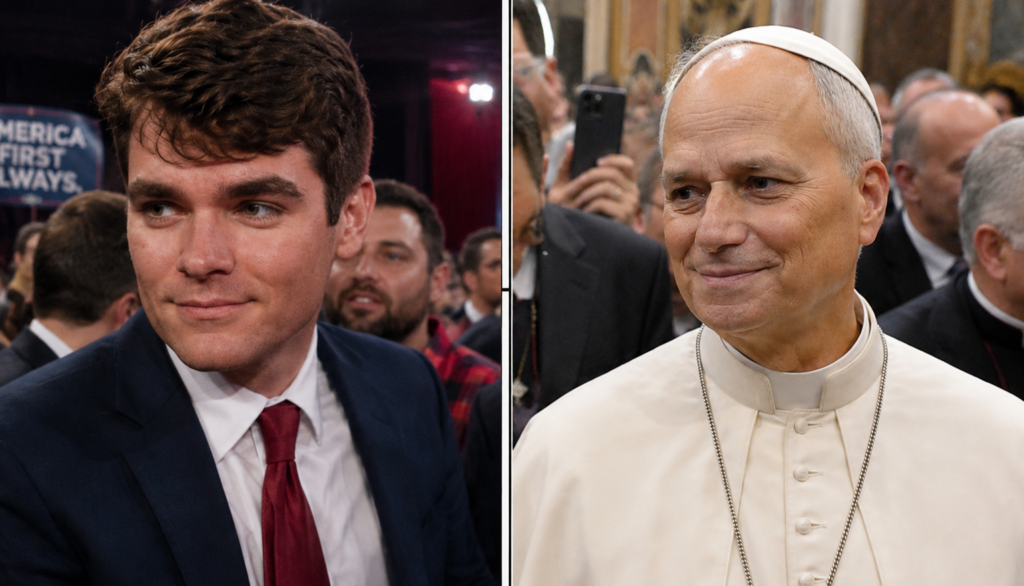
Two voices, both alike in reach and power,
Speak into a divided world.
One feeds grievance.
The other calls for grace.
Influence still carries power. What it often lacks now is responsibility. The contrast between Nick Fuentes and Pope Leo XIV makes that clear. Both command attention. Both reach people who feel ignored. But what they do with that attention is the difference.
Fuentes trades in provocation. He has praised Adolf Hitler as “awesome,” argued that minorities should be imprisoned, and reduced women to categories of use. This is not dissent. It is degradation. And yet, it works. In just over a year, hundreds of thousands of dollars have flowed in, not in spite of the message, but because of it.
Why? Because Fuentes offers something some people want: recognition.
“People are fanatical about my show because they relate to me… they feel conflicted and misunderstood.”
That insight is real.
What he does with it is the problem.
He turns frustration into resentment. Uncertainty into blame. He has described his movement as an “invisible empire… building a cadre” acting “quietly” and “loyally.”
It is belonging defined by opposition.
Now consider Pope Leo.
“The world is being ravaged by a handful of tyrants,” he said.
He is not dividing people. He is naming the misuse of power.
“God does not listen to the prayers of those who wage war… your hands are full of blood.”
That is not rhetoric. It’s accountability.
It echoes a much older truth, that power is judged not by what it can do, but by what it refuses to do. Leo’s message is consistent: power without restraint is a moral failure. He calls it a “delusion of omnipotence.” And he points to its consequence: People “abandoned in misery.”
That is the difference.
Fuentes tells followers who to blame.
Leo asks who is suffering.
Fuentes’s audience pays to be seen, to have their presence affirmed.
Leo asks something harder: that we see others.
“Let those who have the power to unleash wars choose peace.”
No justification. A choice.
This is what separates influence from responsibility.
One narrows the world into sides.
The other insists on dignity beyond sides.
One rewards outrage.
The other requires reflection.
One validates grievance.
The other demands accountability.
Where does it lead?
Toward anger or understanding?
Toward power, or mercy?
That is the choice.
It is the choice of what we listen to,
and what we become by listening.
Comments

Recent Commentaries
November 4, 2026
October 20, 2026
Has America Lost Its Way?
October 16, 2026
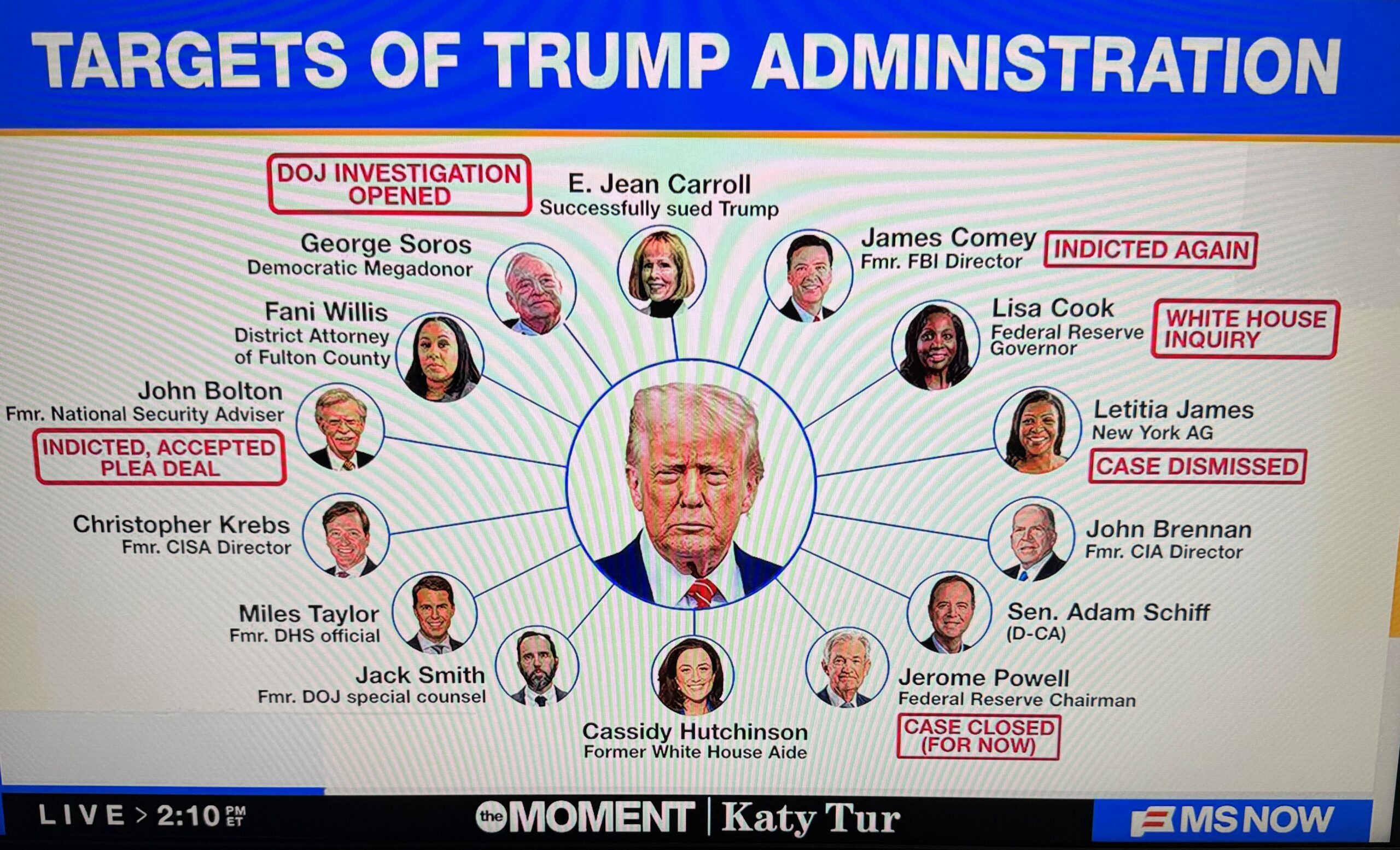
All The President’s Targets
October 13, 2026
Integrity Doesn’t Require a Megaphone
October 12, 2026
WHOSE PURPOSE DOES THIS SERVE?
October 9, 2026
Choreographer of Disaster
October 5, 2026
I Am Not a Politician, and I Have No Partisan Loyalties
October 2, 2026
A Man of Incorruptible Integrity
September 29, 2026

HUMAN VALUES: NOT SPECIFIED
September 23, 2026
You Can’t Do That.
September 21, 2026
Read More Articles
The Latest... And Sometimes Greatest
I AM SICKENED
Tonight, protesters are surrounding the Kennedy Center, the living memorial to John F. Kennedy and the heartbeat of Washington’s cultural life. They are there because...
September 18, 2026
The Courage to Defend a Principle
In 1998, at the height of the Clinton-Lewinsky scandal, Secret Service Director Lewis Merletti was driving to work when a radio report stopped him cold....
September 17, 2026
The Better Angels Among Us
By all appearances, we are becoming less the land of the brave than the land of resentment. Every day is Groundhog Day: same arguments, same...
September 14, 2026
We Remember
On September 11, 2001, nearly 3,000 people were killed in terrorist attacks in New York, at the Pentagon, and aboard Flight 93 in Pennsylvania. More...
September 11, 2026
Mister Roberts!
One of my favorite movies is Mister Roberts, the 1955 comedy-drama set aboard the USS Reluctant in the Pacific during World War II. Henry Fonda...
September 8, 2026
Where’s the Character
In 1984, Wendy’s ran a television commercial featuring the redoubtable Clara Peller, staring at an enormous hamburger bun. Inside was a burger patty smaller than...
August 7, 2026