Published: May 27, 2026
By Jim Lichtman
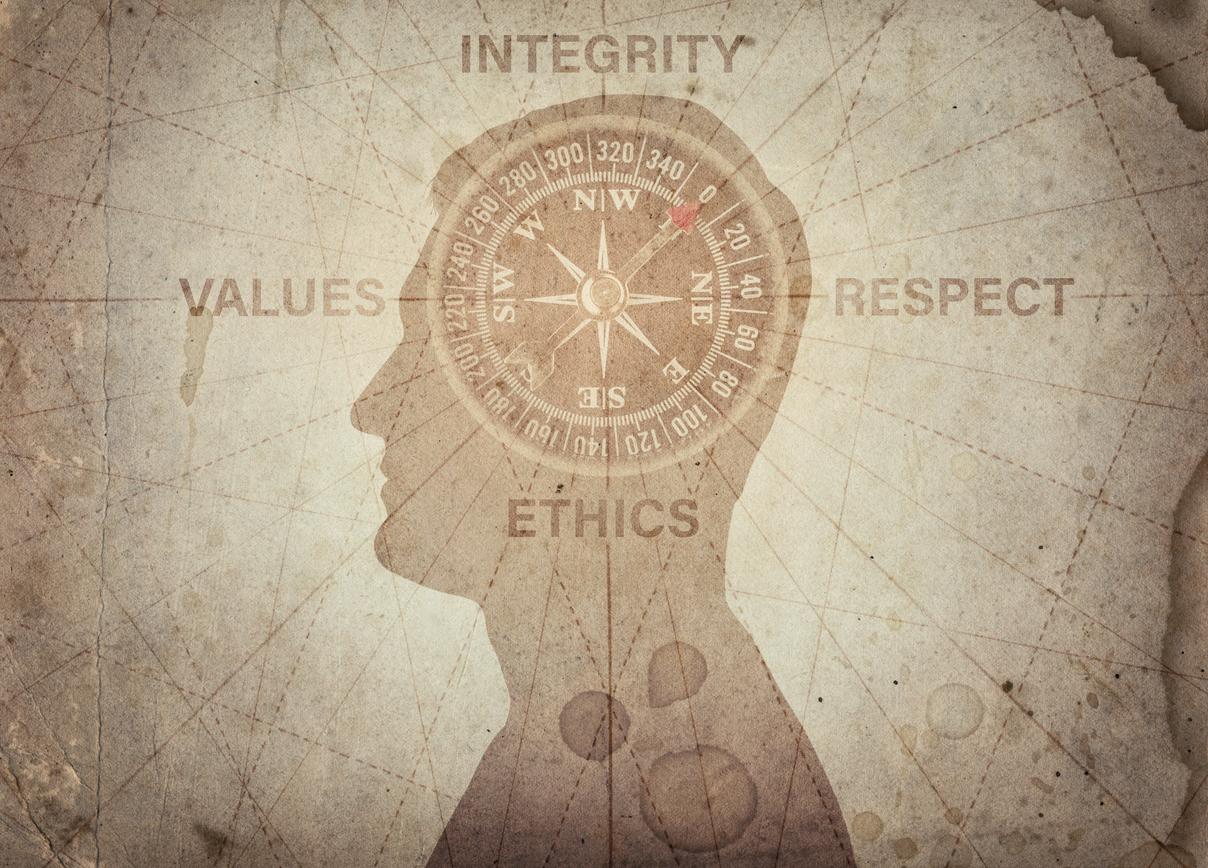
What will it take to restore the values we claim to believe in before the damage becomes irreversible?
They will not be restored by slogans, speeches, campaign promises, or nostalgia for a past that was never as simple—or as noble—as we often imagine. Nor will they be restored by demanding better leadership while excusing ourselves from the responsibility to live by those same values.
Ethical values return only when people decide to practice them in conduct… with families, friends, in schools, workplaces, and especially in moments when doing so costs something.
That’s the test.
It’s easy to defend fairness when fairness benefits us. It’s easy to believe in accountability when someone else is being held accountable. The deeper test comes when fairness protects someone we dislike, and accountability reaches people we admire.
America doesn’t need more people who can recite values. It needs more people willing to live by them when those values conflict with ambition, anger, loyalty, and fear.
So, how do we reset our principles?
The first of those principles is Truth.
A democracy cannot function when truth becomes just another political preference.
Without truth, nothing else holds. Trust collapses. Institutions weaken. Citizens retreat into tribes. Leaders become performers. And public debate becomes a contest of loudness rather than facts.
Truth doesn’t mean we all agree. It means we accept that facts matter, and reality doesn’t change simply because it makes us uncomfortable. The moment a country loses that shared understanding, it becomes vulnerable to manipulation by anyone loud enough, powerful enough, or shameless enough to exploit it.
Charles Lewis, founder of the Center for Public Integrity, shared a story from his early years as an investigative reporter at ABC News. He had uncovered circumstantial evidence suggesting that a top government official might have become wealthy through corruption. His bosses were excited. They wanted to film the man’s homes, put the dollar amounts on screen, and promote the story heavily on the evening news.
But Lewis kept asking questions. He spoke with the man’s banker, his realtor, and finally the official himself. What first looked suspicious began to look explainable. The man and his wife had bought rundown homes, renovated them, and sold them at a profit. Lewis concluded that the story could be made dramatic, but not honest.
So he killed his own story.
His bosses were furious. But Lewis refused to participate in what he later called a “cheap shot.” A week later, another journalist reported the allegation. The FBI investigated for two years. No charges were filed. Lewis’ conclusion was simple: he had done the right thing, and his news organization had not helped ruin a man’s reputation.
That’s what truth requires: not merely exposing what looks wrong, but having the discipline to stop when the facts don’t support the accusation.
The second principle is Accountability.
Accountability is not punishment. It’s responsibility. It is the recognition that actions have consequences, that power requires restraint, and that no one is exempt because of title, party, wealth, popularity, or position.
One of the most dangerous habits in American life today is selective accountability. We demand consequences for those we oppose and excuses for those we support. But ethics can’t survive on double standards. If a principle only applies when it is politically useful, it’s not a principle. It’s a tactic.
Third: Humility.
Humility may be the most underrated virtue in public life. It doesn’t mean weakness. It means understanding that no person, party, movement, or institution has a monopoly on wisdom.
It means listening before speaking, questioning our own certainty, and recognizing that being wrong is not the worst thing. Refusing to learn is.
A divided country does not heal because everyone suddenly agrees. It heals when enough people become willing to hear one another without immediately reaching for contempt.
Truth. Accountability. Humility.
Without them, public life becomes little more than argument and accusation. With them, disagreement can become something better: a way to test ideas, correct mistakes, and move closer to the country we claim to believe in.
But restoring values is not only a matter of what we believe. It is a matter of what we do.
Part Three: What kind of leadership — and what kind of citizenship — will it take to restore ethical values in American life? That’s tomorrow’s conclusion.
Comments
Leave a Comment

Recent Commentaries

Choreographer of Disaster
October 5, 2026
I Am Not a Politician, and I Have No Partisan Loyalties
October 2, 2026
A Man of Incorruptible Integrity
September 29, 2026

HUMAN VALUES: NOT SPECIFIED
September 23, 2026
You Can’t Do That.
September 21, 2026
I AM SICKENED
September 18, 2026
The Courage to Defend a Principle
September 17, 2026

The Better Angels Among Us
September 14, 2026

We Remember
September 11, 2026
Mister Roberts!
September 8, 2026
Read More Articles
The Latest... And Sometimes Greatest
Where’s the Character
In 1984, Wendy’s ran a television commercial featuring the redoubtable Clara Peller, staring at an enormous hamburger bun. Inside was a burger patty smaller than...
August 7, 2026
It Was Important Then. It is Important Today
Freedom of speech in America is under attack, not only when people are denied the right to speak, but when lies, intimidation and the deliberate...
August 3, 2026
When Political Identity Replaces Ethical Judgment
The political and cultural landscape has become a minefield of conflicting beliefs, many now rooted less in public policy than in personal identity. One of...
July 31, 2026
Principles Matter.
A few nights ago, I was watching The Way We Were, a film I’ve seen more times than I can count. This time, a single...
July 28, 2026
All the President’s Men 2.0
“Politics had infiltrated every corner of government—a strong-arm takeover of the agencies by the Nixon White House.” —Bob Woodward and Carl Bernstein, All the President’s...
July 23, 2026
The Threat to November Is Already Here
“Cunning, ambitious, and unprincipled men will be enabled to subvert the power of the people and to usurp for themselves the reins of government.”—George Washington’s...
July 20, 2026
Maybe a copy of this should go to the co-hosts
at The View ?