Published: December 1, 2025
By Jim Lichtman
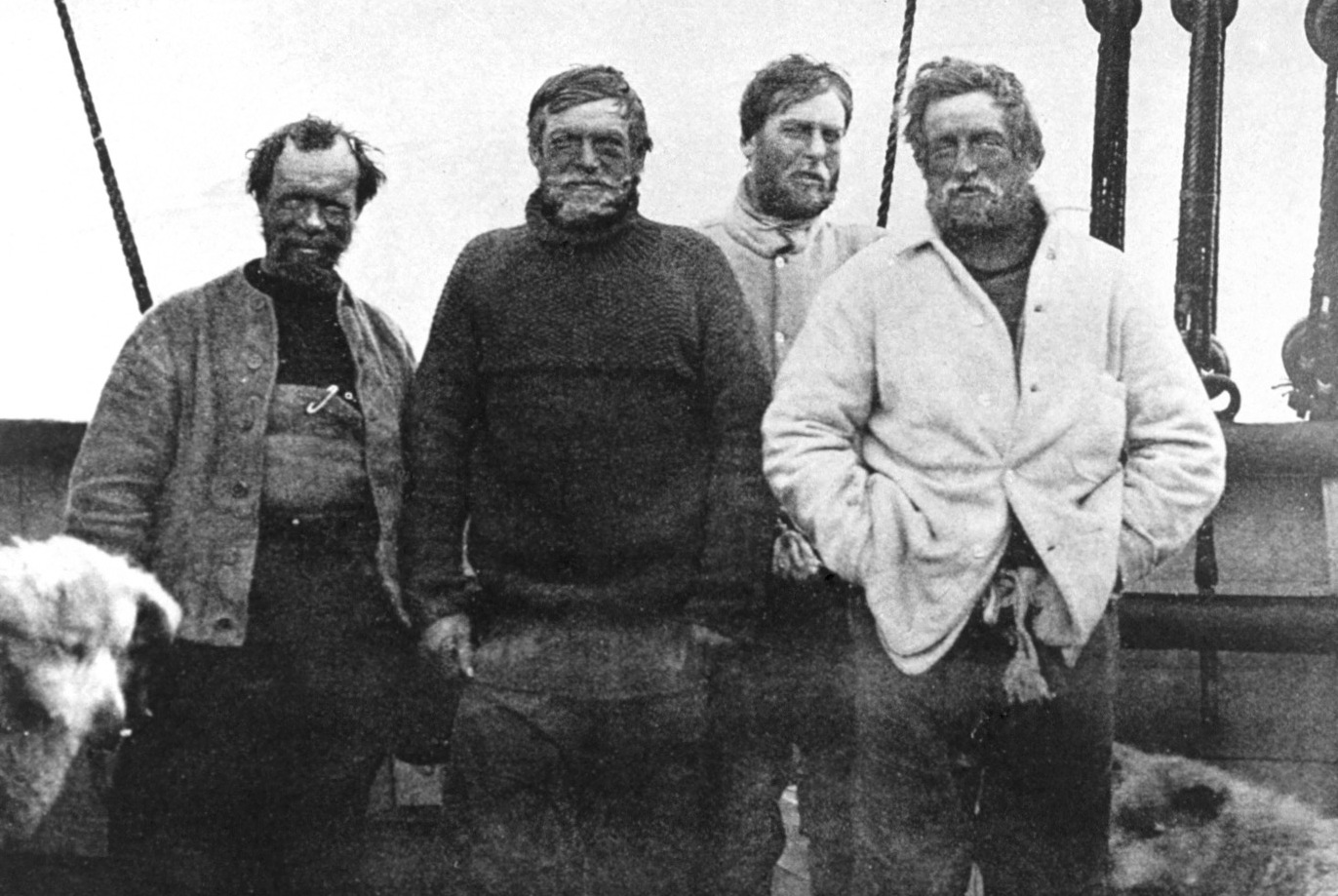
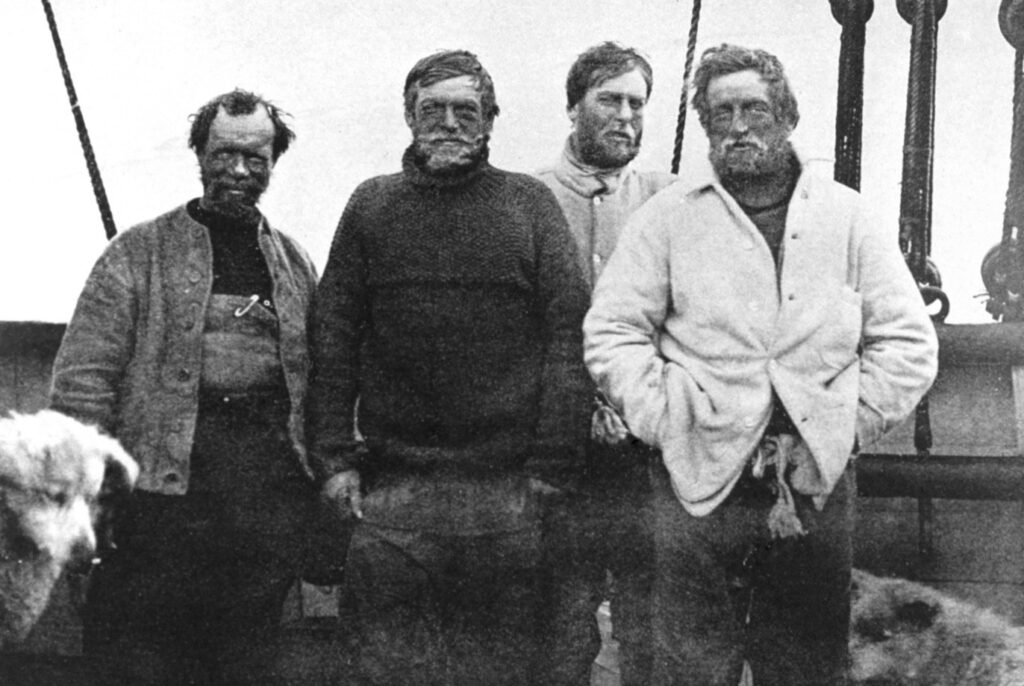
Ernest Shackleton – center
I recently read about a group of explorers who located a ship deep beneath the dark, cold waters off Antarctica: a vessel whose very name says a great deal about the man who once led her.
Ernest Shackleton’s greatness didn’t come from a great feat. It came from the humility to set aside his own ambition the moment his men needed the most from him.
In 1914, Shackleton’s goal was to cross the Antarctic continent from sea to sea, something no one had achieved.
Shackleton believed the journey would test not only endurance, but the character of the men who made it. And so he recruited accordingly. He looked for temperament. For steadiness. For men who could work together in tight quarters, endure boredom, and maintain morale under the most dangerous of conditions. Men who understood that survival would depend as much on one another as on their leader. Shackleton knew he could teach skills, but he couldn’t teach character. So he built his crew around the values of strength, loyalty, and a willingness to support the group over the self.
Those choices became the foundation of one of the greatest survival stories ever told.
When his fittingly named ship, Endurance, had become trapped, then crushed by ice, Shackleton didn’t pretend he had every answer. He made one quiet promise: “We will get home.” And he carried that responsibility in every waking moment.
He earned the trust of his crew by understanding their fears and bearing more than his share. Ernest Shackleton showed that real leadership isn’t about glory, it’s about service. It’s about knowing that when people place their trust in you, you owe them everything.
What makes Shackleton’s leadership feel even more remarkable today is how seldom we see those qualities in much of our nation’s leadership anymore. Humility has become overshadowed by self-promotion. Responsibility, diminished by blame and excuses. Caring, shoved to the side by ambition. And honesty… the backbone of trust… feels like something we’ve lost.
Shackleton never hid the truth from his men. He matched every hard fact with a plan. He met every moment of doubt with a reminder that they were, literally, all in the same boat together.
At a time when leadership has been abandoned in favor of loudness and insults rather than values, Shackleton’s example reminds us that humility, responsibility, caring, and honesty are not relics of the past but daily essentials… and integrity, integrity, the aligning of words with actions, and the willingness to do the harder thing because it’s the right thing. Shackleton lived that standard every day. His men didn’t follow him because he demanded loyalty. They followed him because he embodied it.
When leaders act with honesty, humility, and responsibility, they don’t just steady the ship, they steady the people who depend on them. That’s what Shackleton understood, and what too many leaders forget today.
When Shackleton set off in a small boat with a handful of his crew, leaving the rest of his men on the ice, he made one promise: he would return. And he did. Every man survived.
Ernest Shackleton died on another quest in 1922. He was 47 years old.
Comments
Leave a Comment


Recent Commentaries
All The President’s Targets
October 13, 2026
Integrity Doesn’t Require a Megaphone
October 12, 2026
WHOSE PURPOSE DOES THIS SERVE?
October 9, 2026

Choreographer of Disaster
October 5, 2026
I Am Not a Politician, and I Have No Partisan Loyalties
October 2, 2026
A Man of Incorruptible Integrity
September 29, 2026

HUMAN VALUES: NOT SPECIFIED
September 23, 2026

You Can’t Do That.
September 21, 2026
I AM SICKENED
September 18, 2026
The Courage to Defend a Principle
September 17, 2026
Read More Articles
The Latest... And Sometimes Greatest
The Better Angels Among Us
By all appearances, we are becoming less the land of the brave than the land of resentment. Every day is Groundhog Day: same arguments, same...
September 14, 2026
We Remember
On September 11, 2001, nearly 3,000 people were killed in terrorist attacks in New York, at the Pentagon, and aboard Flight 93 in Pennsylvania. More...
September 11, 2026
Mister Roberts!
One of my favorite movies is Mister Roberts, the 1955 comedy-drama set aboard the USS Reluctant in the Pacific during World War II. Henry Fonda...
September 8, 2026
Where’s the Character
In 1984, Wendy’s ran a television commercial featuring the redoubtable Clara Peller, staring at an enormous hamburger bun. Inside was a burger patty smaller than...
August 7, 2026
It Was Important Then. It is Important Today
Freedom of speech in America is under attack, not only when people are denied the right to speak, but when lies, intimidation and the deliberate...
August 3, 2026
When Political Identity Replaces Ethical Judgment
The political and cultural landscape has become a minefield of conflicting beliefs, many now rooted less in public policy than in personal identity. One of...
July 31, 2026
Yes, leadership: “humility, responsibility, caring, and honesty and integrity.” I am happy to see that some are still leading with these values and some are NOT.