Published: December 12, 2018
By Jim Lichtman
P.M. Forni, the early Italian Literature professor who asked all of us to choose civility, died earlier this month at his Maryland home.
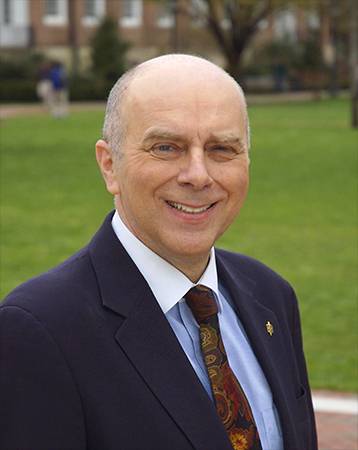
As a faculty member at Johns Hopkins University, Forni help found The Civility Project whose aim was to examine the importance of civility in society, and promote its practice on college campuses and communities around the country.
As a result, Forni produced two books, “Choosing Civility: The Twenty-Five Rules of Considerate Conduct,” (2002) and “The Civility Solution: What to Do When People Are Rude” (2010).
As reported by The New York Times (Dec. 11), “The first book is how not to be rude,” Virginia Forni explained in a telephone interview, “and the second book is what to do when other people are rude to you.”
Forni’s original 25 rules may appear simple, but can be challenging to practice for some:
Pay attention; Acknowledge others; Think the best; Listen; Be inclusive; Speak kindly; Don’t speak ill; Accept and give praise; Respect even a subtle “no”; Respect others’ opinions; Mind your body; Be agreeable; Keep it down (and rediscover silence); Respect other people’s time; Respect other people’s space; Apologize earnestly; Assert yourself; Avoid personal questions; Care for your guests; Think twice before asking for favors; Refrain from idle complaints; Accept and give constructive criticism; Respect the environment and be gentle to animals; and Don’t shift responsibility and blame.
“Lack of civility, [Forni] argued, is also more than a matter of semantics.
“ ‘Acts of violence are often the result of an exchange of acts of rudeness that spiral out of control,’ he told The Christian Science Monitor in 2007. ‘Disrespect can lead to bloodshed. By keeping the levels of incivility down we keep the levels of violence down.’ ”
“In ‘Choosing Civility,’ Dr. Forni recalled the revelatory moment,” The Times continues.
“ ‘One day, while lecturing on the Divine Comedy, I looked at my students and realized that I wanted them to be kind human beings more than I wanted them to know about Dante,’ he wrote. ‘I told them that if they knew everything about Dante and then they went out and treated an elderly lady on the bus unkindly, I’d feel that I had failed as a teacher.’ ”
Thus, was born The Civility Project. Along with U.C.L.A. Professor Giulia Sissa, the two “organized an ambitious conference called ‘Reassessing Civility: Forms and Values at the End of the Century.’ ”
Can we learn to be more civil to each other in critical times?
It can only help.
Comments
Recent Commentaries
WHOSE PURPOSE DOES THIS SERVE?
October 9, 2026

Choreographer of Disaster
October 5, 2026
I Am Not a Politician, and I Have No Partisan Loyalties
October 2, 2026
A Man of Incorruptible Integrity
September 29, 2026

HUMAN VALUES: NOT SPECIFIED
September 23, 2026
You Can’t Do That.
September 21, 2026
I AM SICKENED
September 18, 2026
The Courage to Defend a Principle
September 17, 2026
The Better Angels Among Us
September 14, 2026
We Remember
September 11, 2026
Read More Articles
The Latest... And Sometimes Greatest
Mister Roberts!
One of my favorite movies is Mister Roberts, the 1955 comedy-drama set aboard the USS Reluctant in the Pacific during World War II. Henry Fonda...
September 8, 2026
Where’s the Character
In 1984, Wendy’s ran a television commercial featuring the redoubtable Clara Peller, staring at an enormous hamburger bun. Inside was a burger patty smaller than...
August 7, 2026
It Was Important Then. It is Important Today
Freedom of speech in America is under attack, not only when people are denied the right to speak, but when lies, intimidation and the deliberate...
August 3, 2026
When Political Identity Replaces Ethical Judgment
The political and cultural landscape has become a minefield of conflicting beliefs, many now rooted less in public policy than in personal identity. One of...
July 31, 2026
Principles Matter.
A few nights ago, I was watching The Way We Were, a film I’ve seen more times than I can count. This time, a single...
July 28, 2026
All the President’s Men 2.0
“Politics had infiltrated every corner of government—a strong-arm takeover of the agencies by the Nixon White House.” —Bob Woodward and Carl Bernstein, All the President’s...
July 23, 2026