Published: July 4, 2016
By Jim Lichtman
So, why do we celebrate on July 4th? It has a little something to do with the way the founders and writers work.
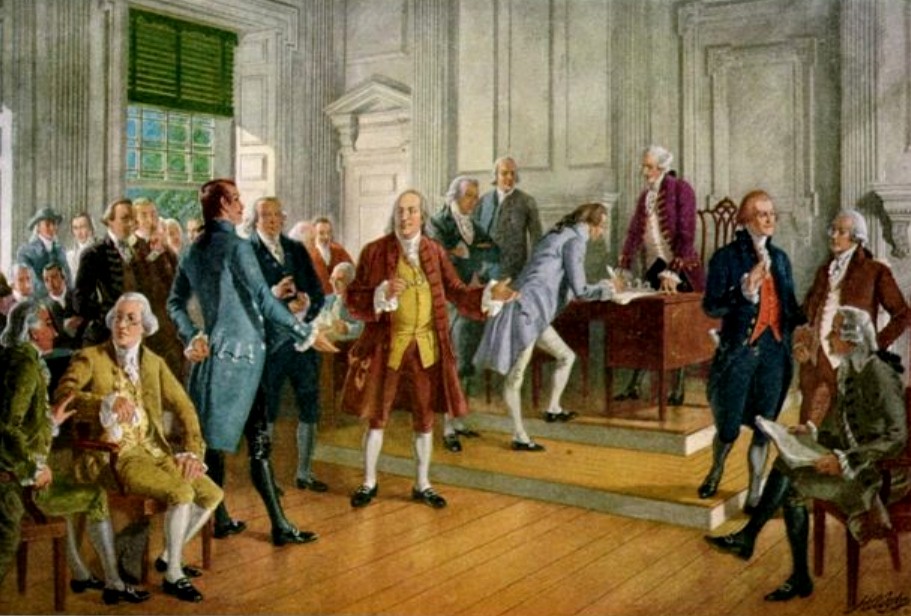
Signing of the Declaration of Independence
According to ConstitutionFacts.com, “We think of July 4, 1776, as a day that represents the Declaration of Independence and the birth of the United States of America as an independent nation.
“But July 4, 1776 wasn’t the day that the Continental Congress decided to declare independence (they did that on July 2, 1776).
“It wasn’t the day we started the American Revolution either (that had happened back in April 1775).
“And it wasn’t the day Thomas Jefferson wrote the first draft of The Declaration of Independence (that was in June 1776). Or the date on which the Declaration was delivered to Great Britain (that didn’t happen until November 1776). Or the date it was signed (that was August 2, 1776).
“So what did happen on July 4, 1776?
“The Continental Congress approved the final wording of The Declaration of Independence on July 4, 1776. They’d been working on it for a couple of days after the draft was submitted on July 2nd and finally agreed on all of the edits and changes.
“July 4, 1776, became the date that was included on The Declaration of Independence, and the fancy handwritten copy that was signed in August (the copy now displayed at the National Archives in Washington, D.C.) It’s also the date that was printed on the Dunlap Broadsides, the original printed copies of the Declaration that were circulated throughout the new nation. So when people thought of the Declaration of Independence, July 4, 1776 was the date they remembered.
“In contrast, we celebrate Constitution Day on September 17th of each year, the anniversary of the date the Constitution was signed, not the anniversary of the date it was approved. If we’d followed this same approach for The Declaration of Independence we’d being celebrating Independence Day on August 2nd of each year, the day The Declaration of Independence was signed!
“How did the Fourth of July become a national holiday?
“For the first 15 or 20 years after the Declaration was written, people didn’t celebrate it much on any date. It was too new and too much else was happening in the young nation. By the 1790s, a time of bitter partisan conflicts, the Declaration had become controversial. One party, the Democratic-Republicans, admired Jefferson and the Declaration. But the other party, the Federalists, thought the Declaration was too French and too anti-British, which went against their current policies.
“By 1817, John Adams complained in a letter that America seemed uninterested in its past. But that would soon change.
“After the War of 1812, the Federalist Party began to come apart and the new parties of the 1820s and 1830s all considered themselves inheritors of Jefferson and the Democratic-Republicans. Printed copies of the Declaration began to circulate again, all with the date July 4, 1776, listed at the top. The deaths of Thomas Jefferson and John Adams on July 4, 1826, may even have helped to promote the idea of July 4 as an important date to be celebrated.
“Celebrations of the Fourth of July became more common as the years went on and in 1870, almost a hundred years after the Declaration was written, Congress first declared July 4 to be a national holiday as part of a bill to officially recognize several holidays, including Christmas. Further legislation about national holidays, including July 4, was passed in 1939 and 1941.”
“And,” as Paul Harvey would say, “now you know the rest of the story.”
Comments


Recent Commentaries
It Was Important Then. It is Important Today
August 3, 2026
When Political Identity Replaces Ethical Judgment
July 31, 2026

Principles Matter.
July 28, 2026

All the President’s Men 2.0
July 23, 2026
The Threat to November Is Already Here
July 20, 2026

Jon Ossoff and the Conscience of Atticus Finch
July 17, 2026

Hearts and Minds
July 16, 2026

The Ethics of Belonging
July 14, 2026
The Best of Us
July 9, 2026
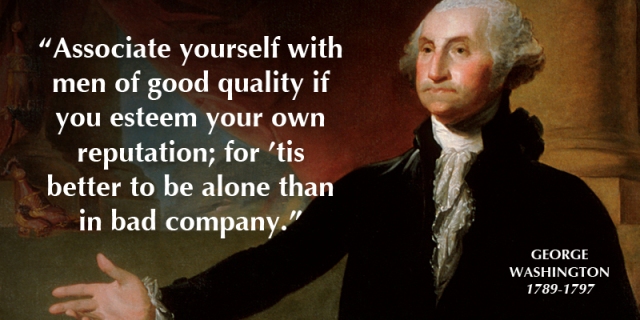
The Standard Washington Set
July 6, 2026
Read More Articles
The Latest... And Sometimes Greatest
Who We Were. Who We Are…
Today, America is 250 years old. This Fourth of July, amid deep national division, it seems worth asking a simple question: Which of our country’s...
July 4, 2026
Are We Still Worthy of What They Declared?
Conclusion: The Words That Made Us and Still Must. In December of 1776, the Revolution was not moving toward triumph. It was close to collapse....
July 3, 2026
Are We Still Worthy of What They Declared?
Part 2: Common Sense Are we still capable of that kind of clarity when it matters most? There was a moment in the birth of...
July 1, 2026
Are We Still Worthy of What They Declared?
For the most part, my high school history classes consisted of names, dates, documents, and battles. What I’ve learned since then — through historians like...
June 29, 2026
A Cautionary Tale: France Then, Washington Now
Lately, I’ve been reading more history, mostly to educate myself. But the other night, I opened Lord Acton’s Lectures on the French Revolution and didn’t...
June 25, 2026
Different Issues. Same Fear.
As our nation nears its 250th anniversary, an uneasy emotional connection to the past has returned—one rooted in fear, and the question of who gets...
June 22, 2026