Published: June 8, 2026
By Jim Lichtman
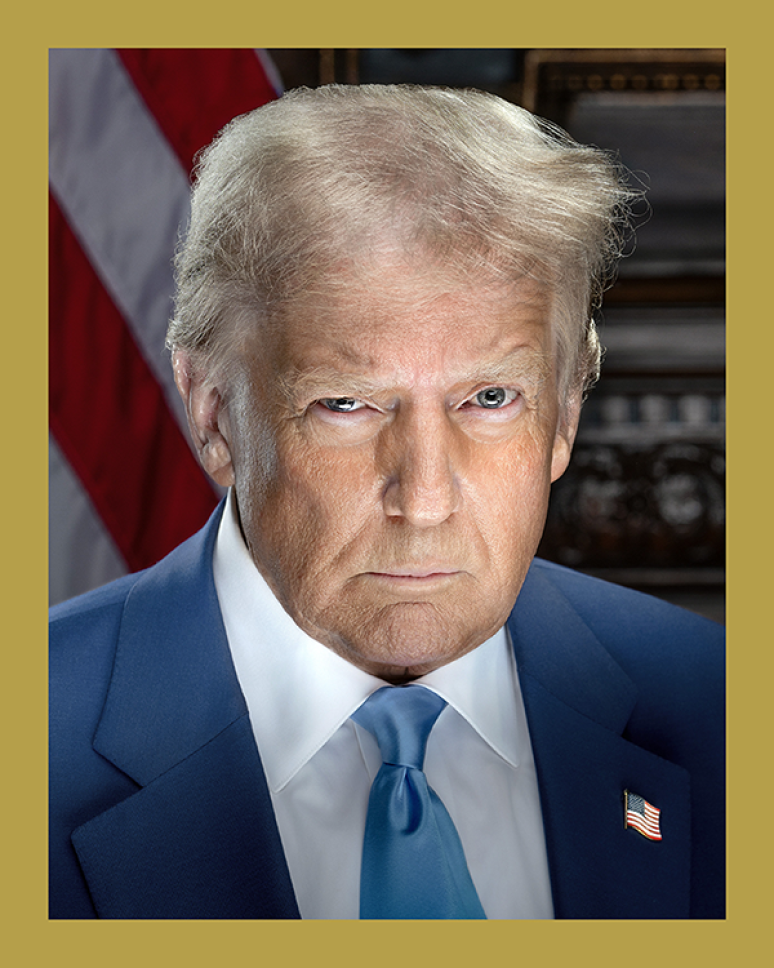
Official White House photo
Last August, I wrote that I was “stepping back from the chaos” of Donald Trump. I meant to write about his presidency only when his actions were significant.
That was the naïve part.
This is not Republican versus Democrat. This is democracy versus authoritarianism:
2025–2026 — Turned pressure on universities into national policy.
After targeting individual universities with investigations and funding threats, the administration moved to rewrite higher-education rules nationwide, including accreditation, grants, DEI, campus protests, and civil-rights enforcement. Critics have said the effort has been to gain political control over academic governance and speech.
August 11, 2025 — Federalized Washington, D.C. policing. Trump took control of D.C.’s police department and activated 800 National Guard members, overriding local authority in the nation’s capital.
September 15, 2025 — Created the Memphis Safe Task Force. Trump launched a federal law-enforcement operation calling for “hypervigilant policing,” “aggressive prosecution,” and saturation of neighborhoods with law enforcement.
September 2025 — Pressured late-night television and comedy. After Trump publicly demanded ABC fire Jimmy Kimmel, ABC suspended Jimmy Kimmel Live! for several days, and Disney later accused the FCC of using license reviews to suppress speech.
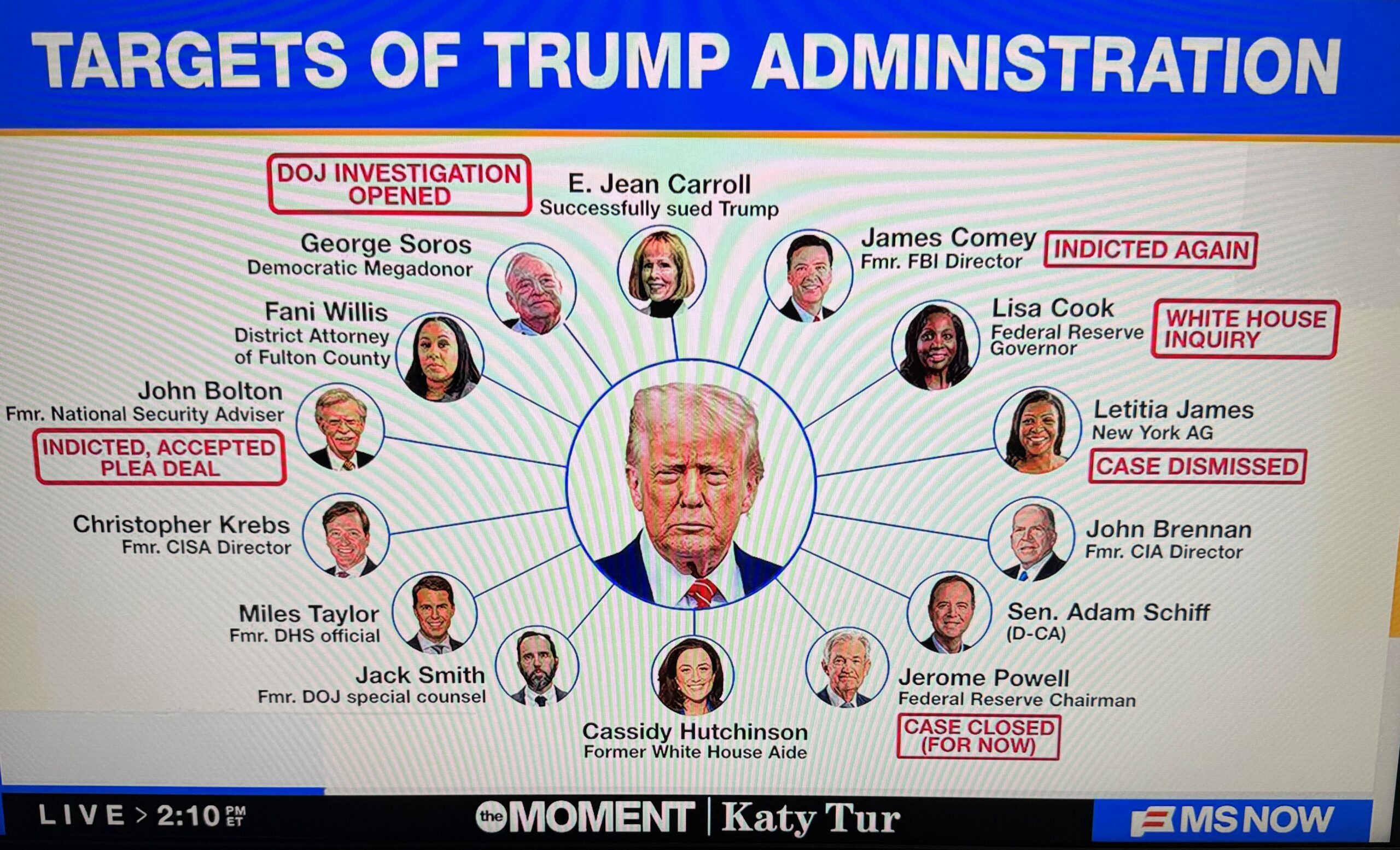
September 25, 2025 — James Comey indicted. The former FBI director was charged with making a false statement and obstruction, days after Trump publicly urged Attorney General Pam Bondi to prosecute Comey and other perceived political enemies. Comey pleaded not guilty, and the case was later dismissed after a judge ruled that the Trump-aligned prosecutor, Lindsey Halligan, who brought it had been unlawfully appointed; the government appealed the dismissal.
September 30, 2025 — Treated American cities as military “training grounds.” Trump told military leaders that dangerous American cities should be used as training grounds against the “enemy from within.”
October 2025 — Sent National Guard troops into more American cities.
After federalizing policing in Washington, Trump ordered National Guard deployments to Portland and Chicago, expanding the use of military force in Democratic-led cities to suppress protests and bolster immigration enforcement. Reuters noted that the move ran against the country’s long tradition of not using the military to police civilians.
October 9, 2025 — Targeted Letitia James after her case against him. New York Attorney General Letitia James was indicted after what AP described as a Trump pressure campaign. The indictment was dismissed without prejudice on November 24, 2025, after a federal judge ruled that Lindsey Halligan, the Trump-aligned prosecutor who brought the case, had been unlawfully appointed and therefore lacked authority to secure the indictment. “Without prejudice” meant DOJ could try again. But when prosecutors tried to revive it, a grand jury declined to re-indict James.
October 16, 2025 — John Bolton was indicted after becoming a prominent critic. Trump’s former national security adviser and public critic was charged with 18 counts involving national defense information. Bolton recently reached a tentative plea agreement under which he is expected to plead guilty to one count of illegally retaining classified information connected to notes he compiled while preparing his book.
The Vanities—
October 20–21, 2025 — Tore down the White House East Wing. The People’s House was physically altered to make room for Trump’s 90,00 square foot grand ballroom project. The $1 Billion that Congress was set to include in the budget for the project has been jettisoned… for now.
December 2025 — Put his name on the John F. Kennedy Center for the Performing Arts.
The Kennedy Center board added Trump’s name to the institution, but a federal judge ruled the move illegal, saying only Congress can rename the federally established center. The judge ordered his name removed from signage, stationery, websites, and other official materials. Angered by the ruling, Trump threatened to abandon planned improvements and return control of the center to Congress.
May 21, 2026 — Pushed a massive triumphal arch. A Trump-appointed commission approved the design for his proposed 250-foot Washington arch. Officially, it was for America’s 250th birthday. But when asked who it was for, Trump said: “Me.”
May 27, 2026 — Prepared a UFC cage-fighting arena on the White House lawn.
A temporary UFC arena was being built on the White House South Lawn for a June 14 event marking America’s 250th anniversary — and Trump’s 80th birthday — bringing cage fighting to the White House grounds as part of a broader run of Trump construction projects. A federal lawsuit sought to block Trump’s planned cage-fighting event on the White House South Lawn, arguing that it violated federal park rules, lacked required approvals, and bypassed environmental review.
May 28, 2026 — Pushed a $250 bill with his image. The White House urged Congress to approve a new $250 bill bearing Trump’s portrait for America’s 250th anniversary, despite laws barring living people from U.S. currency.
The Corruption—
May 2026 — Bought stock tied to UFC before staging a UFC event at the White House. Financial disclosures reportedly showed Trump purchased stock in TKO Group Holdings, UFC’s parent company, shortly before a high-profile UFC event was planned for the White House South Lawn.
2025–2026 — Used crypto policy while the Trump family profited from crypto. The Trump family’s crypto ventures became a major source of income while the administration pushed pro-crypto policies, backed stablecoin legislation, reduced enforcement pressure, and sought to make the U.S. the “crypto capital of the world.” The New Yorker reported that the family’s ventures “leverage Trump’s status as President” to attract buyers and investors. Self-interest dressed up as public policy
May 25, 2026 — Used the presidency for private financial gain. John Cassidy reported in The New Yorker that Trump-linked financial firms made thousands of stock trades worth hundreds of millions of dollars.
May 2026 — DOJ gave Trump sweeping tax-audit protection. A reported Justice Department settlement granted Trump, his family, and businesses immunity from federal tax audits for already-filed returns, raising serious concerns about self-protection and abuse of government power.
Since March, more than 10,000 federal lawyers across the government have departed while DOJ alone had lost more than a quarter of its lawyers. And the exodus continues under acting Attorney General Todd Blanche.
May 2026 — Held investments tied to companies benefiting from federal action. A Pentagon contract with Dell reportedly boosted Dell’s stock price while Trump held more than $1 million in Dell shares, raising conflict-of-interest concerns because his assets were not in a true blind trust.
June 4, 2026 — Ballroom donors won $50B in contracts after giving to Trump project. A Public Citizen report says more than half of the known corporate donors to Trump’s $400 million White House ballroom project received new or expanded federal contracts worth over $50 billion in the past six months. Many also faced federal enforcement actions, or had those actions paused by the Trump administration.
The Outrages—
January 7, 2026 — Renee Nicole Good was shot and killed by an ICE officer as a result of Trump’s aggressive tactics by ICE officers. DHS said the officer acted in self-defense, claiming Good had used her vehicle as a weapon. But bystander and cellphone videos raised serious questions about that account, and Minneapolis Mayor Jacob Frey said the footage he reviewed did not support the government’s claim.
January 24, 2026 — Alex Pretti was shot and killed by a U.S. Border Patrol officer as a result of Trump’s aggressive tactics. Pretti, a U.S. citizen, was shot during an immigration-enforcement action in Minneapolis. Reuters reported DHS claimed he approached with a handgun and resisted attempts to disarm him, but that video reviewed by Reuters contradicted parts of that account.
January 28, 2026 — The Trump administration seized Fulton County Georgia’s 2020 paper ballots and other election materials as part of a federal investigation into possible election irregularities. Prior reviews of Fulton County’s 2020 election had already found disorganization and procedural problems, but no evidence of fraud or illegality that changed the result.
March 9, 2026 — The Trump administration obtained records and digital data tied to the Arizona Senate’s 2021 review of Maricopa County’s 2020 election. That review had confirmed Biden’s win and found no evidence of fraud, though it raised claims of irregularities that Maricopa County officials later disputed as flawed or false.
March 31, 2026 — Moved to restrict mail voting by executive order. Trump issued an order attempting to impose federal changes to election administration and mail voting, despite serious constitutional objections.
March–May 2026 — Kept fighting to punish major law firms.
After several judges blocked Trump’s executive orders targeting law firms as unlawful, the administration continued trying to revive them on appeal. The firms argued the orders were retaliation for representing Trump’s political opponents or causes he opposed.
April 28, 2026 — James Comey was indicted again — this time over an Instagram photo of seashells arranged to read “86 47,” which prosecutors claimed was a threat against Trump, though Comey denied any violent intent and First Amendment experts questioned whether the ambiguous post could meet the legal standard for a true threat. The case is still pending.
May 25–27, 2026 — Renewed U.S. strikes inside Iran during ceasefire talks. The administration carried out new strikes in Iran while negotiations to end the war were underway, risking wider conflict even as it claimed the attacks were defensive. Iran rejected the latest changes in wording made by Trump and reported that the Strait of Hormuz will remain closed.
May 26, 2026 — Targeted the Southern Poverty Law Center through the Justice Department. The SPLC asked a court to dismiss what it called a “vindictive” federal indictment driven by Trump’s campaign against perceived enemies.
May 27, 2026 — Oversaw detention conditions at New Jersey’s Delaney Hall. Lawmakers and detainees reported dire conditions at Delaney Hall, including spoiled food, inadequate medical care, poor air circulation, and a lack of basic hygiene, while hundreds of detainees reportedly joined a hunger and labor strike. DHS denied mistreatment, and White House border czar Tom Homan defended the facility, saying it was not a “five-star resort” but was “well-run… and the spaghetti was good.”
May 28, 2026 — Used federal force against civic observers in Memphis. The ACLU sued over alleged intimidation, surveillance, harassment, and false arrest of people monitoring the Trump-ordered Memphis task force.
May 29, 2026 — Backed a $1.8 billion “anti-weaponization” fund. A federal judge temporarily blocked the fund, which critics said could become a political reward system for Trump allies and January 6 defendants. On Tuesday, June 2, acting Attorney General Todd Blanche announced–several times in hearings–that the proposed fund was being withdrawn while Trump suggests otherwise. Senator Cory Booker (D-NJ) and Sen. Bill Cassidy (R-LA) filed a joint bipartisan amicus brief in federal court to permanently block the Trump administration’s “anti-weaponization” fund, arguing that it bypasses Congress to spend taxpayer money unconstitutionally. However, “a settlement that gave the president, his family, and their businesses broad protection from past I.R.S. investigations,” remains in place.
May 31, 2026 — Escalated force around protests at Delaney Hall. As protests grew outside Newark’s Delaney Hall ICE detention center, New Jersey officials expanded restricted zones and imposed a nightly curfew. Governor Mikie Sherrill urged peaceful protest and cautioned demonstrators not to attack ICE agents, warning that violence would only give the federal government grounds to escalate.
June 2, 2026 — Trump named Bill Pulte, his housing-finance regulator and political ally, as acting Director of National Intelligence. (Acting appointments can last up to 210 days.) Two days later, amid bipartisan criticism over Pulte’s lack of intelligence experience, Trump said Pulte would not be his permanent nominee, but suggested he might use the temporary post to “find out some things about the rigged elections.” During his tenure as federal housing-finance regulator, Pulte used his position to pursue mortgage-fraud allegations against Trump critics, including Sen. Adam Schiff and Federal Reserve Governor Lisa Cook, referring both matters to the Justice Department. No proven fraud has been publicly established in either case.
June 2026 — Consequences of the January 6 pardons continued to surface. New reporting found that dozens of pardoned January 6 defendants had later faced new arrests, charges, or convictions, underscoring the real-world fallout from Trump’s mass clemency.
June 4, 2026 — Moved to install Todd Blanche permanently at Justice. Trump said he would nominate acting Attorney General Todd Blanche — his former personal lawyer — as permanent attorney general. Reuters reported that Blanche had aligned closely with Trump’s agenda, including targeting Trump critics, after Pam Bondi was pushed out.
June 5, 2026 — Trump officials planned to mark 2.7 million living people as dead, whistleblower claims. “Jeremiah Schofield, who worked at Social Security for 25 years and helped lead the agency’s IT modernization efforts before leaving in October, said he refused to help implement the plan after agency lawyers warned that falsely marking living people as dead could violate federal law.” — The New York Times.
When public power is used to punish critics, intimidate institutions, weaken voting rights, militarize civic life, demean human dignity, eliminate legally authorized tax audits, or turn democratic spaces into monuments to one man, I have a duty to call it out.
And so do all of us.
Comments


Recent Commentaries
All The President’s Targets
October 13, 2026
Integrity Doesn’t Require a Megaphone
October 12, 2026
WHOSE PURPOSE DOES THIS SERVE?
October 9, 2026

Choreographer of Disaster
October 5, 2026
I Am Not a Politician, and I Have No Partisan Loyalties
October 2, 2026
A Man of Incorruptible Integrity
September 29, 2026

HUMAN VALUES: NOT SPECIFIED
September 23, 2026
You Can’t Do That.
September 21, 2026
I AM SICKENED
September 18, 2026
The Courage to Defend a Principle
September 17, 2026
Read More Articles
The Latest... And Sometimes Greatest
The Better Angels Among Us
By all appearances, we are becoming less the land of the brave than the land of resentment. Every day is Groundhog Day: same arguments, same...
September 14, 2026
We Remember
On September 11, 2001, nearly 3,000 people were killed in terrorist attacks in New York, at the Pentagon, and aboard Flight 93 in Pennsylvania. More...
September 11, 2026
Mister Roberts!
One of my favorite movies is Mister Roberts, the 1955 comedy-drama set aboard the USS Reluctant in the Pacific during World War II. Henry Fonda...
September 8, 2026
Where’s the Character
In 1984, Wendy’s ran a television commercial featuring the redoubtable Clara Peller, staring at an enormous hamburger bun. Inside was a burger patty smaller than...
August 7, 2026
It Was Important Then. It is Important Today
Freedom of speech in America is under attack, not only when people are denied the right to speak, but when lies, intimidation and the deliberate...
August 3, 2026
When Political Identity Replaces Ethical Judgment
The political and cultural landscape has become a minefield of conflicting beliefs, many now rooted less in public policy than in personal identity. One of...
July 31, 2026