Published: June 2, 2025
By Jim Lichtman
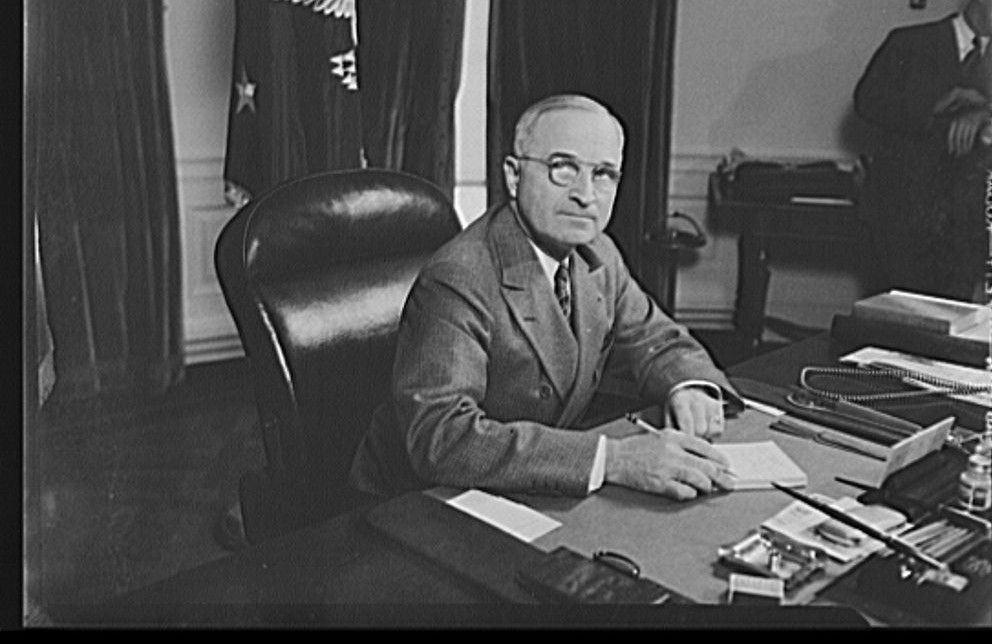
photo: AP
What separates a good leader from a great one isn’t intelligence, charm, or even experience. It’s character—specifically, the willingness to do the right thing when it’s difficult, unpopular, or politically damaging.
We’ve seen this quality in several U.S. presidents, but four in particular stand out—not for partisan wins, but for the ethical backbone they demonstrated when it mattered most.
In 1948, President Harry S. Truman signed Executive Order 9981, desegregating the United States Armed Forces. It was a time when segregation wasn’t just tolerated—it was expected, especially in Southern states. Truman’s decision cost him politically. But he saw a deeper truth: that EVERY American who wears the uniform deserves equal treatment and dignity. Who does that include? …CLASS?
President Lyndon B. Johnson faced a similar reckoning. In 1964, Johnson signed the Civil Rights Act; a year later, the Voting Rights Act. These weren’t symbolic measures—they were monumental shifts in American law. And they came at a steep price. Johnson knew he was sacrificing the South politically for a generation. “We have lost the South,” he said. But he signed them anyway. “We shall overcome,” he told Congress—not just echoing a movement, but joining it. When the moral arc of the universe needed a nudge, Johnson helped bend it toward justice.
Then there’s President George H. W. Bush, a man often underestimated in his ethical clarity. In 1991, after the racially motivated murder of an Indian-American man in Texas, Bush didn’t stay silent. He condemned the act publicly, calling it what it was: a hate crime. He used the presidency not to inflame, but to unite. And two years earlier, in 1989, he did something even more politically dangerous—he raised taxes after promising not to. It likely cost him re-election. But Bush put the country’s fiscal stability ahead of personal ambition. That’s what real leadership looks like.
Finally, President Barack Obama, who, during his time in office, faced numerous calls to interfere with Department of Justice investigations—most notably during the probe of Hillary Clinton’s emails. Time and again, Obama refused. He understood the importance of keeping the White House and the DOJ separate—an institutional guardrail that has been tested in recent years. He believed justice must not only be done but be seen to be done. In a hyper-partisan climate, that wasn’t just ethical—it was essential.
Each of these presidents made a choice that risked their political capital. They chose principle over popularity, duty over convenience.
In a time when many elected officials seem more focused on polls and pundits than principle, it’s worth remembering: leadership is not about staying in office. It’s about standing for something.
Doing the right thing doesn’t always win elections. But it’s how we preserve the soul of the republic.
That’s what these four presidents understood—and what we, as citizens, must never forget.
Comments
Leave a Comment
Recent Commentaries
November 4, 2026
October 20, 2026
Has America Lost Its Way?
October 16, 2026
All The President’s Targets
October 13, 2026
Integrity Doesn’t Require a Megaphone
October 12, 2026
WHOSE PURPOSE DOES THIS SERVE?
October 9, 2026

Choreographer of Disaster
October 5, 2026
I Am Not a Politician, and I Have No Partisan Loyalties
October 2, 2026
A Man of Incorruptible Integrity
September 29, 2026

HUMAN VALUES: NOT SPECIFIED
September 23, 2026
You Can’t Do That.
September 21, 2026
Read More Articles
The Latest... And Sometimes Greatest
I AM SICKENED
Tonight, protesters are surrounding the Kennedy Center, the living memorial to John F. Kennedy and the heartbeat of Washington’s cultural life. They are there because...
September 18, 2026
The Courage to Defend a Principle
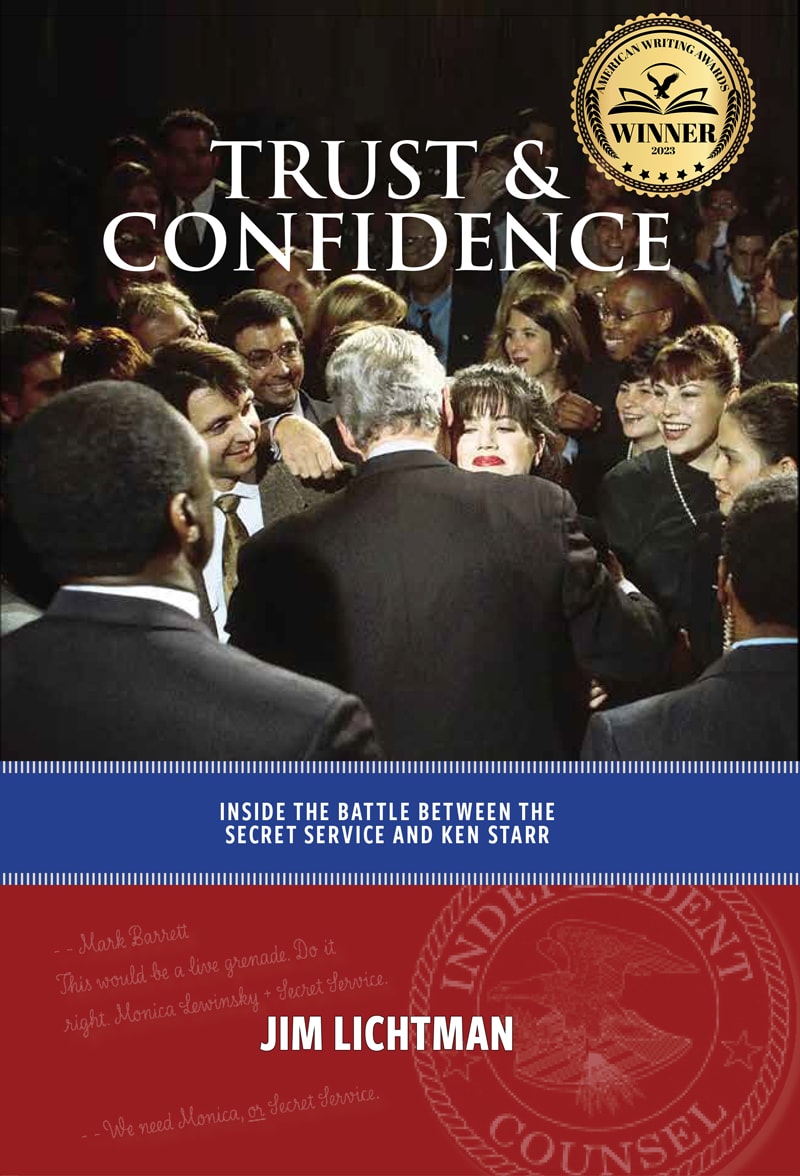
In 1998, at the height of the Clinton-Lewinsky scandal, Secret Service Director Lewis Merletti was driving to work when a radio report stopped him cold....
September 17, 2026
The Better Angels Among Us
By all appearances, we are becoming less the land of the brave than the land of resentment. Every day is Groundhog Day: same arguments, same...
September 14, 2026
We Remember
On September 11, 2001, nearly 3,000 people were killed in terrorist attacks in New York, at the Pentagon, and aboard Flight 93 in Pennsylvania. More...
September 11, 2026
Mister Roberts!
One of my favorite movies is Mister Roberts, the 1955 comedy-drama set aboard the USS Reluctant in the Pacific during World War II. Henry Fonda...
September 8, 2026
Where’s the Character
In 1984, Wendy’s ran a television commercial featuring the redoubtable Clara Peller, staring at an enormous hamburger bun. Inside was a burger patty smaller than...
August 7, 2026
the rules of wars should exist that the chaplains & guides have free access to the injured & killed in battle. the death soul itself should not be part of another silent war ? who controls this to make sure ?
would like to know which President/s the most ethical that never would allow violation of the mind or abuses at/during death ? if there are individuals being abused e.g. at death by gangster carers, is it possible that thee govt might want this to occur, as a form of bloodsport, or war over soul politics, or in order to create a new job category ? do they want this new bad opening? to force the helpless dying to pay to die or otherwise wake up during cremation ? as there are so many bad priests etc – is there any specific President or Judge who would have or now does stop this ? otherwise could become a war, if another nation wanted to own or take over an individuals soul & rebirth etc? i do not think police would help much.