Published: December 5, 2025
By Jim Lichtman
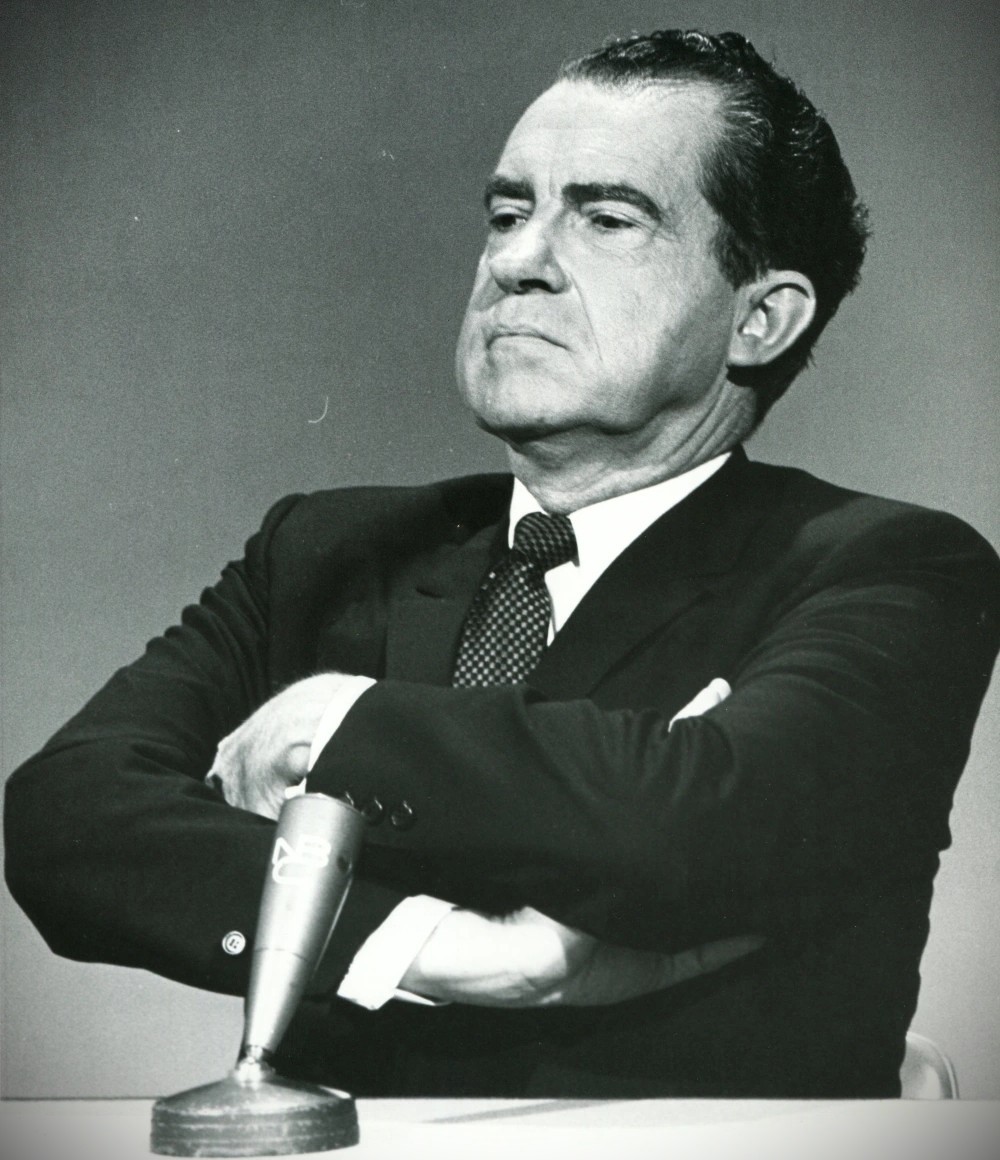
Richard Nixon – 1968 – NBC Meet The Press
CONTEMPT—Raw, in-your-face, unapologetic, and morally bankrupt.
Every so often, the country reaches a point where character is not an abstraction but a requirement. We’re in one of those moments now. The country’s cynicism level has reached DEFCON 1.
You can feel it in the way the culture has shifted. You can see it in how some treat once-trusted institutions with insolence. Some insist this is unprecedented. It isn’t. We’ve seen contemptible conduct before, and history is clear about the cost.
E.g.: Andrew Jackson approached the presidency like a battlefield. Disagreement wasn’t negotiable; it was a personal insult. The Supreme Court wasn’t a coequal branch; it was obstruction. Jackson believed he alone carried the will of the people, and anyone who disagreed was somehow betraying that will. His contempt didn’t just weaken institutions; it normalized the idea that institutions were obstacles rather than guardrails.
A century later, Richard Nixon carried the same instincts into the White House. To Nixon, the Press, Congress… especially Congress, weren’t partners in a democratic system; they were potential threats. Much of his contempt played out behind closed doors, but the effect was the same: when a leader treats the system as an enemy, the system eventually breaks. What ended his presidency wasn’t a clash of ideas; it was the destruction of trust: one leak, one list, one lie at a time.
Joseph McCarthy presented another lesson. He never reached the Oval Office, but he reached the national psyche. McCarthy understood the power of accusation and the spectacle of contempt. Entire agencies were smeared, careers destroyed, institutions discredited, not by evidence, but by insinuation. Fear and suspicion became political tools. It took one moment, “Have you no sense of decency, sir?,” to remind the country how far we had drifted from our moral center.
Huey Long utilized the same template, but with a populist flourish. He built a political empire on personal loyalty and public grievance. Boundaries were optional. Critics weren’t opponents; they were targets. Long wrapped it all in promises of uplift, but underneath was the same message: institutions exist only as long as they serve the leader.
Different men, different eras. But they shared a common destructive, me-first impulse: a willingness to undermine the very structures that make democracy possible. Each of these men carried their contempt in full view: never softened, never qualified, and never hidden. Whether it was Jackson defying the Court, Nixon turning suspicion into policy, McCarthy disregarding decency, or Long destroying anyone who stood in his way, the message was unmistakable: restraint was for others, not for them.
And here we are again—where anger is coin of the realm and outrage is the strategy of choice, without regard for the people it harms. Institutions once seen as stabilizing forces are described as biased, corrupt, and untrustworthy.
Contempt—cruel, defiant, toxic—is no way to lead a country.
The lesson is as simple as it is old: character still counts. Democracy doesn’t endure contempt. It endures decency, responsibility, and humility.
When are we going to learn that lesson?
Comments


Recent Commentaries
The Burden of Command
April 16, 2026

“If I wasn’t in the White House, Leo wouldn’t be in the Vatican”
April 13, 2026

We
April 9, 2026

An Easter Message That Matters
April 4, 2026
The Man Who Feared What We Might Become
March 30, 2026
Same Price. Same War. Different Truth
March 25, 2026

Who Writes This Stuff: Jim or A.I.?
March 23, 2026
Loyalty vs. Conscience
March 19, 2026

When Will This Madness End!?
March 18, 2026

When Government Threatens the Truth
March 16, 2026
Read More Articles
The Latest... And Sometimes Greatest
Separating Fact from Rhetoric
SPECIAL REPORT I recently received an email message from a nationwide grassroots political network. The message reads as follows: “The Department of Homeland Security (DHS)...
March 12, 2026
Lindsay Vonn’s Gold Medal Moment
The day after her fall in the women’s downhill at the Winter Olympic Games in Milan-Cortina, Lindsey Vonn posted a message on Instagram. Not just...
March 12, 2026
Teaching an Algorithm Right from Wrong
In a quiet office in San Francisco, a philosopher is deep in thought, attempting something that until recently belonged to science fiction. She is trying...
March 9, 2026
Now, More Than Ever
In moments of national crisis, a nation discovers whether its founding principles are merely words on paper, or values worth defending. As the 150th anniversary...
March 6, 2026
Peace Is Not an Elective
I had just learned of the passing of a good friend and colleague, Colman McCarthy when the memories began to return. Before I ever met...
March 2, 2026
Revelations
In 1927, Sinclair Lewis gave America a character it did not want to recognize in the mirror: Elmer Gantry. Gantry is loud, magnetic, insatiable —...
February 26, 2026