Published: December 5, 2025
By Jim Lichtman
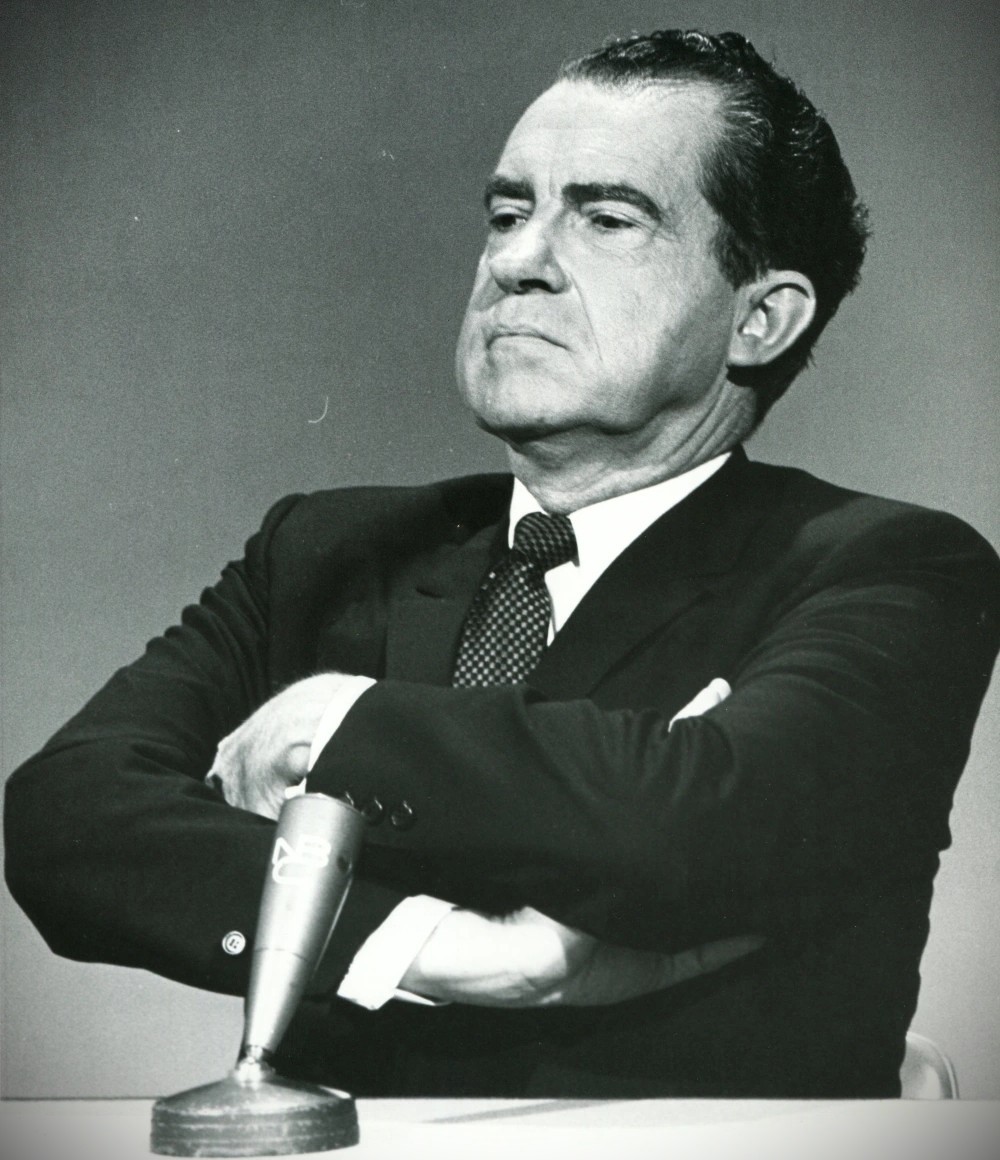
Richard Nixon – 1968 – NBC Meet The Press
CONTEMPT—Raw, in-your-face, unapologetic, and morally bankrupt.
Every so often, the country reaches a point where character is not an abstraction but a requirement. We’re in one of those moments now. The country’s cynicism level has reached DEFCON 1.
You can feel it in the way the culture has shifted. You can see it in how some treat once-trusted institutions with insolence. Some insist this is unprecedented. It isn’t. We’ve seen contemptible conduct before, and history is clear about the cost.
E.g.: Andrew Jackson approached the presidency like a battlefield. Disagreement wasn’t negotiable; it was a personal insult. The Supreme Court wasn’t a coequal branch; it was obstruction. Jackson believed he alone carried the will of the people, and anyone who disagreed was somehow betraying that will. His contempt didn’t just weaken institutions; it normalized the idea that institutions were obstacles rather than guardrails.
A century later, Richard Nixon carried the same instincts into the White House. To Nixon, the Press, Congress… especially Congress, weren’t partners in a democratic system; they were potential threats. Much of his contempt played out behind closed doors, but the effect was the same: when a leader treats the system as an enemy, the system eventually breaks. What ended his presidency wasn’t a clash of ideas; it was the destruction of trust: one leak, one list, one lie at a time.
Joseph McCarthy presented another lesson. He never reached the Oval Office, but he reached the national psyche. McCarthy understood the power of accusation and the spectacle of contempt. Entire agencies were smeared, careers destroyed, institutions discredited, not by evidence, but by insinuation. Fear and suspicion became political tools. It took one moment, “Have you no sense of decency, sir?,” to remind the country how far we had drifted from our moral center.
Huey Long utilized the same template, but with a populist flourish. He built a political empire on personal loyalty and public grievance. Boundaries were optional. Critics weren’t opponents; they were targets. Long wrapped it all in promises of uplift, but underneath was the same message: institutions exist only as long as they serve the leader.
Different men, different eras. But they shared a common destructive, me-first impulse: a willingness to undermine the very structures that make democracy possible. Each of these men carried their contempt in full view: never softened, never qualified, and never hidden. Whether it was Jackson defying the Court, Nixon turning suspicion into policy, McCarthy disregarding decency, or Long destroying anyone who stood in his way, the message was unmistakable: restraint was for others, not for them.
And here we are again—where anger is coin of the realm and outrage is the strategy of choice, without regard for the people it harms. Institutions once seen as stabilizing forces are described as biased, corrupt, and untrustworthy.
Contempt—cruel, defiant, toxic—is no way to lead a country.
The lesson is as simple as it is old: character still counts. Democracy doesn’t endure contempt. It endures decency, responsibility, and humility.
When are we going to learn that lesson?
Comments


Recent Commentaries
It Doesn’t Take a Rocket Genius to Recognize the Danger
October 22, 2026
November 4, 2026
October 20, 2026
Has America Lost Its Way?
October 16, 2026
All The President’s Targets
October 13, 2026
Integrity Doesn’t Require a Megaphone
October 12, 2026
WHOSE PURPOSE DOES THIS SERVE?
October 9, 2026

Choreographer of Disaster
October 5, 2026
I Am Not a Politician, and I Have No Partisan Loyalties
October 2, 2026
A Man of Incorruptible Integrity
September 29, 2026

HUMAN VALUES: NOT SPECIFIED
September 23, 2026
Read More Articles
The Latest... And Sometimes Greatest
You Can’t Do That.
BREAKING: News organizations responded forcefully on Monday after President Trump barred CNN, MS NOW and Politico from the White House. They went to federal court—and,...
September 21, 2026
I AM SICKENED
Tonight, protesters are surrounding the Kennedy Center, the living memorial to John F. Kennedy and the heartbeat of Washington’s cultural life. They are there because...
September 18, 2026
The Courage to Defend a Principle
In 1998, at the height of the Clinton-Lewinsky scandal, Secret Service Director Lewis Merletti was driving to work when a radio report stopped him cold....
September 17, 2026
The Better Angels Among Us
By all appearances, we are becoming less the land of the brave than the land of resentment. Every day is Groundhog Day: same arguments, same...
September 14, 2026
We Remember
On September 11, 2001, nearly 3,000 people were killed in terrorist attacks in New York, at the Pentagon, and aboard Flight 93 in Pennsylvania. More...
September 11, 2026
Mister Roberts!
One of my favorite movies is Mister Roberts, the 1955 comedy-drama set aboard the USS Reluctant in the Pacific during World War II. Henry Fonda...
September 8, 2026