Published: October 27, 2025
By Jim Lichtman
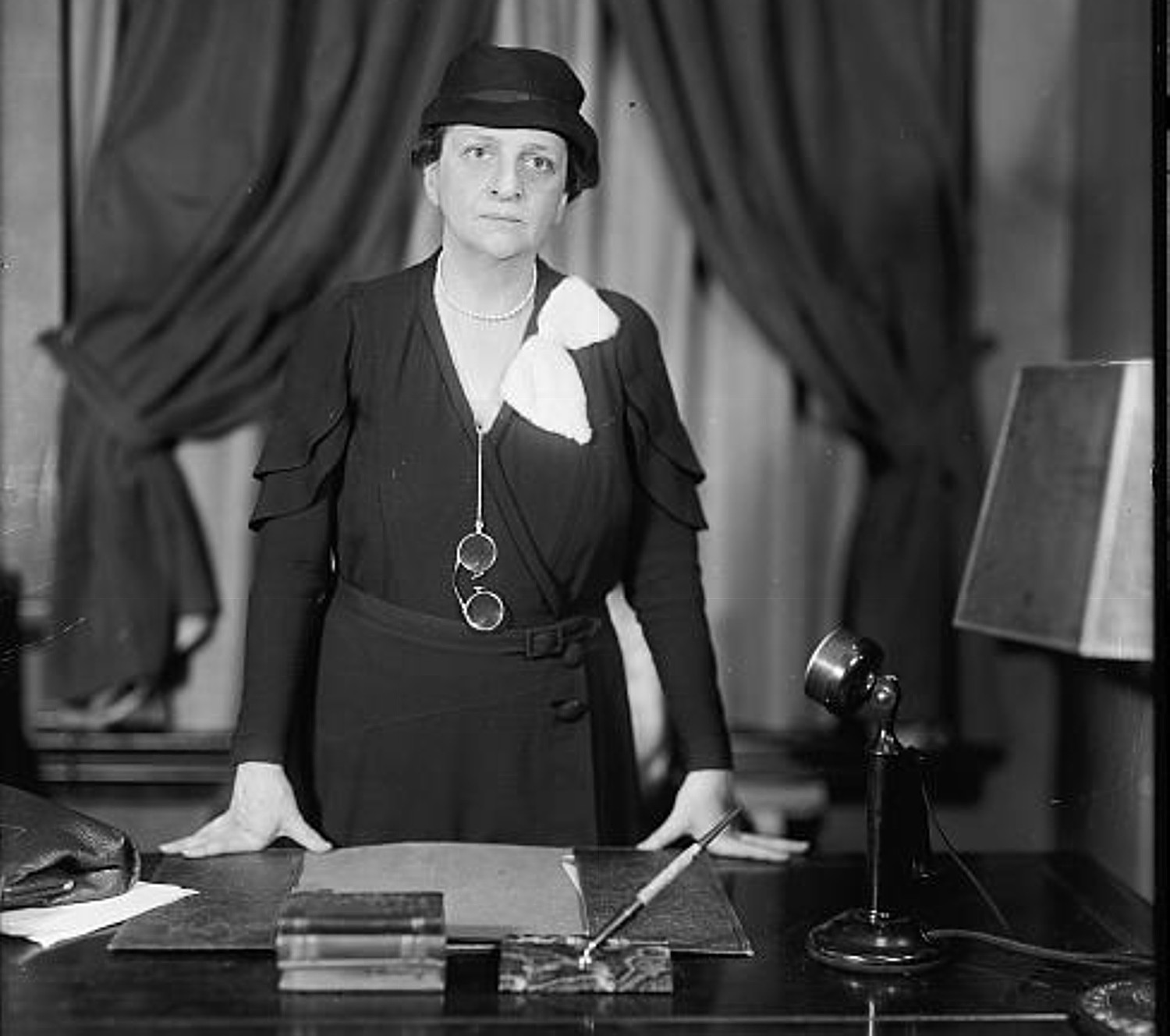
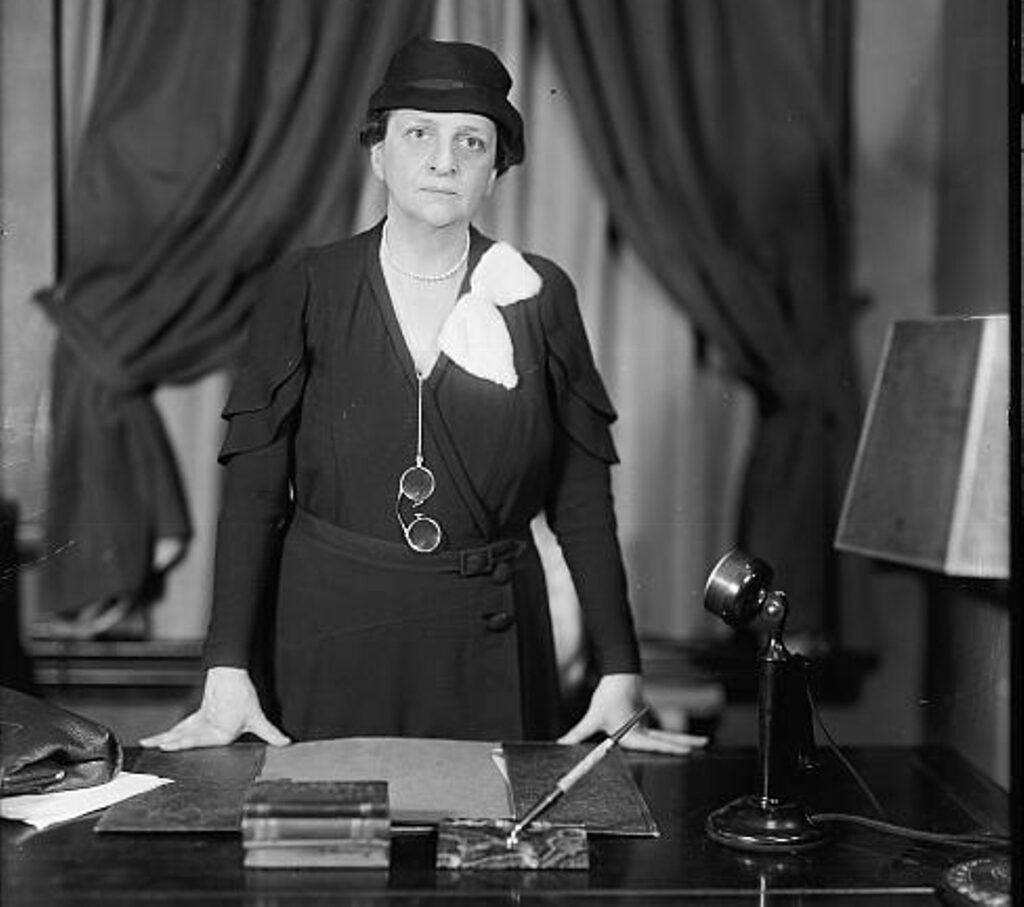
Photo: Library of Congress
I happened across Frances Perkins while searching files at the Franklin D. Roosevelt Presidential Library. She was the first woman in U.S. history to serve in a cabinet post, as Secretary of Labor under the most consequential president of the era. She shined brightest, not in seeking headlines, but in advancing the rights and well-being of ordinary Americans.
Born in 1880, Perkins demonstrated an unshakable belief in fairness and the dignity of work. That belief became a mission in 1911 when she stood on a New York City street and watched the Triangle Shirtwaist Factory burn: 146 workers trapped behind locked doors, most of them young women. The horror of that day never left her. From then on, she devoted her life to ensuring that no one would ever again die because of greed or neglect.
When Franklin Roosevelt asked her to serve as Secretary of Labor in 1933, Perkins came with a clear vision and a long list of significant reforms: a minimum wage, a 40-hour workweek, the abolition of child labor, safer workplaces, unemployment insurance, and a national pension system. Many said it was impossible. Perkins went to work anyway.
Against incredible resistance from business leaders and political power brokers, Perkins never raised her voice. Her strength was persistence: quiet and unstoppable. She became the moral compass of the New Deal and played a central role in shaping the Social Security Act, one of the most consequential laws in American history.
In an era when women were expected to remain on the sidelines, Frances Perkins stood shoulder to shoulder with the most powerful men of her time. She combined compassion with competence and vision with pragmatism. Her life was a reminder that real change doesn’t come from shouting the loudest; it comes from standing your ground and doing the work.
Perkins understood that public service was about service, not personal power or recognition. “I came to work for God, FDR, and the millions of forgotten, plain, common working men,” she said. Her focus remained on people, especially those left out or left behind.
One of her great strengths was her ability to listen to factory workers, labor organizers, women with children, and unemployed families struggling to survive the Great Depression. She knew that good government policy begins with understanding the realities of those it is meant to serve. And she never forgot that real change takes time, persistence, and principle.
But Perkins faced constant resistance, not only because of her policies, but because she was a woman in a position of power. In an era when few women were allowed a voice in public life, she endured attacks but continued to lead with conviction and quiet strength. Through her actions, she shows us what real public service looks like. It’s not about power or ego. It’s about serving the public good. It’s about protecting those without a voice. It’s about using government to help people live better, safer, more secure lives.
The protections Frances Perkins helped put in place still form the backbone of American life. She set the gold standard for what public service can be: that government, when guided by principle and courage, can stand for fairness, dignity, and justice.
It’s a lesson many in government would do well to remember today.
Comments


Recent Commentaries

All The President’s Targets
October 13, 2026
Integrity Doesn’t Require a Megaphone
October 12, 2026

WHOSE PURPOSE DOES THIS SERVE?
October 9, 2026

Choreographer of Disaster
October 5, 2026
I Am Not a Politician, and I Have No Partisan Loyalties
October 2, 2026
A Man of Incorruptible Integrity
September 29, 2026

HUMAN VALUES: NOT SPECIFIED
September 23, 2026

You Can’t Do That.
September 21, 2026

I AM SICKENED
September 18, 2026

The Courage to Defend a Principle
September 17, 2026
Read More Articles
The Latest... And Sometimes Greatest
The Better Angels Among Us
By all appearances, we are becoming less the land of the brave than the land of resentment. Every day is Groundhog Day: same arguments, same...
September 14, 2026
We Remember
On September 11, 2001, nearly 3,000 people were killed in terrorist attacks in New York, at the Pentagon, and aboard Flight 93 in Pennsylvania. More...
September 11, 2026
Mister Roberts!
One of my favorite movies is Mister Roberts, the 1955 comedy-drama set aboard the USS Reluctant in the Pacific during World War II. Henry Fonda...
September 8, 2026
Where’s the Character
In 1984, Wendy’s ran a television commercial featuring the redoubtable Clara Peller, staring at an enormous hamburger bun. Inside was a burger patty smaller than...
August 7, 2026
It Was Important Then. It is Important Today
Freedom of speech in America is under attack, not only when people are denied the right to speak, but when lies, intimidation and the deliberate...
August 3, 2026
When Political Identity Replaces Ethical Judgment
The political and cultural landscape has become a minefield of conflicting beliefs, many now rooted less in public policy than in personal identity. One of...
July 31, 2026