Published: November 20, 2025
By Jim Lichtman
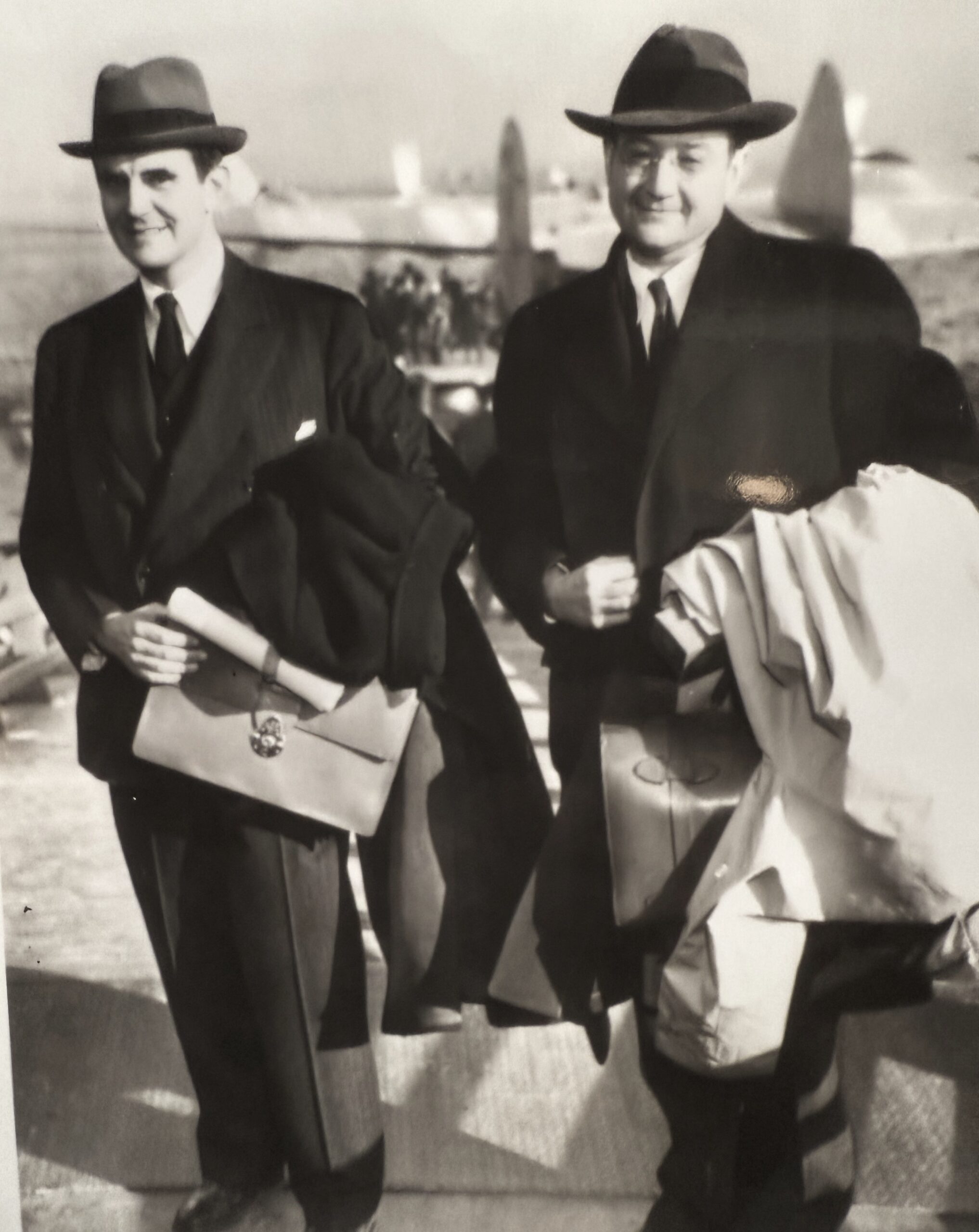
1941 Press Photo: Ambassador to Britain, John Winant, on the left, with advisor Benjamin Cohen–bound for London.
John Gilbert Winant was one of the rarest of figures in public life: a three-term Republican governor from New Hampshire whose leadership wasn’t calculated but instinctive; a public servant who treated humility as a strength, and a diplomat who put principle ahead of political convenience. Yet for all the steadiness he gave to others, he struggled to find a place of rest for himself.
I’ve been spending some time reading about this Lincolnesque man who gave more of himself than duty required, and who carried the burdens of two nations on his shoulders without ever seeking the recognition he so richly deserved.
In a political landscape that often rewards the loudest voice and performative chest-pounding, Winant stands apart. He didn’t command the stage. He was admired precisely because he wasn’t Roosevelt or Churchill. Churchill’s gift for grand, dramatic oratory was unmatched; Roosevelt’s political instincts were razor-sharp. Winant’s strength came from his emotional steadiness and moral clarity, which earned the trust of both leaders. And when he arrived in a bomb-battered London in 1941 as America’s new ambassador, that was exactly what Britain needed.
Winant’s arrival marked a turning point that had nothing to do with strategy and everything to do with spirit. His predecessor, Joseph Kennedy, had told anyone who would listen that Britain was finished. Winant stepped off the plane, looked into the faces of people worn down by air raids and rationing, and said simply: “There is no place I would rather be than in England at this time.” It wasn’t a line drafted by a speechwriter. It was the truth. And because it was true, it landed with the force of hope.
Winant frequently walked through the streets of London as a man who believed that leadership begins with showing up. While bombs fell and anti-aircraft guns hammered the sky every night, Winant visited shelters, fire brigades, and the forgotten corners of the city where grief was a daily companion. What he offered Londoners was presence. In a climate defined by fear, presence becomes its own form of courage.
Churchill saw in Winant something essential: a steadiness of heart and a calm, rational mind he knew he could rely on.
In A Letter from Grosvenor Square, Winant describes arriving at Chequers in early December 1941, just as he had so many times before. By then, he was more than a guest; he was almost part of the Churchill family.
Churchill understood that Britain’s survival hung in the balance on whether the United States entered the war. He believed that if America was pushed into the conflict, its vast military power could finally turn the tide against Nazi Germany.
In a moment that reads like a scene from a movie, Winant recalls the instant Churchill learned of the attack on Pearl Harbor—and with it, the certainty that Roosevelt’s decision to stand fully with Britain was now at hand.
“It was [Churchill’s] custom,” Winant recalls, “to listen to the nine o’clock… news.” His portable radio was set on the table when “a voice announced that Japan had attacked our fleet at Pearl Harbor.
“Churchill jumped to his feet and started for the door with the announcement, ‘We shall declare war on Japan!’
“‘Good God,’ I said, ‘you can’t declare war on a radio announcement.’
“‘What shall I do?’ The question was asked, not because he needed me to tell him what to do, but as a courtesy to the representative of the country attacked.
“I said, ‘I will call up the President by telephone and ask him what the facts are.’”
The facts were indeed true, and later that night, Churchill learned that Japan had also attacked the British in Malaya.
“The days of peace were over for us,” Winant writes, “The wide waters of the great oceans could not keep the flames of war away from our shores. We, too, had to hear that peace is indivisible and global.”
But Winant’s story doesn’t end with victory. When he returned home to Concord, New Hampshire, he faced a different kind of battle—one that would lead to an untimely death….
Comments
Recent Commentaries
Has America Lost Its Way?
October 16, 2026
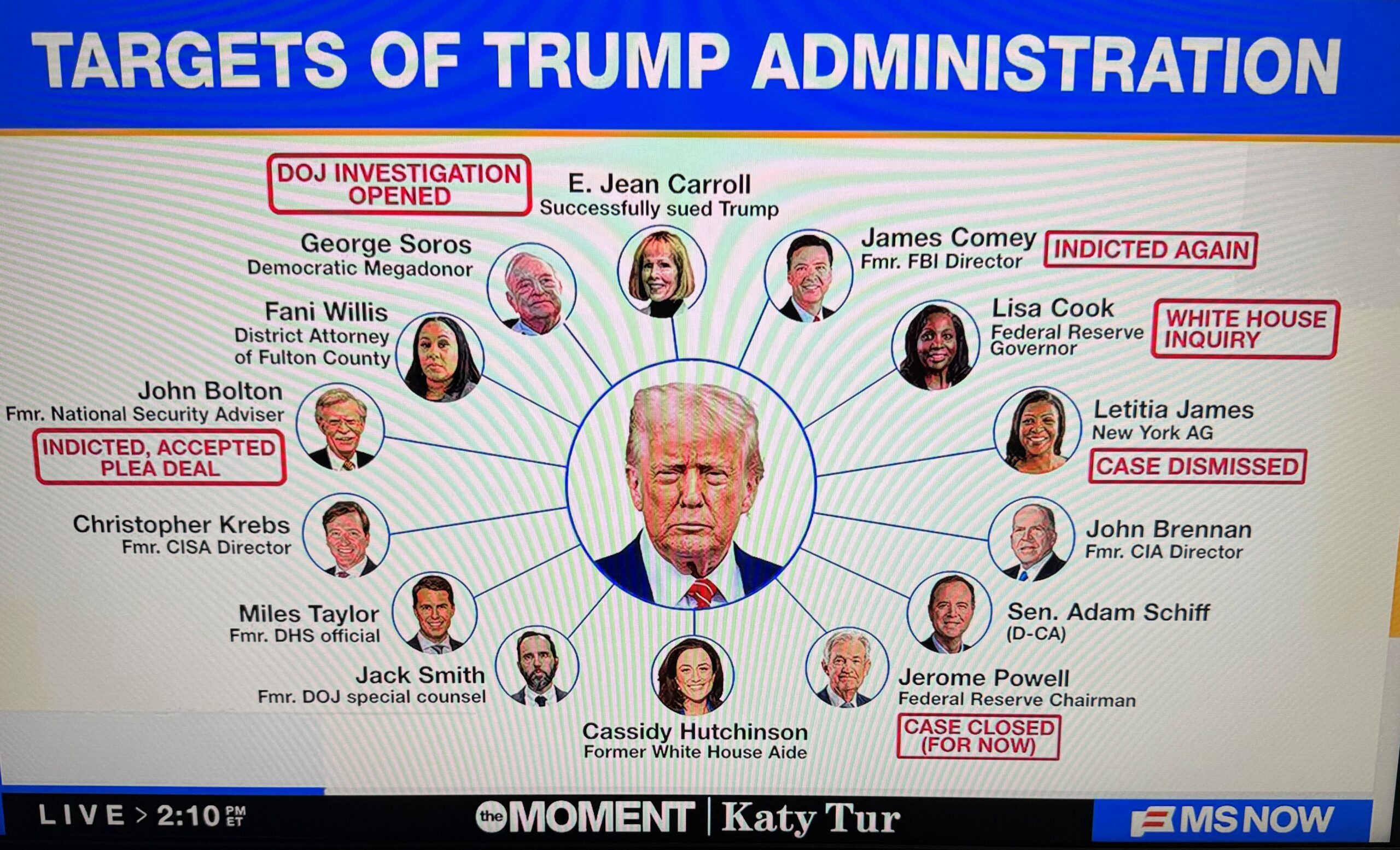
All The President’s Targets
October 13, 2026
Integrity Doesn’t Require a Megaphone
October 12, 2026
WHOSE PURPOSE DOES THIS SERVE?
October 9, 2026

Choreographer of Disaster
October 5, 2026
I Am Not a Politician, and I Have No Partisan Loyalties
October 2, 2026
A Man of Incorruptible Integrity
September 29, 2026

HUMAN VALUES: NOT SPECIFIED
September 23, 2026
You Can’t Do That.
September 21, 2026
I AM SICKENED
September 18, 2026
Read More Articles
The Latest... And Sometimes Greatest
The Courage to Defend a Principle
In 1998, at the height of the Clinton-Lewinsky scandal, Secret Service Director Lewis Merletti was driving to work when a radio report stopped him cold....
September 17, 2026
The Better Angels Among Us
By all appearances, we are becoming less the land of the brave than the land of resentment. Every day is Groundhog Day: same arguments, same...
September 14, 2026
We Remember
On September 11, 2001, nearly 3,000 people were killed in terrorist attacks in New York, at the Pentagon, and aboard Flight 93 in Pennsylvania. More...
September 11, 2026
Mister Roberts!
One of my favorite movies is Mister Roberts, the 1955 comedy-drama set aboard the USS Reluctant in the Pacific during World War II. Henry Fonda...
September 8, 2026
Where’s the Character
In 1984, Wendy’s ran a television commercial featuring the redoubtable Clara Peller, staring at an enormous hamburger bun. Inside was a burger patty smaller than...
August 7, 2026
It Was Important Then. It is Important Today
Freedom of speech in America is under attack, not only when people are denied the right to speak, but when lies, intimidation and the deliberate...
August 3, 2026