Published: November 3, 2025
By Jim Lichtman
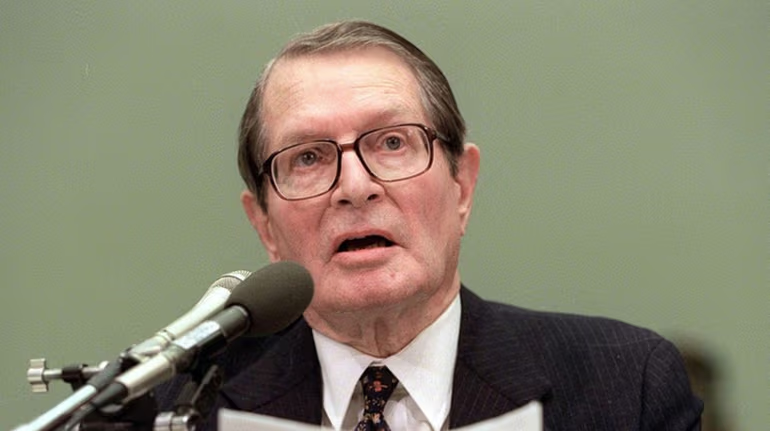
“Republicans won’t speak out against Trump because they’re afraid, politically.”
The measure of a public servant isn’t how tightly they hold onto power, but how faithfully they hold their integrity when the pressure to bend is greatest. Few can withstand the pressure; fewer still have the character and courage to act.
In October 1973, amid the growing Watergate scandal, Attorney General Elliot Richardson faced a test that would ultimately define his life and reaffirm a timeless truth: The Rule of Law Survives Only When Conscience Stands Guard.
Richardson was a man who believed action mattered more than show. A Harvard-educated lawyer and a lifelong Republican, he believed in the process and responsibility of his position. When Congress confirmed him as Attorney General, he was tasked with appointing a special prosecutor to investigate the Watergate scandal. He agreed, but only after making one clear promise: that the prosecutor would be free to pursue the evidence wherever it led.
For Richardson, that promise was non-negotiable.
The nation was already shaken by revelations of political espionage and corruption at the highest levels. Richardson understood that if the investigation were to have any meaning, it had to remain independent, even from the president.
But as the pressure on Richard Nixon intensified, so did the president’s desperation. Nixon ordered Richardson to fire Special Prosecutor Archibald Cox, who had subpoenaed the White House tapes. Richardson refused. He reminded the president of his commitment to Congress and the country. When Nixon repeated the order, Richardson chose to resign rather than break his word.
“I could not in good conscience carry out that instruction,” he later said.
Deputy Attorney General William Ruckelshaus also refused and resigned. Finally, Solicitor General Robert Bork, next in line, complied and fired Cox.
The press called it “The Saturday Night Massacre,” and it shook the country deeply. But beneath the chaos was an act of quiet clarity: two men placing conscience above a command from a president. Richardson and Ruckelshaus reminded the nation that the Constitution depends not on loyalty to power but on loyalty to principle.
Elliot Richardson’s resignation was an act of faith. Faith in the law. Faith in the idea that public service means more than holding office; it means holding fast to what’s right when it matters most and the cost is high.
In an age when expedience often outruns ethics, Richardson’s example endures. He walked away from his post to preserve something far greater than a title: his honor.
Comments

Recent Commentaries

November 4, 2026
October 20, 2026

Has America Lost Its Way?
October 16, 2026
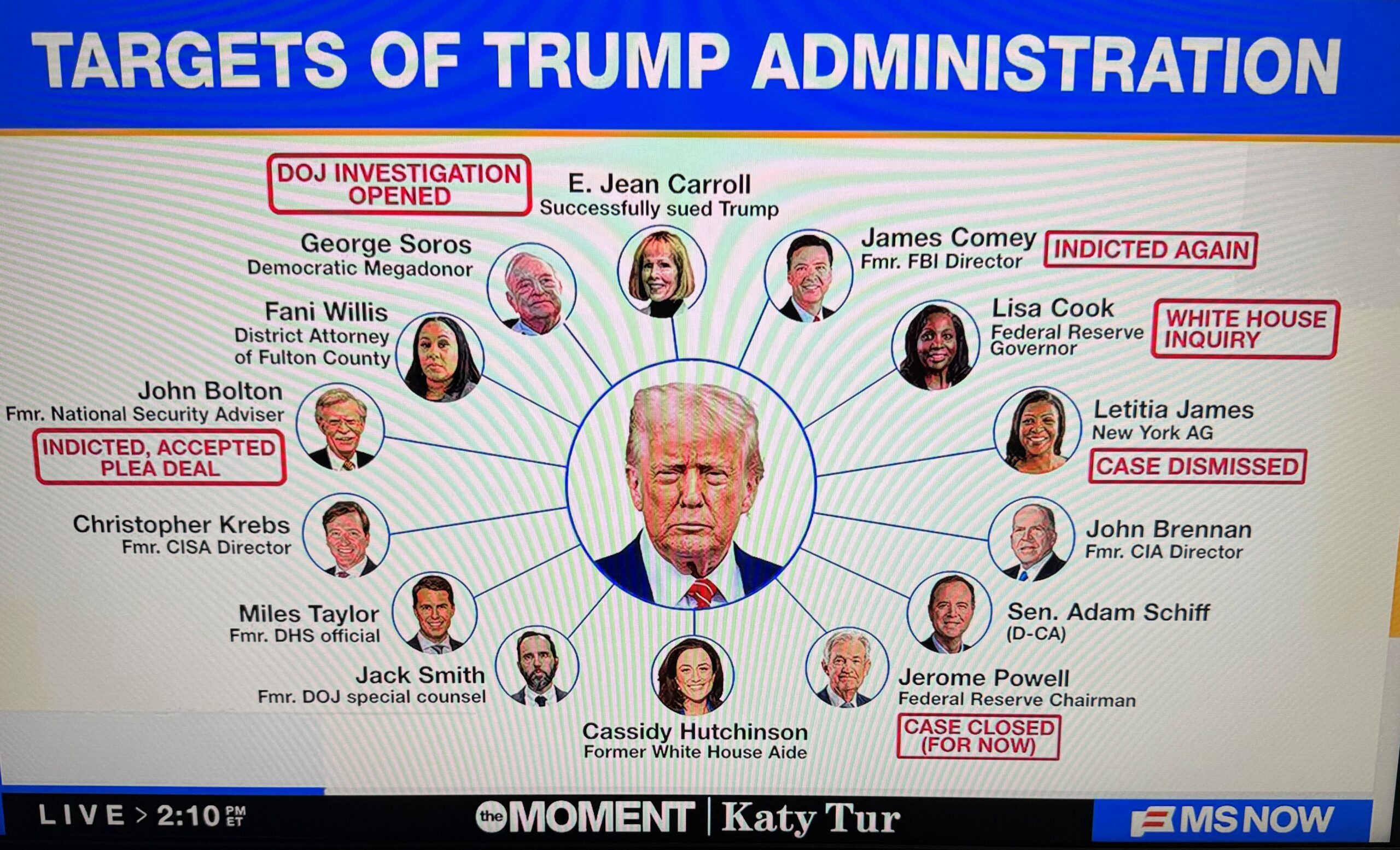
All The President’s Targets
October 13, 2026
Integrity Doesn’t Require a Megaphone
October 12, 2026
WHOSE PURPOSE DOES THIS SERVE?
October 9, 2026

Choreographer of Disaster
October 5, 2026
I Am Not a Politician, and I Have No Partisan Loyalties
October 2, 2026
A Man of Incorruptible Integrity
September 29, 2026

HUMAN VALUES: NOT SPECIFIED
September 23, 2026
You Can’t Do That.
September 21, 2026
Read More Articles
The Latest... And Sometimes Greatest
I AM SICKENED
Tonight, protesters are surrounding the Kennedy Center, the living memorial to John F. Kennedy and the heartbeat of Washington’s cultural life. They are there because...
September 18, 2026
The Courage to Defend a Principle
In 1998, at the height of the Clinton-Lewinsky scandal, Secret Service Director Lewis Merletti was driving to work when a radio report stopped him cold....
September 17, 2026
The Better Angels Among Us
By all appearances, we are becoming less the land of the brave than the land of resentment. Every day is Groundhog Day: same arguments, same...
September 14, 2026
We Remember
On September 11, 2001, nearly 3,000 people were killed in terrorist attacks in New York, at the Pentagon, and aboard Flight 93 in Pennsylvania. More...
September 11, 2026
Mister Roberts!
One of my favorite movies is Mister Roberts, the 1955 comedy-drama set aboard the USS Reluctant in the Pacific during World War II. Henry Fonda...
September 8, 2026
Where’s the Character
In 1984, Wendy’s ran a television commercial featuring the redoubtable Clara Peller, staring at an enormous hamburger bun. Inside was a burger patty smaller than...
August 7, 2026