Published: November 17, 2025
By Jim Lichtman
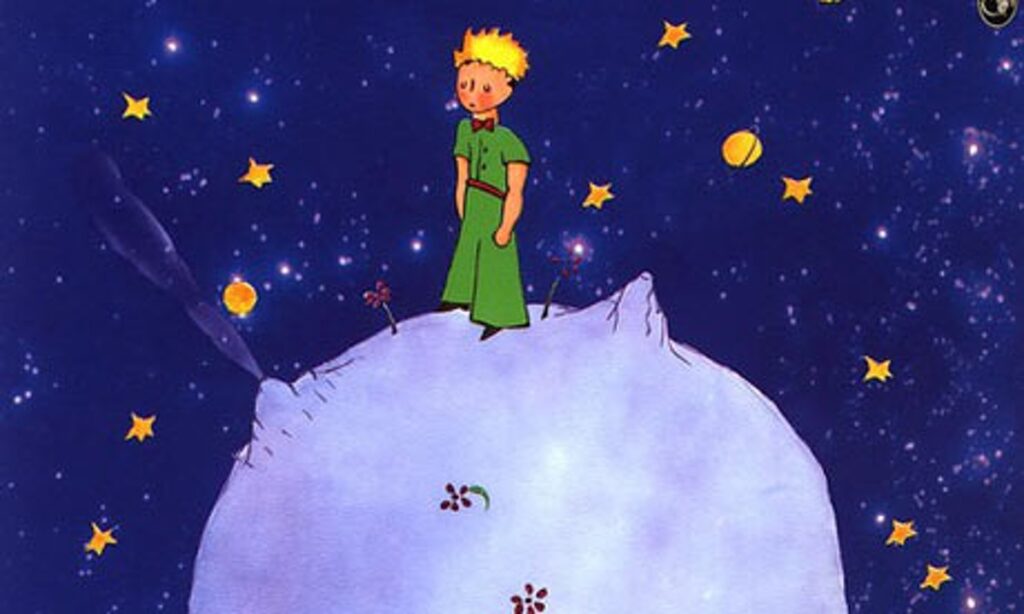
That line from The Little Prince by French aviator and author, Antoine de Saint-Exupéry is the essence of the story and the essence of what we too often forget: that the most meaningful truths, character and love, can’t be photographed or seen. They have to be felt.
You might not think that what many consider a children’s story has anything to teach us about democracy, but it does.
I found myself returning to that line, anticipating Ken Burns’ upcoming series, The American Revolution. What Burns uncovers, time and again, is that the real strength of this country has never been found in its monuments or its rhetoric, but in the values that can’t be seen.
Democracy lives in two places. There’s the part we can see: the speeches, the elections, the debates, the laws. This visible machinery gets most of the attention because it’s loud, dramatic, and easy to argue about. It’s also the part we measure—fundraising, polling, turnout, votes—as if democracy were nothing more than a scoreboard.
But the essential part is the one we don’t see.
Democracy survives, or falters, on the invisible commitments we make to one another: trust in the rule of law, respect for facts, the basic belief that our fellow citizens are not enemies, and the acknowledgment that we are all Americans sharing the same pursuit of happiness. These are quiet virtues. They don’t trend, shout, or fit neatly into a campaign commercial or slogan. Yet without them, all the visible machinery is just noise.
Saint-Exupéry wrote The Little Prince during a time of war. Exiled in the United States, he watched nations fall apart, not just because of invading armies, but because the unseen bonds that once held those societies together had weakened. He understood that the most important forces in our lives—compassion, love, shared responsibility, trust—have to be lived.
The same is true of democracy.
We can point to the statues, the rituals of Election Day, the Constitution. But the strength of our system rests on something deeper: an invisible foundation of respect for each other’s rights, even when we disagree… especially when we disagree.
“What is essential is invisible to the eye.” It was true for Saint-Exupéry. It’s true for us. The question is whether we still value those unseen commitments that hold this fragile Republic together, or whether we’ve become too distracted by the visible drama to notice what’s slipping away.
Comments


Recent Commentaries

HUMAN VALUES: NOT SPECIFIED
September 23, 2026
You Can’t Do That.
September 21, 2026
I AM SICKENED
September 18, 2026

The Courage to Defend a Principle
September 17, 2026
The Better Angels Among Us
September 14, 2026

We Remember
September 11, 2026

Mister Roberts!
September 8, 2026

Where’s the Character
August 7, 2026
It Was Important Then. It is Important Today
August 3, 2026

When Political Identity Replaces Ethical Judgment
July 31, 2026
Read More Articles
The Latest... And Sometimes Greatest
Principles Matter.
A few nights ago, I was watching The Way We Were, a film I’ve seen more times than I can count. This time, a single...
July 28, 2026
All the President’s Men 2.0
“Politics had infiltrated every corner of government—a strong-arm takeover of the agencies by the Nixon White House.” —Bob Woodward and Carl Bernstein, All the President’s...
July 23, 2026
The Threat to November Is Already Here
“Cunning, ambitious, and unprincipled men will be enabled to subvert the power of the people and to usurp for themselves the reins of government.”—George Washington’s...
July 20, 2026
Jon Ossoff and the Conscience of Atticus Finch
I’ve written about Georgia Senator Jon Ossoff before, but after watching his questioning of Jay Clayton, President Trump’s nominee for director of national intelligence (DNI),...
July 17, 2026
Hearts and Minds
There’s a moment in Cool Hand Luke when Luke, played by Paul Newman, is returned to a prison camp after escaping. Determined to break his...
July 16, 2026
The Ethics of Belonging
I recently read a book by a man who has learned some of life’s hardest lessons and, by his own account, is still learning them...
July 14, 2026