Published: November 10, 2025
By Jim Lichtman


“There’s a difference between what you have a right to do and what is right to do.”
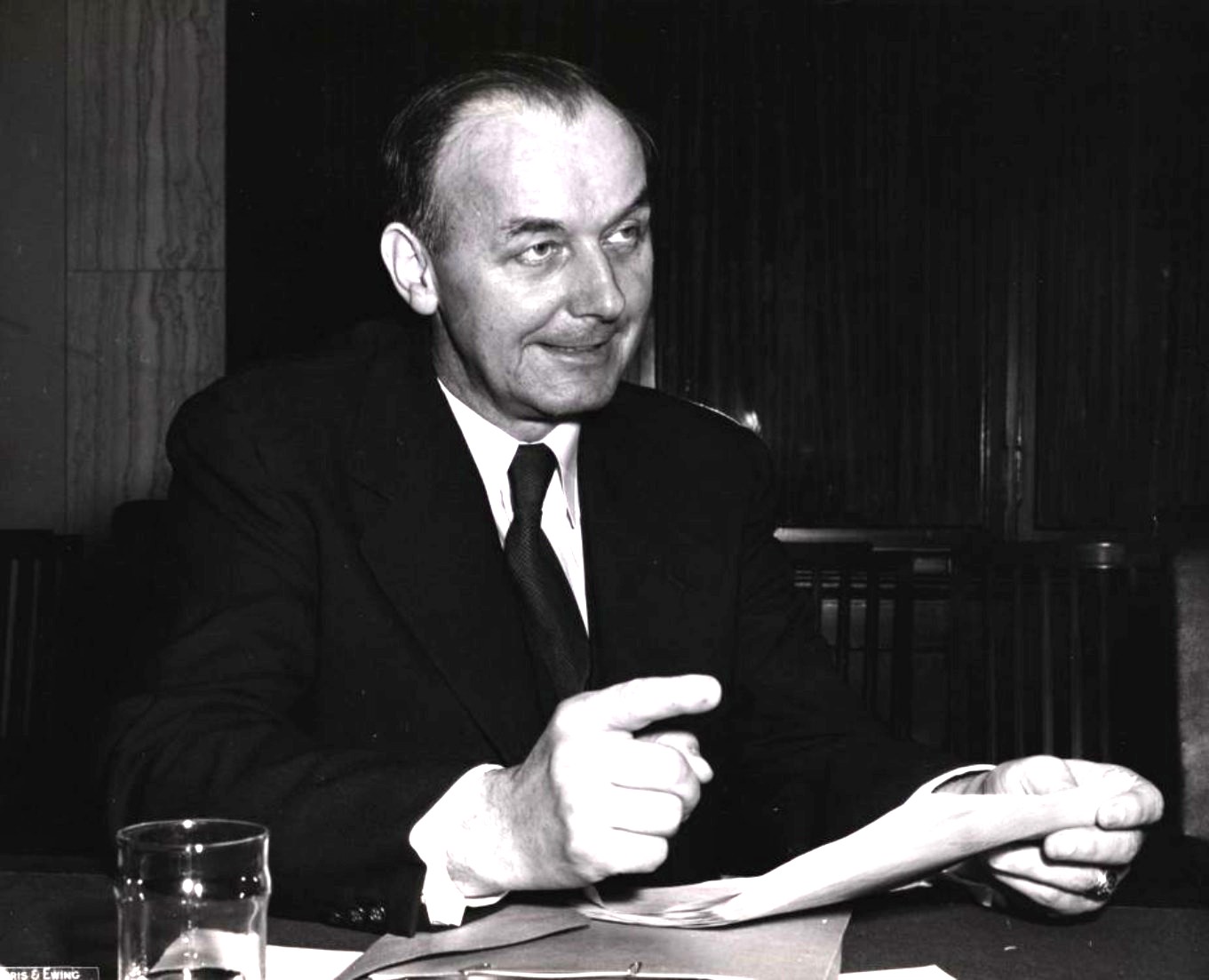
United States Supreme Court Justice Potter Stewart said that. But it was not part of any written Supreme Court opinion or legal case. While it’s been widely quoted as Stewart’s judicial philosophy, there is no record of it in any official Supreme Court opinion, concurrence, or dissent written by Stewart.
Best guess: it likely came from a speech or an interview. But it doesn’t matter. What does matter is that it represented Stewart’s legal philosophy for 23 years.
Appointed by President Eisenhower, Stewart was known for his moderate, pragmatic approach and for emphasizing the distinction between legal rights and moral judgment. The statement aligns with his broader view that the law sets minimum standards for behavior, but ethics and personal conscience go further.
“There’s a difference between what you have a right to do and what IS right to do.”
The Supreme Court—the Roberts Court—has lost its way. And we all suffer for it.
When history is written—and it is being written now—the Roberts Court will go down as one that confused power with principle. Under Chief Justice John Roberts, a conservative majority has used the law not to strengthen faith in justice but to advance ideological and political ends. The Court that once stood as the guardian of balance has become an instrument of imbalance, where rights are expanded for the powerful and narrowed for everyone else.
From its reversal of Roe v. Wade to decisions undermining the Voting Rights Act, environmental protections, and long-standing ethics expectations, this Court has cloaked itself in “originalism” while stripping away the sense of fairness and restraint that once defined judicial leadership. Stewart’s reminder—that having the right to act does not make the act right—is precisely the moral compass that seems to have been discarded.
When a Justice accepts lavish gifts or luxury travel from a political donor and dismisses questions of conflict as “personal friendship,” that’s not ethics—it’s entitlement. When the Chief Justice declines to impose a binding code of conduct on the Court because “we can be trusted,” that’s not leadership—it’s denial. And when the Court shields a former president from accountability under the guise of “immunity,” it doesn’t just distort the law—it betrays the public’s trust in justice itself.
Potter Stewart’s distinction matters because the legitimacy of any court, especially the Supreme Court, rests not on power, but on principle. The Roberts Court may have the right to decide what it decides—but if those decisions deepen cynicism, widen division, and erode the people’s faith in equal justice, they are not right.
The law is supposed to illuminate moral clarity, not obscure it. Stewart understood that. Roberts once did too—or at least he said he did—when he famously described his role as “calling balls and strikes.”
But somewhere between that promise and this present, the Court stopped being an umpire and became a player, favoring one team over another. And unlike baseball, there are no challenges, no video review of the plays in slow motion for a panel of umpires to re-examine and decide.
Stewart understood that the law is not a weapon for power but a guide for conscience. A reminder that what’s legal is not always what’s right. The Roberts Court may have the right to rule as it does, but in doing so it has weakened the one quality every democracy depends on: trust.
“There’s a difference between what you have a right to do and what is right to do.”
Comments
Leave a Comment

Recent Commentaries

November 4, 2026
October 20, 2026

Has America Lost Its Way?
October 16, 2026
All The President’s Targets
October 13, 2026
Integrity Doesn’t Require a Megaphone
October 12, 2026

WHOSE PURPOSE DOES THIS SERVE?
October 9, 2026

Choreographer of Disaster
October 5, 2026
I Am Not a Politician, and I Have No Partisan Loyalties
October 2, 2026
A Man of Incorruptible Integrity
September 29, 2026

HUMAN VALUES: NOT SPECIFIED
September 23, 2026
You Can’t Do That.
September 21, 2026
Read More Articles
The Latest... And Sometimes Greatest
I AM SICKENED
Tonight, protesters are surrounding the Kennedy Center, the living memorial to John F. Kennedy and the heartbeat of Washington’s cultural life. They are there because...
September 18, 2026
The Courage to Defend a Principle
In 1998, at the height of the Clinton-Lewinsky scandal, Secret Service Director Lewis Merletti was driving to work when a radio report stopped him cold....
September 17, 2026
The Better Angels Among Us
By all appearances, we are becoming less the land of the brave than the land of resentment. Every day is Groundhog Day: same arguments, same...
September 14, 2026
We Remember
On September 11, 2001, nearly 3,000 people were killed in terrorist attacks in New York, at the Pentagon, and aboard Flight 93 in Pennsylvania. More...
September 11, 2026
Mister Roberts!
One of my favorite movies is Mister Roberts, the 1955 comedy-drama set aboard the USS Reluctant in the Pacific during World War II. Henry Fonda...
September 8, 2026
Where’s the Character
In 1984, Wendy’s ran a television commercial featuring the redoubtable Clara Peller, staring at an enormous hamburger bun. Inside was a burger patty smaller than...
August 7, 2026
Bob R writes: What a great examination about the differences between what you have a right to do and what IS right to do.