Published: May 12, 2010
By Jim Lichtman
At the lowest point in America’s war for independence from Great Britain, General George Washington read an inspiring essay written by British-born sympathizer Thomas Paine. Entitled, The American Crisis, it began like this –

“These are the times that try men’s souls: The summer soldier and the sunshine patriot will, in this crisis, shrink from the service of their country; but he that stands it now, deserves the love and thanks of man and woman.
“Tyranny, like hell, is not easily conquered; yet we have this consolation with us, that the harder the conflict, the more glorious the triumph. What we obtain too cheap, we esteem too lightly: it is dearness only that gives every thing its value. Heaven knows how to put a proper price upon its goods; and it would be strange indeed if so celestial an article as freedom should not be highly rated.”
At the end of the essay, Paine signed the document, Common Sense. Common sense for the common man.
Washington immediately ordered the pamphlet read to his Continental Army prior to the Battle of Trenton in order to rouse and remind his troops what they were all fighting for – Freedom, independence to choose their own destiny.
According to my trusty 1941 edition World Book Encyclopedia, Paine was “a political and philosophical writer born in Norfolk, England.” He attempted many professions before meeting Benjamin Franklin, the man who would change his life. “While employed as editor of the Pennsylvania Magazine, in 1776, [Paine] became suddenly prominent through the publication of his pamphlet… Common Sense.
And here’s an interesting little note: “In 1777, [Paine] was made secretary to the Congressional Committee of Foreign Affairs, but was dismissed two years later for making use of diplomatic secrets in his writings.
“Paine went to Europe in 1787, spent time in France, then back to England where he published his Rights of Man, a reply to [Edmund] Burke’s attack on the French Revolution.” Ever the revolutionary, Paine’s Rights spelled out a representative government with numerous social programs as a solution to the paralyzing poverty of commoners through tax measures. As a result, Paine became unpopular in England, but was glorified in France where “he was elected a member of the French National Convention.”
Unfortunately, “his opposition to the execution of Louis XVI offended the radicals in the Convention and he was excluded from the body and imprisoned.” According to Daniel Wheeler’s The Life and Writings of Thomas Paine, “Paine narrowly escaped execution.
“A guard walked through the prison placing a chalk mark on the doors of the prisoners who were due to be sent to the guillotine on the morrow. He placed a 4 on the door of Paine’s cell, but Paine’s door had been left open to let a breeze in, because Paine was seriously ill at the time. That night, his other three cell mates closed the door, thus hiding the mark inside the cell. The next day their cell was overlooked. “The Angel of Death” had passed over Paine. He kept his head and survived the few vital days needed to be spared by the fall of Robespierre.”
Paine returned to the United States in 1802 but took little part in public affairs. While his early efforts in the patriotic cause won him the gratitude of the Americans, his attack on religion in The Age of Reason alienated many.
At the time of his death at age 72, Paine’s obituary in the New York Citizen read in part: “He had lived long, did some good and much harm.” Only six mourners came to his funeral, two of whom were black.
Political leader and writer Robert G. Ingersoll wrote of Paine, “Thomas Paine had passed the legendary limit of life. One by one most of his old friends and acquaintances had deserted him. Maligned on every side, execrated, shunned and abhorred – his virtues denounced as vices – his services forgotten – his character blackened, he preserved the poise and balance of his soul. He was a victim of the people, but his convictions remained unshaken. He was still a soldier in the army of freedom, and still tried to enlighten and civilize those who were impatiently waiting for his death…”
“I love the man,” Paine wrote in Common Sense, “that can smile in trouble that can gather strength from distress, and grow brave by reflection. ‘Tis the business of little minds to shrink, but he whose heart is firm, and whose conscience approves his conduct, will pursue his principles unto death.”
Thomas Paine remains a man of passionate words and principled character.
Comments


Recent Commentaries

Has America Lost Its Way?
October 16, 2026
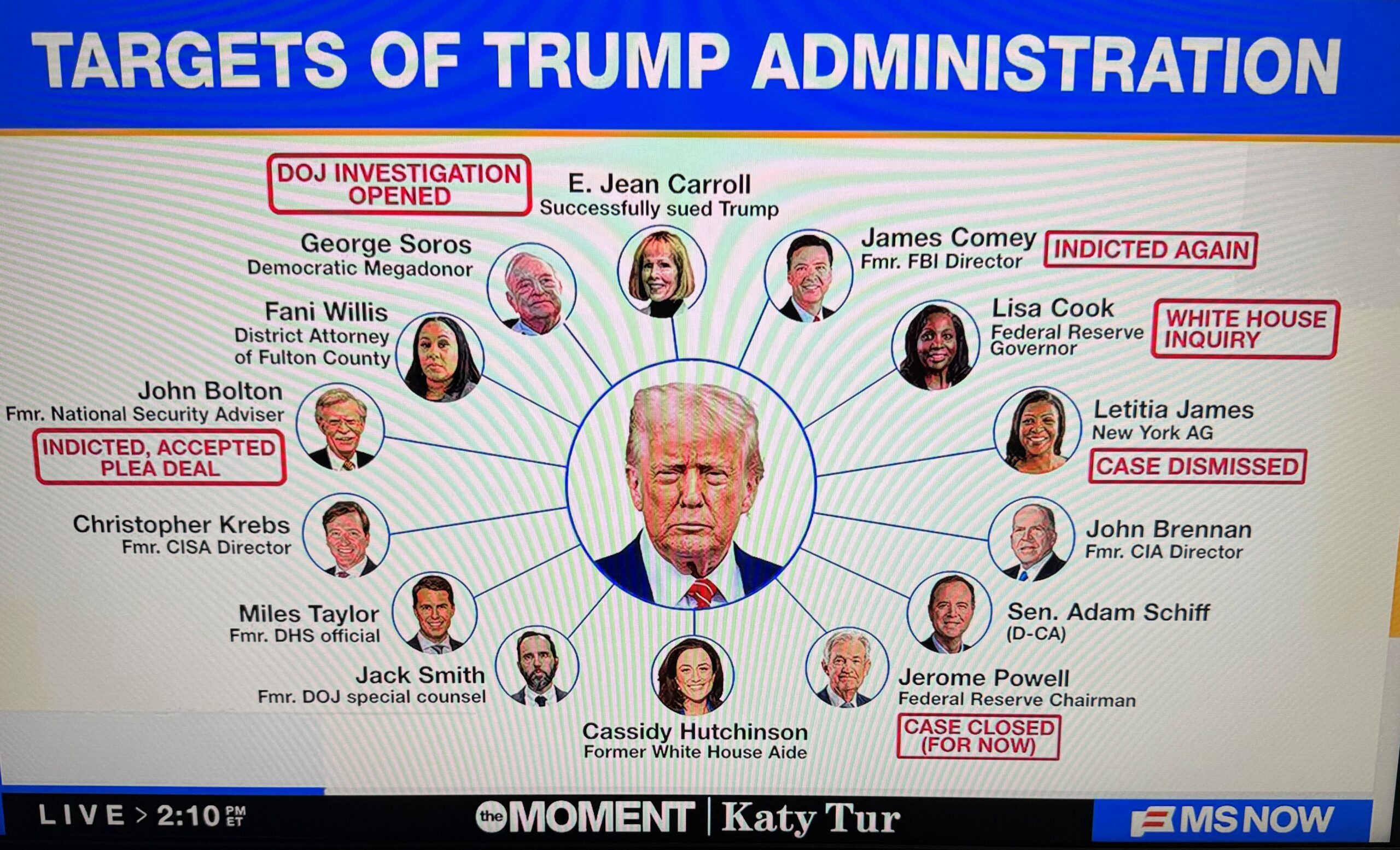
All The President’s Targets
October 13, 2026
Integrity Doesn’t Require a Megaphone
October 12, 2026

WHOSE PURPOSE DOES THIS SERVE?
October 9, 2026

Choreographer of Disaster
October 5, 2026
I Am Not a Politician, and I Have No Partisan Loyalties
October 2, 2026
A Man of Incorruptible Integrity
September 29, 2026

HUMAN VALUES: NOT SPECIFIED
September 23, 2026
You Can’t Do That.
September 21, 2026
I AM SICKENED
September 18, 2026
Read More Articles
The Latest... And Sometimes Greatest
The Courage to Defend a Principle
In 1998, at the height of the Clinton-Lewinsky scandal, Secret Service Director Lewis Merletti was driving to work when a radio report stopped him cold....
September 17, 2026
The Better Angels Among Us
By all appearances, we are becoming less the land of the brave than the land of resentment. Every day is Groundhog Day: same arguments, same...
September 14, 2026
We Remember
On September 11, 2001, nearly 3,000 people were killed in terrorist attacks in New York, at the Pentagon, and aboard Flight 93 in Pennsylvania. More...
September 11, 2026
Mister Roberts!
One of my favorite movies is Mister Roberts, the 1955 comedy-drama set aboard the USS Reluctant in the Pacific during World War II. Henry Fonda...
September 8, 2026
Where’s the Character
In 1984, Wendy’s ran a television commercial featuring the redoubtable Clara Peller, staring at an enormous hamburger bun. Inside was a burger patty smaller than...
August 7, 2026
It Was Important Then. It is Important Today
Freedom of speech in America is under attack, not only when people are denied the right to speak, but when lies, intimidation and the deliberate...
August 3, 2026