Published: December 22, 2025
By Jim Lichtman
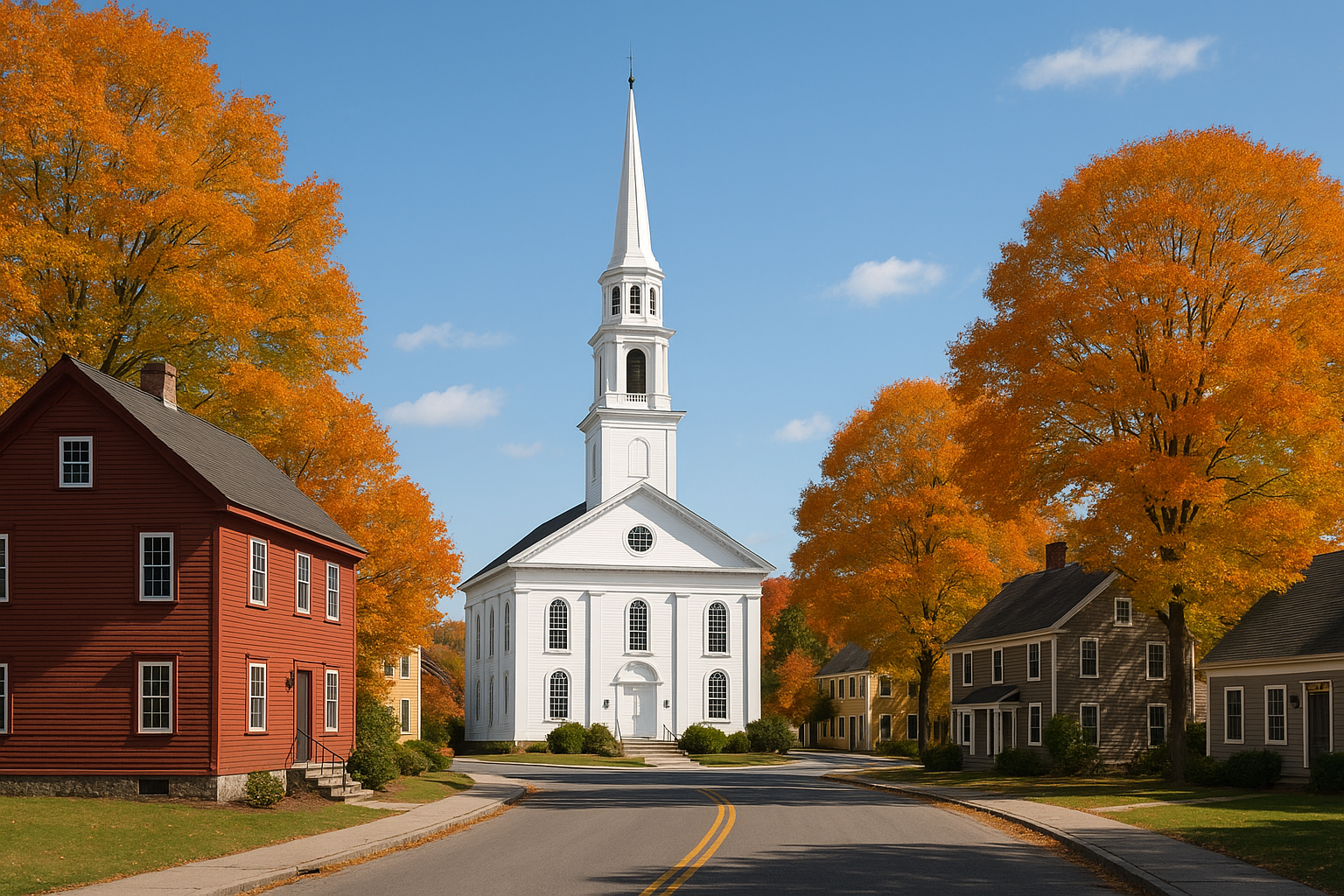

In the winter of his century, Charles Dickens walked a London powered by industry but running short on warmth. People moved past one another as if connection were a luxury they could no longer afford. Wealth and want lived on opposite sides of the same street, and compassion, even at Christmas time, was showing signs of strain.
Dickens wrote his story to remind a distracted nation that caring for one another isn’t an old sentiment; it’s the foundation of any society that hopes to call itself decent.
The story I offer now comes out of that same concern: a time when neighbors can feel distant, when the simple act of caring may be the most necessary, and most overlooked, virtue we have.
* * *
The attic of the old, white-steepled church wasn’t a destination so much as a memory. It was one of those places people knew existed but rarely bothered to visit. The narrow wooden staircase creaked with each step. Dust drifted, and the light from two small windows fell across boxes, props, and the remnants of Christmas pageants long past.
Emily Carter set down her cardboard box and paused.
She had volunteered to help decorate the sanctuary for the town’s annual Christmas program, a tradition that still held meaning in this small New England community. Her fourth graders would be singing this year, and Emily was the kind of teacher who didn’t think twice about pitching in. Someone mentioned the attic might have old garlands and ornaments. It was the simple thing to do. And she believed simple things mattered.
Emily liked this town. People were good-hearted. They held doors, asked about your family, left casseroles on porches when someone fell ill. But lately something shifted. People were still polite, always polite, but there was a tiredness behind the smiles. It felt as though everyone had grown more inward, drifting into a quiet, remote solitude.
She moved a stack of hymnals aside, checked a few boxes marked “Christmas 1954,” and noticed a narrow shelf tucked beneath the eaves. On it rested a single envelope, placed carefully, as though it had been left for someone who would eventually arrive.
Emily picked it up. The faded handwriting read, “To whoever finds this when we need it most.”
She opened the envelope. Inside was a folded letter and a small brass key. She unfolded the letter.
To whoever finds this:
If this letter has reached your hands, then its moment has arrived. I cannot know your name or your time, only that the need will be clear when you read these words.
I have returned home after years abroad. The town is much as I left it, courteous, steady, neighborly, but beneath that familiar warmth, I found a quiet weariness. Hearts are tired.
During my years overseas, I walked through a foreign city during its darkest nights. Windows shattered. Fear was prevalent. Yet in many homes, candles burned. People helped one another by that light, sometimes not knowing names, only recognizing need.
Those candles reminded me of a memory from childhood.
Mr. Harrington was a shopkeeper in town. In winter storms, he crafted lanterns from tin and glass. He placed them in his windows and kept several behind the counter. When someone looked discouraged, he sent them home with one.
“Light’s meant to be shared,” he would say. “Helps folks find their way.”
So if you’ve found this in a quiet moment when the town feels tired and unsettled, take the light it carries, and when your way is clear again, leave it burning for the next traveler.
Emily lowered the letter, aware of the key. She looked up. Behind a timber beam, half-hidden in shadow, was a small wooden door she hadn’t noticed before. She crossed the attic and fitted the key into the lock. Hard to turn, but with a little effort, she opened the door. Inside, stacked neatly on wooden shelves, were lanterns… dozens of them. Each one handmade—tin frames carefully soldered, wavy glass panes fitted with care.
This wasn’t storage. It was preparation.
Emily stood quietly, the letter still open in her hand, understanding that this work had not been abandoned. It had been waiting. …
Tomorrow: Part II
Comments


Recent Commentaries

Has America Lost Its Way?
October 16, 2026

All The President’s Targets
October 13, 2026
Integrity Doesn’t Require a Megaphone
October 12, 2026

WHOSE PURPOSE DOES THIS SERVE?
October 9, 2026

Choreographer of Disaster
October 5, 2026
I Am Not a Politician, and I Have No Partisan Loyalties
October 2, 2026
A Man of Incorruptible Integrity
September 29, 2026

HUMAN VALUES: NOT SPECIFIED
September 23, 2026

You Can’t Do That.
September 21, 2026
I AM SICKENED
September 18, 2026
Read More Articles
The Latest... And Sometimes Greatest
The Courage to Defend a Principle
In 1998, at the height of the Clinton-Lewinsky scandal, Secret Service Director Lewis Merletti was driving to work when a radio report stopped him cold....
September 17, 2026
The Better Angels Among Us
By all appearances, we are becoming less the land of the brave than the land of resentment. Every day is Groundhog Day: same arguments, same...
September 14, 2026
We Remember
On September 11, 2001, nearly 3,000 people were killed in terrorist attacks in New York, at the Pentagon, and aboard Flight 93 in Pennsylvania. More...
September 11, 2026
Mister Roberts!
One of my favorite movies is Mister Roberts, the 1955 comedy-drama set aboard the USS Reluctant in the Pacific during World War II. Henry Fonda...
September 8, 2026
Where’s the Character
In 1984, Wendy’s ran a television commercial featuring the redoubtable Clara Peller, staring at an enormous hamburger bun. Inside was a burger patty smaller than...
August 7, 2026
It Was Important Then. It is Important Today
Freedom of speech in America is under attack, not only when people are denied the right to speak, but when lies, intimidation and the deliberate...
August 3, 2026