Published: September 19, 2012
By Jim Lichtman
It began with an e-mail exchange with Senior Analyst Jamie O’Boyle of the Center for Cultural Studies & Analysis.
“I assume you saw the Gallup report (Sept. 18) on Democrats driving economic confidence since the Democratic Convention,” O’Boyle’s message began.
It was 6:30 a.m. yesterday when I received both the Gallupreport and Jamie’s e-mail.
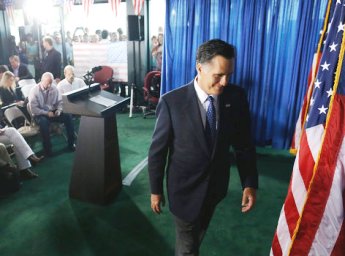
Gallup said that “Democrats and, to a lesser degree, independents continue to buoy U.S. economic confidence in September.”
“If there is any doubt that politics can influence economic confidence, one need look no further than this month’s GallupDaily tracking data. Gallup has long documented that Americans’ confidence in the economy, as well as their broader satisfaction with the country’s direction, is colored by the party affiliation of the sitting president.
“This month, Gallup found a dramatic upward shift in Democrats’ and independents’ confidence, starting on opening night of the Democratic National Convention. That could have resulted from positive messages about the economy in prime-time speeches by first lady Michelle Obama and San Antonio Mayor Julian Castro. Or it could simply reflect the sense of optimism the convention conveyed about the election, making Democrats and Democratic-leaning independents feel generally more upbeat.”
“I find [the data] interesting,” O’Boyle writes, “because the economy is, in large part, a mental construct – if you believe it is good, you spend money, there is more money in circulation, and it gets better. If you don’t believe in it and you don’t spend money, it gets worse. The economy, in a large part, is driven by what we believe it to be.
“So it looks like the Democrats, and some Independents now have a rosier picture of the economy since the convention. Part of this comes from the Democrats’ good job of reminding people where we were when Obama took office. (Joe Biden summarized: ‘Bin Laden is dead and General Motors is alive.’ ”
“But another major factor,” O’Boyle says, “is that the conventions gave people a side-by-side look at the two candidates, their running mates, and their platforms. For Democrats, the worry that this was going to be a close election that they could likely lose vanished. Economic confidence rose. This also implies that simply the idea of a Republican victory is enough to damage the economy. They don’t have to actually do anything; they just have to show up.”
I hastily wrote back: “Perception is reality!” And Jamie quickly corrected.
“Perception is not reality: it is our reality. So, people act on perception as if it is reality. In human systems – stock market, politics – that changes the outcomes of the system. In natural systems such as climate change and evolution, it doesn’t work so well. You can deny it. You can rationalize your belief. It’s still going to happen whether you believe it or not.”
Actually, I meant to say: “Perception can become reality” – as we saw in the Middle East and news interviews where angry Muslims attacked a U.S. consulate and killed Ambassador Chris Stevens due, largely, to a stupid, insulting video that ridiculed Islam that had originated in the U.S. With the circulation of the video on YouTube, many Muslims falsely believe that Americans hate Muslims.
“The thing about perception,” Jamie writes, “is that, once fixed, it can be slow to adapt. A lot of our assumptions are fixed when we first encounter whatever the issue is. Our opinions on what race is and where the problems lie are fixed in our youth. People my age are used to seeing interracial dating but many are still uncomfortable with it. People under 30 don’t know anything else. The national debate on race will change dramatically as the boomers die off and are replaced as opinion leaders.
“Perceptions hang on long after they have ceased to reflect contemporary reality. Democrats used to be the party of segregation; Republicans were the party of Lincoln. That changed but it took decades. Republicans strong suits were business and defense. Now they are visibly losing that distinctive difference to the Democrats. The Republicans may not believe in evolution, but evolution clearly believes in them.”
Comments

Recent Commentaries
Mister Roberts!
September 8, 2026
Where’s the Character
August 7, 2026
It Was Important Then. It is Important Today
August 3, 2026
When Political Identity Replaces Ethical Judgment
July 31, 2026
Principles Matter.
July 28, 2026

All the President’s Men 2.0
July 23, 2026
The Threat to November Is Already Here
July 20, 2026
Jon Ossoff and the Conscience of Atticus Finch
July 17, 2026
Hearts and Minds
July 16, 2026

The Ethics of Belonging
July 14, 2026
Read More Articles
The Latest... And Sometimes Greatest
The Best of Us
“We choose to go to the Moon in this decade and do the other things—not because they are easy, but because they are hard.” When...
July 9, 2026
The Standard Washington Set
Much has been written about George Washington, our first American president: his command of the Continental Army, his leadership in the fragile birth of a...
July 6, 2026
Who We Were. Who We Are…
Today, America is 250 years old. This Fourth of July, amid deep national division, it seems worth asking a simple question: Which of our country’s...
July 4, 2026
Are We Still Worthy of What They Declared?
Conclusion: The Words That Made Us and Still Must. In December of 1776, the Revolution was not moving toward triumph. It was close to collapse....
July 3, 2026
Are We Still Worthy of What They Declared?
Part 2: Common Sense Are we still capable of that kind of clarity when it matters most? There was a moment in the birth of...
July 1, 2026
Are We Still Worthy of What They Declared?
For the most part, my high school history classes consisted of names, dates, documents, and battles. What I’ve learned since then — through historians like...
June 29, 2026