Published: June 11, 2026
By Jim Lichtman
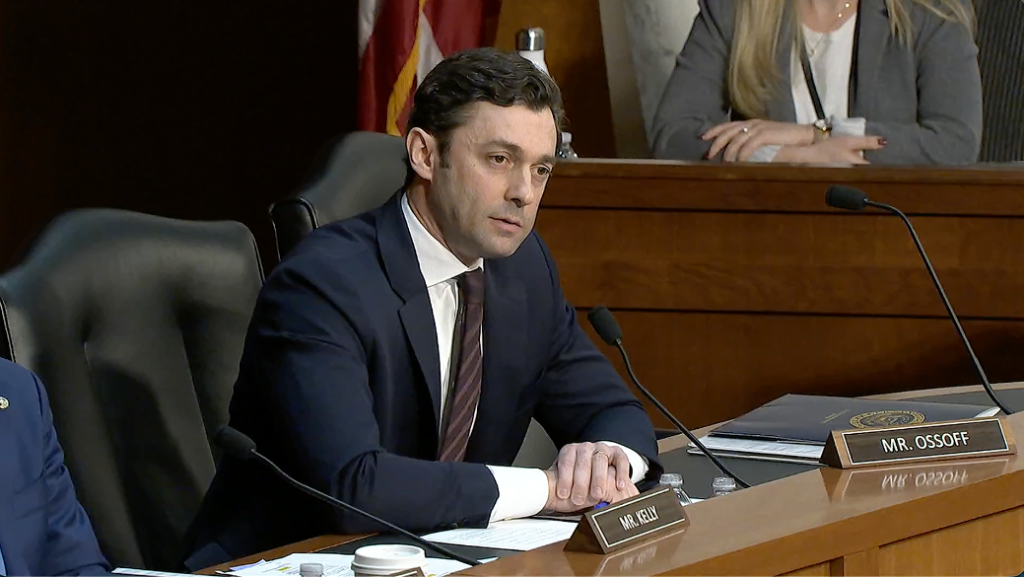
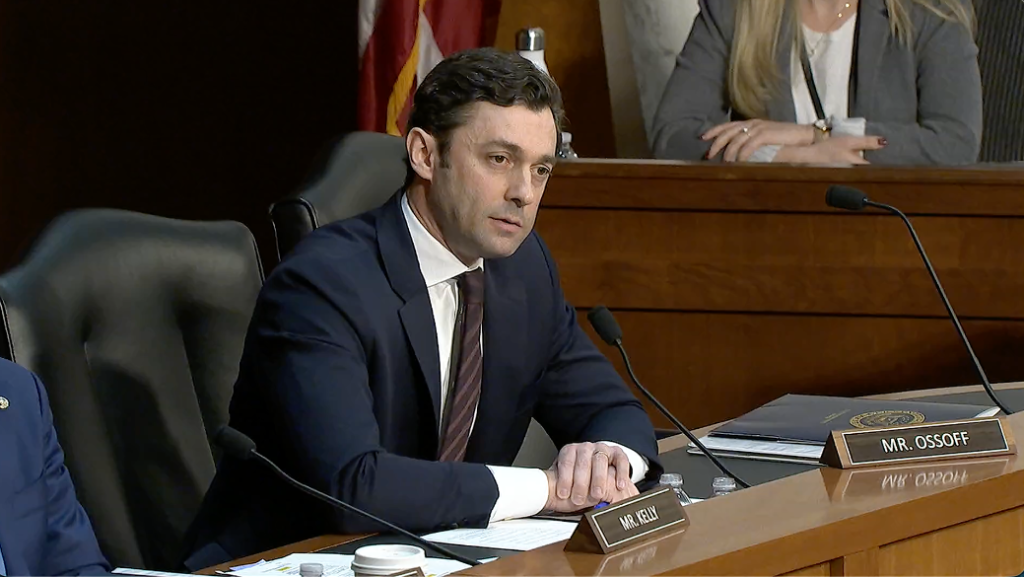
I’ve been listening to and watching Democratic Senator Jon Ossoff of Georgia for more than a year now: his speeches, his questions in Senate hearings, his oversight work.
And I keep coming back to one clear thought: Jon Ossoff should not only be re-elected to the Senate. He should consider running for President.
Why?
Because he does something that has become exceedingly rare in Congress.
He just does his job.
He does not turn hearings into auditions for cable news. He does not use every question as a campaign clip. He prepares. He listens. He asks precise questions. He follows the facts. He pushes witnesses for answers. He exposes what government is doing wrong, then tries to fix it. Watch this Senate hearing as Ossoff questions several intelligence officials, including Director of National Intelligence Tulsi Gabbard.
He is not building a brand around outrage. His public presence is not built on gimmicks, stunts, or constant self-promotion. Even when his speeches go viral, they go viral because of what he is saying, not because he is performing for attention.
When he talks about corruption, he speaks of it as a system: money, power, favors, influence, and self-dealing distorting government from the inside. That is why his criticism of Trump feels different. It is not just Trump-is-bad politics. It is a larger argument about public corruption, abuse of power, and the collapse of accountability. He has pushed legislation to ban members of Congress from trading individual stocks because public office should not be a private investment opportunity.
When military families reported dangerous and unhealthy conditions in privatized housing, Ossoff didn’t issue a press release and move on. He did his job by helping lead a bipartisan investigation. He put the problem before the public. He asked why families serving this country were being left to live with mold, unsafe conditions, and bureaucratic indifference.
Before politics, Ossoff worked on documentaries about corruption, human-rights abuses, and abuses of power around the world. That matters. It helps explain why corruption is not a side issue for him. It is central to how he understands power, how it is used, how it is abused, and how ordinary people pay the price when no one is held accountable.
He connects his criticism of corruption to something larger: a vision of America rooted in democratic ideals, civil rights, accountability, and the simple proposition that public office is a trust, not a weapon.
When constituents in Georgia are stuck in federal red tape — veterans waiting for benefits, families unable to get answers from agencies — his office has built a reputation for actually trying to solve the problem. That, too, is the job. Not the speech. The service.
He has also shown a willingness to take politically risky positions when he believes a moral line has to be drawn. That doesn’t mean everyone will agree with every position he takes. But it does suggest that he is not simply calculating every move by asking what will get him the easiest headline or the safest applause.
And that is what separates him from so many others in Congress. Too many treat hearings as theater, and public service as a stepping stone to fame.
Ossoff is different. He is serious without being theatrical, and ambitious without looking desperate for attention. He represents Georgia, but in the way he conducts himself, he also represents what many Americans still want from public life: competence, restraint, preparation, decency, and accountability.
He just does his job.
And these days, that alone feels almost presidential.
Comments


Recent Commentaries

Choreographer of Disaster
October 5, 2026
I Am Not a Politician, and I Have No Partisan Loyalties
October 2, 2026
A Man of Incorruptible Integrity
September 29, 2026

HUMAN VALUES: NOT SPECIFIED
September 23, 2026
You Can’t Do That.
September 21, 2026
I AM SICKENED
September 18, 2026
The Courage to Defend a Principle
September 17, 2026
The Better Angels Among Us
September 14, 2026

We Remember
September 11, 2026
Mister Roberts!
September 8, 2026
Read More Articles
The Latest... And Sometimes Greatest
Where’s the Character
In 1984, Wendy’s ran a television commercial featuring the redoubtable Clara Peller, staring at an enormous hamburger bun. Inside was a burger patty smaller than...
August 7, 2026
It Was Important Then. It is Important Today
Freedom of speech in America is under attack, not only when people are denied the right to speak, but when lies, intimidation and the deliberate...
August 3, 2026
When Political Identity Replaces Ethical Judgment
The political and cultural landscape has become a minefield of conflicting beliefs, many now rooted less in public policy than in personal identity. One of...
July 31, 2026
Principles Matter.
A few nights ago, I was watching The Way We Were, a film I’ve seen more times than I can count. This time, a single...
July 28, 2026
All the President’s Men 2.0
“Politics had infiltrated every corner of government—a strong-arm takeover of the agencies by the Nixon White House.” —Bob Woodward and Carl Bernstein, All the President’s...
July 23, 2026
The Threat to November Is Already Here
“Cunning, ambitious, and unprincipled men will be enabled to subvert the power of the people and to usurp for themselves the reins of government.”—George Washington’s...
July 20, 2026