Published: July 1, 2026
By Jim Lichtman
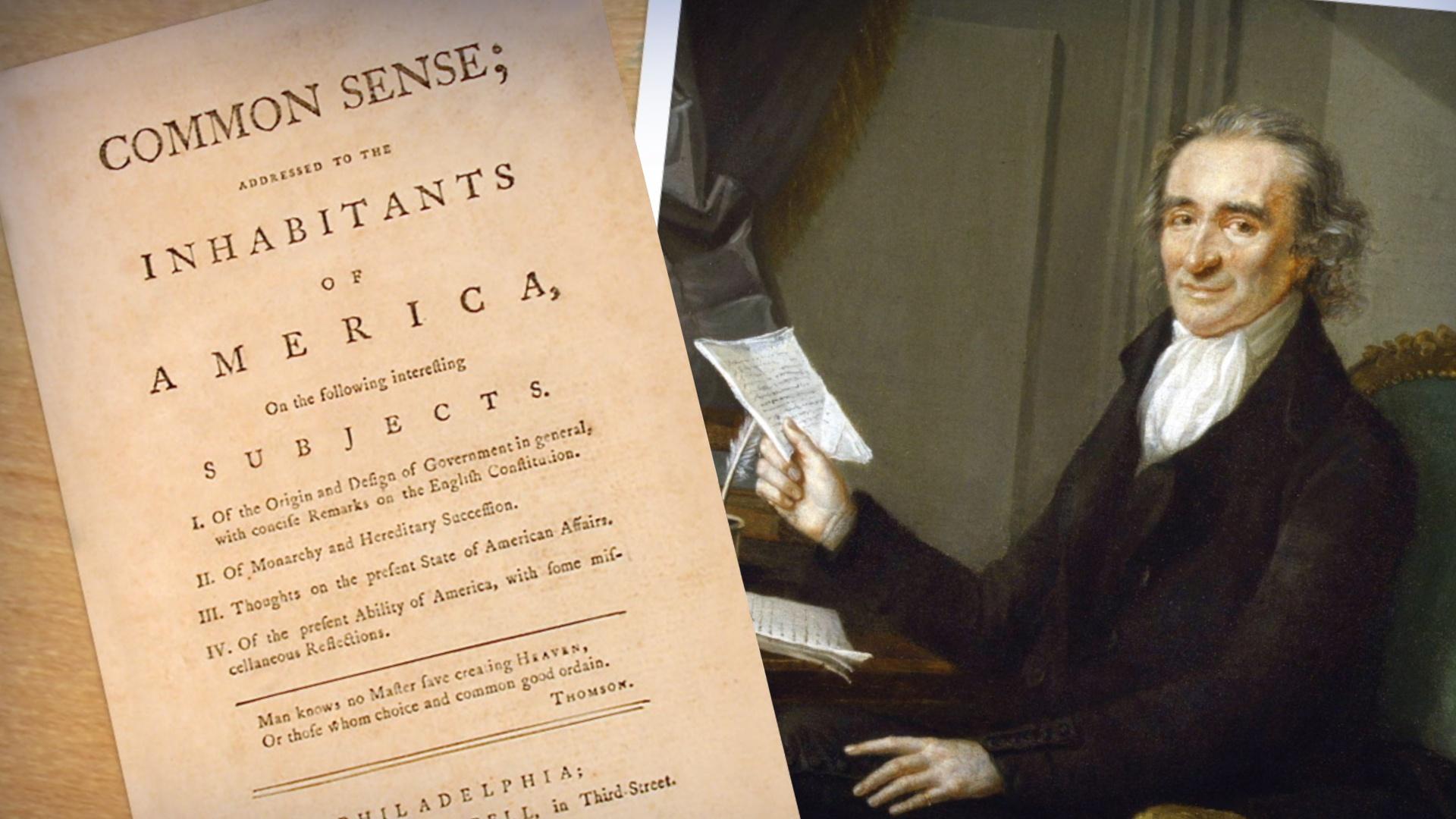
Part 2: Common Sense
Are we still capable of that kind of clarity when it matters most?
There was a moment in the birth of the country when uncertainty did not simply fade; it was confronted. Not with noise or outrage, but with moral clarity. A moment when a divided people were forced to face a harder question: not what is safe, but what is right.
That moment did not come from a battlefield or a vote in Congress. It came from a pamphlet that was plainspoken and impossible to ignore.
Thomas Paine’s Common Sense did not create the grievances. It did not invent doubt. It exposed the cost of living with it:
“A long habit of not thinking a thing wrong gives it a superficial appearance of being right.” What had been accepted as familiar was now revealed as unjust.
On Monday, we looked at the uncertainty that preceded independence. Today, we turn to the moment when doubt gave way to conviction, not because the risks disappeared, but because the principle became unavoidable.
Going to high school, I lived about three miles from the modest cottage in New Rochelle, New York, where Thomas Paine once lived. At the time, it was simply a marker for history. Years later, however, I came to understand more fully what happened there and why it was and still is important to remember.
In the winter of 1776, as the colonies debated fiercely over whether independence was wise, Paine’s short pamphlet changed the national conversation. Common Sense turned principle into responsibility. It didn’t ask readers to admire an idea. It demanded they act on it.
Timing mattered. But clarity mattered more.
Paine did not write to prolong the debate. He wrote to end avoidance:
“Everything that is right or reasonable pleads for separation,” he argued. It was not strategy. It was an ethical conclusion.
The son of a corset maker, Thomas Paine was not a man of status. Born in 1737 in Thetford, England, he moved from job to job, endured hardship, and knew little success. But he possessed something more important: a commitment to fairness and the courage to say what others would not. As an Excise Officer, he argued for better treatment of workers, not because it was popular, but because it was right.
In 1774, nearly forty and with little to show for his efforts, Paine met Benjamin Franklin in London, who encouraged him to begin again in America. Paine arrived in Philadelphia late that year, sick and nearly penniless. Within months, he was writing and editing, doing what he would soon do better than anyone else: he made complex ideas clear and moral choices unavoidable.
“The sun never shined on a cause of greater worth,” Paine wrote, elevating the question of independence beyond politics to responsibility.
Then came the line that removed any refuge in neutrality: “O ye that love mankind! Ye that dare oppose not only the tyranny but the tyrant, stand forth!”
Through Common Sense, Paine made clear that clarity demands response. And in 1776, enough people chose not to look away. They did not act because the outcome was certain. They acted because the principle was.
Friday, the conclusion.
Comments
Recent Commentaries

Choreographer of Disaster
October 5, 2026
I Am Not a Politician, and I Have No Partisan Loyalties
October 2, 2026
A Man of Incorruptible Integrity
September 29, 2026

HUMAN VALUES: NOT SPECIFIED
September 23, 2026
You Can’t Do That.
September 21, 2026
I AM SICKENED
September 18, 2026
The Courage to Defend a Principle
September 17, 2026
The Better Angels Among Us
September 14, 2026
We Remember
September 11, 2026
Mister Roberts!
September 8, 2026
Read More Articles
The Latest... And Sometimes Greatest
Where’s the Character
In 1984, Wendy’s ran a television commercial featuring the redoubtable Clara Peller, staring at an enormous hamburger bun. Inside was a burger patty smaller than...
August 7, 2026
It Was Important Then. It is Important Today
Freedom of speech in America is under attack, not only when people are denied the right to speak, but when lies, intimidation and the deliberate...
August 3, 2026
When Political Identity Replaces Ethical Judgment
The political and cultural landscape has become a minefield of conflicting beliefs, many now rooted less in public policy than in personal identity. One of...
July 31, 2026
Principles Matter.
A few nights ago, I was watching The Way We Were, a film I’ve seen more times than I can count. This time, a single...
July 28, 2026
All the President’s Men 2.0
“Politics had infiltrated every corner of government—a strong-arm takeover of the agencies by the Nixon White House.” —Bob Woodward and Carl Bernstein, All the President’s...
July 23, 2026
The Threat to November Is Already Here
“Cunning, ambitious, and unprincipled men will be enabled to subvert the power of the people and to usurp for themselves the reins of government.”—George Washington’s...
July 20, 2026