Published: June 22, 2026
By Jim Lichtman
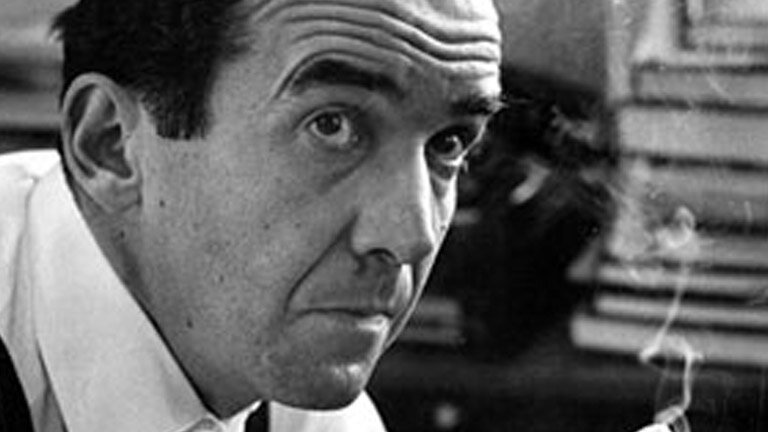
As our nation nears its 250th anniversary, an uneasy emotional connection to the past has returned—one rooted in fear, and the question of who gets to define the “real” America.
Reading The Murrow Boys, by Stanley Cloud and Lynne Olson—which traces Edward R. Murrow’s journalistic coverage from World War II through the Red Scare of the 1950s—it’s hard not to hear echoes in today’s Culture Wars.
Murrow’s confrontation with Senator Joseph McCarthy was not simply a fight between a journalist and a demagogue. It was a test of ethical values in public life.
What happens when fear becomes a political weapon?
What happens when accusation replaces evidence?
What happens when loyalty to country is confused with loyalty to one man, one movement, or one narrow definition of America?
In the 1950s, the threat was Communism. Teachers, writers, actors, government employees, journalists, and ordinary citizens could find themselves accused of disloyalty, often with little more than insinuation as evidence. McCarthy understood the power of accusation. He knew that in a frightened country, the charge itself could be enough. Careers could be ruined, reputations destroyed, and institutions intimidated before the truth ever had a chance to catch up.
Murrow’s great contribution was not that he denied the existence of Communism or dismissed legitimate Cold War fears. It was that he exposed how fear was being weaponized against democratic principles. He understood that the real danger was not only what America feared from the outside, but what America might become on the inside if fear replaced fairness, courage, restraint, and truth.
And that is where the comparison to today becomes uncomfortable.
Culture Wars are not a replay of McCarthyism. The targets are different. The language has changed. The machinery of accusation no longer depends on congressional hearings or network broadcasts; it moves at digital speed with emotional impact: fear of internal enemies, suspicion of corrupted institutions, and the belief that the country is being taken over from within.
A recent CNN poll validates that anxiety.
The poll found that Americans are sharply divided over whether society has gone too far in accepting different cultures, gender identities, sexual orientations, and backgrounds. Just under half say it has gone too far, while a little more than half reject that view. The country is not merely divided over policy; it is divided over the meaning of acceptance itself. That makes the Culture Wars more than a political fight. It makes them an ethical test.
Then—the question was whether someone was truly American or secretly Communist.
Today—the question is often whether someone is truly patriotic, truly moral, truly democratic, truly Christian, truly anti-racist, truly pro-family, or truly loyal to the “real” America. Political disagreement becomes not a difference of judgment, but evidence of betrayal.
The issue is not that all cultural disputes are fabricated or unimportant. Many involve real questions about what children should be taught, how honestly we confront race and history, where religious liberty meets public responsibility, how we protect free speech without excusing cruelty, and how a country balances individual rights with a shared civic life. These are serious issues that deserve serious argument.
But when a society begins treating every disagreement as proof of corruption or disloyalty, it stops debating and starts hunting.
That was the danger Murrow saw in McCarthy’s America. It may be the danger we’re flirting with again.
Murrow still matters because he reminds us that democracy cannot survive on fear alone. It depends on ethical values that are easy to praise and hard to practice: fairness when we are angry, truth when lies are useful, restraint when outrage is profitable, and courage when silence is safer.
The deeper question is not whether today’s Culture Wars are exactly like the Red Scare. They are not. The question is whether we are once again allowing fear to become an excuse for abandoning the very values we claim to defend.
Comments


Recent Commentaries
All The President’s Targets
October 13, 2026
Integrity Doesn’t Require a Megaphone
October 12, 2026
WHOSE PURPOSE DOES THIS SERVE?
October 9, 2026

Choreographer of Disaster
October 5, 2026
I Am Not a Politician, and I Have No Partisan Loyalties
October 2, 2026
A Man of Incorruptible Integrity
September 29, 2026

HUMAN VALUES: NOT SPECIFIED
September 23, 2026
You Can’t Do That.
September 21, 2026
I AM SICKENED
September 18, 2026
The Courage to Defend a Principle
September 17, 2026
Read More Articles
The Latest... And Sometimes Greatest
The Better Angels Among Us
By all appearances, we are becoming less the land of the brave than the land of resentment. Every day is Groundhog Day: same arguments, same...
September 14, 2026
We Remember
On September 11, 2001, nearly 3,000 people were killed in terrorist attacks in New York, at the Pentagon, and aboard Flight 93 in Pennsylvania. More...
September 11, 2026
Mister Roberts!
One of my favorite movies is Mister Roberts, the 1955 comedy-drama set aboard the USS Reluctant in the Pacific during World War II. Henry Fonda...
September 8, 2026
Where’s the Character
In 1984, Wendy’s ran a television commercial featuring the redoubtable Clara Peller, staring at an enormous hamburger bun. Inside was a burger patty smaller than...
August 7, 2026
It Was Important Then. It is Important Today
Freedom of speech in America is under attack, not only when people are denied the right to speak, but when lies, intimidation and the deliberate...
August 3, 2026
When Political Identity Replaces Ethical Judgment
The political and cultural landscape has become a minefield of conflicting beliefs, many now rooted less in public policy than in personal identity. One of...
July 31, 2026