Published: March 16, 2018
By Jim Lichtman
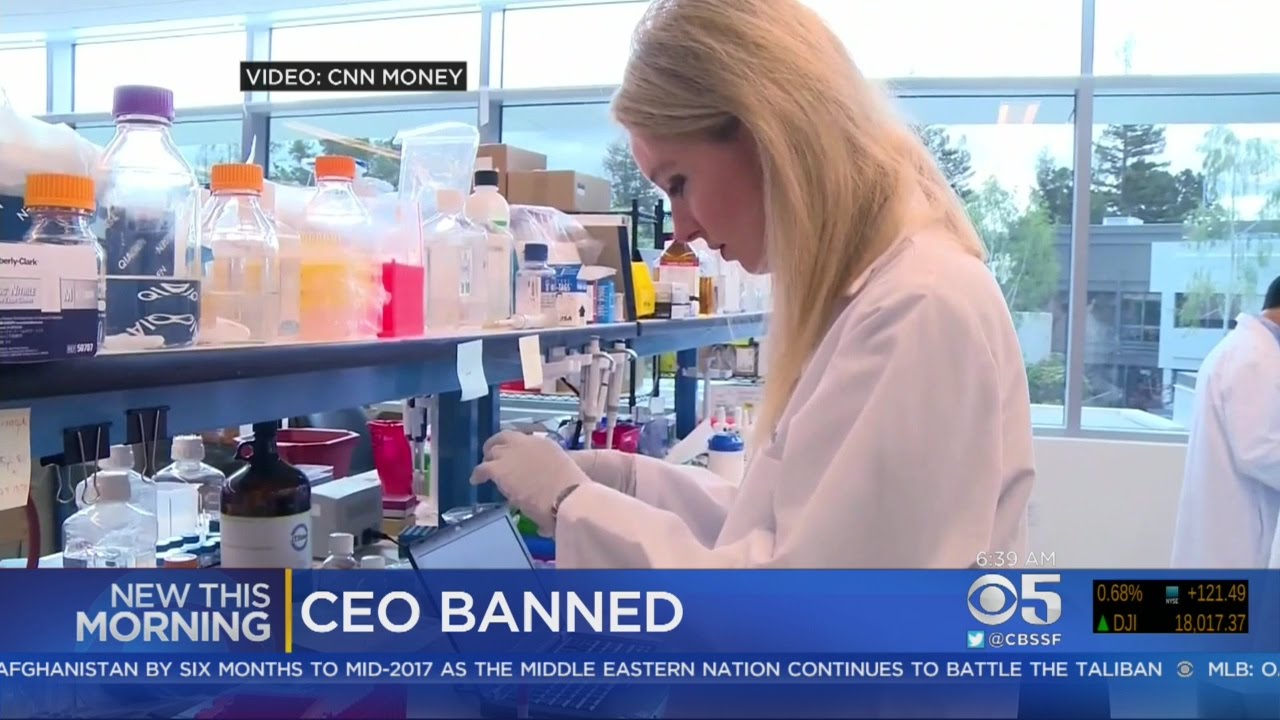
It sounded like a good idea.
(Strike that.)
It sounded like a great idea: one simple blood test that required a single finger prick would give “everyday Americans unlimited control over their health,” The New York Times writes (Mar. 15).
The key promise Theranos founder Elizabeth Holmes made to investors and potential clients: “that drawing a tiny amount of blood at a time from each patient’s finger,” Wall Street Journal reporter John Carreyrou described in 2015, “…will lead to earlier diagnoses and save lives.”
Sadly, it was not to be.
Holmes was not as cocky or social media-loathsome as Martin Shkreli, not by a long shot. However, like the Pharma Bro, she was considered a whiz-kid “with her invention: a technology cheaply done at a local drugstore that could detect a range of illnesses, from diabetes to cancer.”
With her on-stage presence and black turtlenecks, Holmes was often compared to Apple genius, Steve Jobs.
“On Wednesday,” The Times continues, “the Securities and Exchange Commission charged Ms. Holmes… with widespread fraud, accusing her of exaggerating — even lying — about her technology while raising $700 million from investors.”
The magic that was Holmes began to unravel after a series of stories by Investigative Reporter John Carreyrou.
“One former senior employee,” Carreyrou wrote in 2015, “says Theranos was routinely using the device, named Edison after the prolific inventor, for only 15 tests in December 2014. Some employees were leery about the machine’s accuracy, according to the former employees and emails reviewed by The Wall Street Journal.
“In a complaint to regulators, Carreyrou adds, “one Theranos employee accused the company of failing to report test results that raised questions about the precision of the Edison system. Such a failure could be a violation of federal rules for laboratories, the former employee said.”
After the Journal story, Holmes admitted to employees “that its vaunted core technology was actually faulty and that Theranos administered almost all of its blood tests using competitors’ equipment,” Vanity Fair wrote (Sept. 6, 2016).
“The charges were brought against Theranos,” the BBC News reports (Mar. 14), “and its former president Ramesh ‘Sunny’ Balwani as well as Ms. Holmes….
“The regulator alleged that Theranos, Ms. Holmes and Mr. Balwani made a series of false and misleading statements in investor presentations, product demonstrations and interviews.
“It said: ‘Theranos, Holmes, and Balwani claimed that Theranos’ products were deployed by the US Department of Defense on the battlefield in Afghanistan and on medevac helicopters and that the company would generate more than $100m in revenue in 2014.
“ ‘In truth, Theranos’ technology was never deployed by the US Department of Defense and generated a little more than $100,000 in revenue from operations in 2014…
“ ‘In truth, according to the SEC’s complaint, Theranos’ proprietary analyzer could complete only a small number of tests, and the company conducted the vast majority of patient tests on modified and industry-standard commercial analyzers manufactured by others.’ ”
As for Journal reporter Carreyrou, he’s got a much-anticipated book version of the story, entitled Bad Blood, due to hit bookshelves later this year, and… Jennifer Lawrence is set to star in the film version.
Comments


Recent Commentaries
All The President’s Targets
October 13, 2026
Integrity Doesn’t Require a Megaphone
October 12, 2026

WHOSE PURPOSE DOES THIS SERVE?
October 9, 2026

Choreographer of Disaster
October 5, 2026
I Am Not a Politician, and I Have No Partisan Loyalties
October 2, 2026
A Man of Incorruptible Integrity
September 29, 2026
HUMAN VALUES: NOT SPECIFIED
September 23, 2026

You Can’t Do That.
September 21, 2026
I AM SICKENED
September 18, 2026
The Courage to Defend a Principle
September 17, 2026
Read More Articles
The Latest... And Sometimes Greatest
The Better Angels Among Us
By all appearances, we are becoming less the land of the brave than the land of resentment. Every day is Groundhog Day: same arguments, same...
September 14, 2026
We Remember
On September 11, 2001, nearly 3,000 people were killed in terrorist attacks in New York, at the Pentagon, and aboard Flight 93 in Pennsylvania. More...
September 11, 2026
Mister Roberts!
One of my favorite movies is Mister Roberts, the 1955 comedy-drama set aboard the USS Reluctant in the Pacific during World War II. Henry Fonda...
September 8, 2026
Where’s the Character
In 1984, Wendy’s ran a television commercial featuring the redoubtable Clara Peller, staring at an enormous hamburger bun. Inside was a burger patty smaller than...
August 7, 2026
It Was Important Then. It is Important Today
Freedom of speech in America is under attack, not only when people are denied the right to speak, but when lies, intimidation and the deliberate...
August 3, 2026
When Political Identity Replaces Ethical Judgment
The political and cultural landscape has become a minefield of conflicting beliefs, many now rooted less in public policy than in personal identity. One of...
July 31, 2026