Published: August 21, 2009
By Jim Lichtman
Former Washington Post columnist, teacher and good friend Colman McCarthy wrote the following eulogy about his friendship with Eunice Shriver. I thought it was well worth repeating.
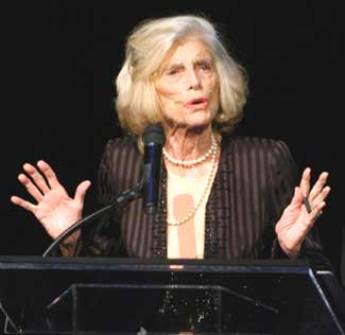
My friendship with Eunice Kennedy Shriver began in 1966, when I bumped into her — literally — during a pickup basketball game on her backyard court at the Timberlawn estate in Rockville. I had begun working that year for her husband, R. Sargent Shriver, at President Lyndon B. Johnson’s Office of Economic Opportunity. Before the game, her husband counseled me: Guard her closely; she can be ferocious. Throw an elbow or two and go all-out to win. The worse you beat her, the more she’ll like you.
Eunice Shriver devoted her life to full-effort people. On the Bermuda grass at Timberlawn, where she hosted a camp for children with mental disabilities, and later at the Special Olympics, she could be found gamboling among the participants — encouraging, prodding, congratulating. She truly believed, and she instilled in those events, the idea that it’s not what you achieve in life, it’s what you overcome. A morally driven and politically astute woman, she sprung open doors globally for the mentally disabled and opened minds that had too long been closed to accepting people with Down syndrome and other disabilities.
With friends, she spoke of herself rarely, and usually in the context of her effort to increase funding for those with mental disabilities. She might say something in passing about how she’d been prodding her brother Teddy to hold hearings for a bill.
More often, though, she played interviewer, probing for information about what you’d been doing lately, pressing to find out whether you were using your gifts well. I’d come away from lunches and dinners with Eunice thinking to myself, “I need to become a better person.”
Eunice and her Sargie had the soundest kind of marriage: a union based less on being together than on working together. They raised five loving and lovable children, each now working to fulfill their mother’s call to “believe in possibility.”
Affectionately playful about their mother’s piety — a life-size statue of the Virgin Mary stood a few paces from the front door of the Shriver home in Potomac — the children had T-shirts made for all the guests at Eunice’s 85th birthday party with an image of their mother’s face beneath the words “St. Eunice.” So canonized by vox populi, she flashed a smile — fittingly beatific.
I’ve often wondered why no biography, nor even a New Yorker profile, has been written about this singular woman who bettered the lives of uncounted millions of the otherwise rejected. Of late, we’ve had biographies of Brooke Astor, Helen Gurley Brown, Julia Child, Mae West and Gypsy Rose Lee (two of her, no less).
Apparently fewer people are interested in reading 400 pages about a life of unglittery goodness and giving. About a woman who was faithful to one husband, one church, one mission — and, worse, who was never jailed, never overdosed and never threw things at stakeout reporters.
No matter. Eunice Shriver had no taste for fame-seeking. She had no publicist, no agent, no handler. All she had was energy, of a steeled kind that never stalled out. It was Olympian energy, special in its grace.
Comments

Recent Commentaries

A Light From Christmas Past – Part II
December 23, 2025

A Light from Christmas Past
December 22, 2025

Nothing Beside Remains
December 16, 2025

Finding Common Ground, and Why It Matters
December 15, 2025
What Dickens Meant Us to Remember
December 11, 2025
Looking for America’s Soul
December 8, 2025
Here We Are Again
December 5, 2025
The Steady Endurance of Leadership
December 1, 2025

Under the Wild Sky, We Gather
November 27, 2025
London, 1943.
November 25, 2025
Read More Articles
The Latest... And Sometimes Greatest
Faith in The Goodness of Ordinary People, Even in The Darkest Hours
During his years in wartime London, U.S. Ambassador John Gilbert Winant absorbed the suffering around him. He was known for walking the streets during the...
November 24, 2025
The Forgotten Statesman and the Freedom He Helped Preserve
John Gilbert Winant was one of the rarest of figures in public life: a three-term Republican governor from New Hampshire whose leadership wasn’t calculated but...
November 20, 2025
“What Is Essential Is Invisible to The Eye.”
That line from The Little Prince by French aviator and author, Antoine de Saint-Exupéry is the essence of the story and the essence of what...
November 17, 2025
The Move That Mattered Most
I’ve played chess about two dozen times, and every match feels less like a game and more like mental boot camp. It’s not difficult; it’s...
November 13, 2025
The Difference Between Right and Rights
“There’s a difference between what you have a right to do and what is right to do.” United States Supreme Court Justice Potter Stewart said...
November 10, 2025
Integrity and Edmund G. Ross
Moments of character often define a person—sometimes even a nation. I first came across Senator Ross’s story when reading President Kennedy’s Profiles in Courage. What...
November 6, 2025