Published: July 21, 2025
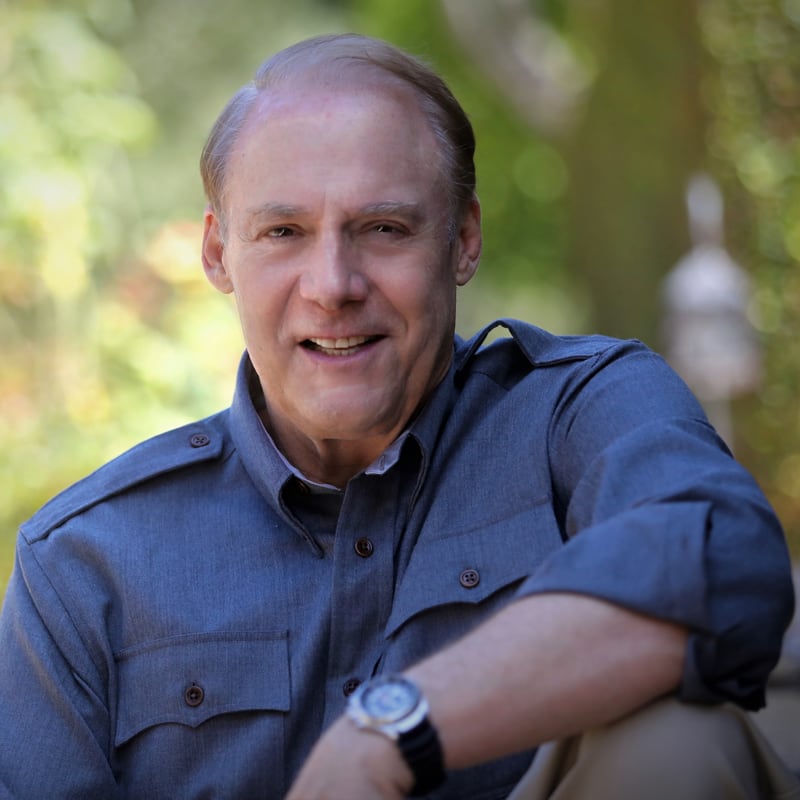
By Jim Lichtman

Photo by Shane Collins
A recent graduation speech by a young philosophy major, Clair Doyle, at Northwestern University in Illinois, began with a deceptively simple question that stopped me in my tracks, and caused me to think: Am I asking the right questions?
It’s not the typical question you hear in a commencement address. But it’s the kind we need to be asking, now more than ever.
“For my entire life,” she said, “everyone around me championed faith — belief in the unknown and a steadfast trust that things would work out. They urged me to set my doubts aside, but I remember, even back then, my dissatisfaction with blind faith.”
Her experience at college—where students debated everything from war to animal rights—taught her something else: to sit with uncertainty, to test her own assumptions, and to become comfortable not with answers, but with the questions themselves.
Throughout history, ethical progress has rarely come from having the “right” answers, but from those willing to ask the difficult questions, questions that challenge convention, confront injustice, and push society toward something better.
Lincoln himself wrestled with the greatest moral question of his time—slavery—revisiting his own assumptions as he searched not for what was politically safe, but for what was ethically right.
She reminded her classmates that Socrates was sentenced to death not for sedition, but for “corrupting the youth”—teaching them to ask hard questions. “We are not learning to blindly believe,” she said. “We are learning to doubt, and to question and to criticize.”
It’s no surprise that kind of thinking is under attack.
We’re living in a time when asking questions—real questions about ethics, truth, and responsibility—is often viewed as disloyal, disruptive, or even dangerous.
But real ethical growth doesn’t come from comfort or certainty. It comes from discomfort—the quiet inner work of examining our assumptions, weighing competing values, and admitting when we’ve been wrong.
Doubt, far from being a weakness, is a necessary condition for growth. Without it, there’s no correction, no learning, no reform—only repetition. And in a democracy, repetition without reflection hardens into dogma, unyielding and unexamined.
Some believe that our universities are “indoctrinating” students with liberal ideology. But what’s actually happening is more powerful—and more threatening to those who rely on blind allegiance. Students are being taught to think. To challenge. To doubt. And that is what authoritarian minds fear most.
So, let me ask a few questions of my own:
Do we teach our children to reason, or to defend belief?
Are we more committed to being right, or to doing what’s right?
What happens to democracy when moral courage is replaced by tribal loyalty?
These are not academic exercises. They are essential ethical questions. How we answer them will help define the direction and meaning of our lives—not only as individuals, but as a nation.
We cannot build a just society on certainty alone—especially not the kind of certainty that refuses to be questioned. We need to embrace the kind of moral humility that Socrates lived and died for. The kind that this graduate found—not in her answers, but in her doubts.
I ask questions to point us toward ethical clarity. But even then, I have to remind myself that certainty can be comforting, and doubt, though harder, is often more honest.
Doyle concluded her speech by encouraging her peers not simply to “change the world,” but to do something harder: to change their minds.
We would do well to do the same.
Comments
Recent Commentaries
It Doesn’t Take a Rocket Genius to Recognize the Danger
October 22, 2026

November 4, 2026
October 20, 2026

Has America Lost Its Way?
October 16, 2026
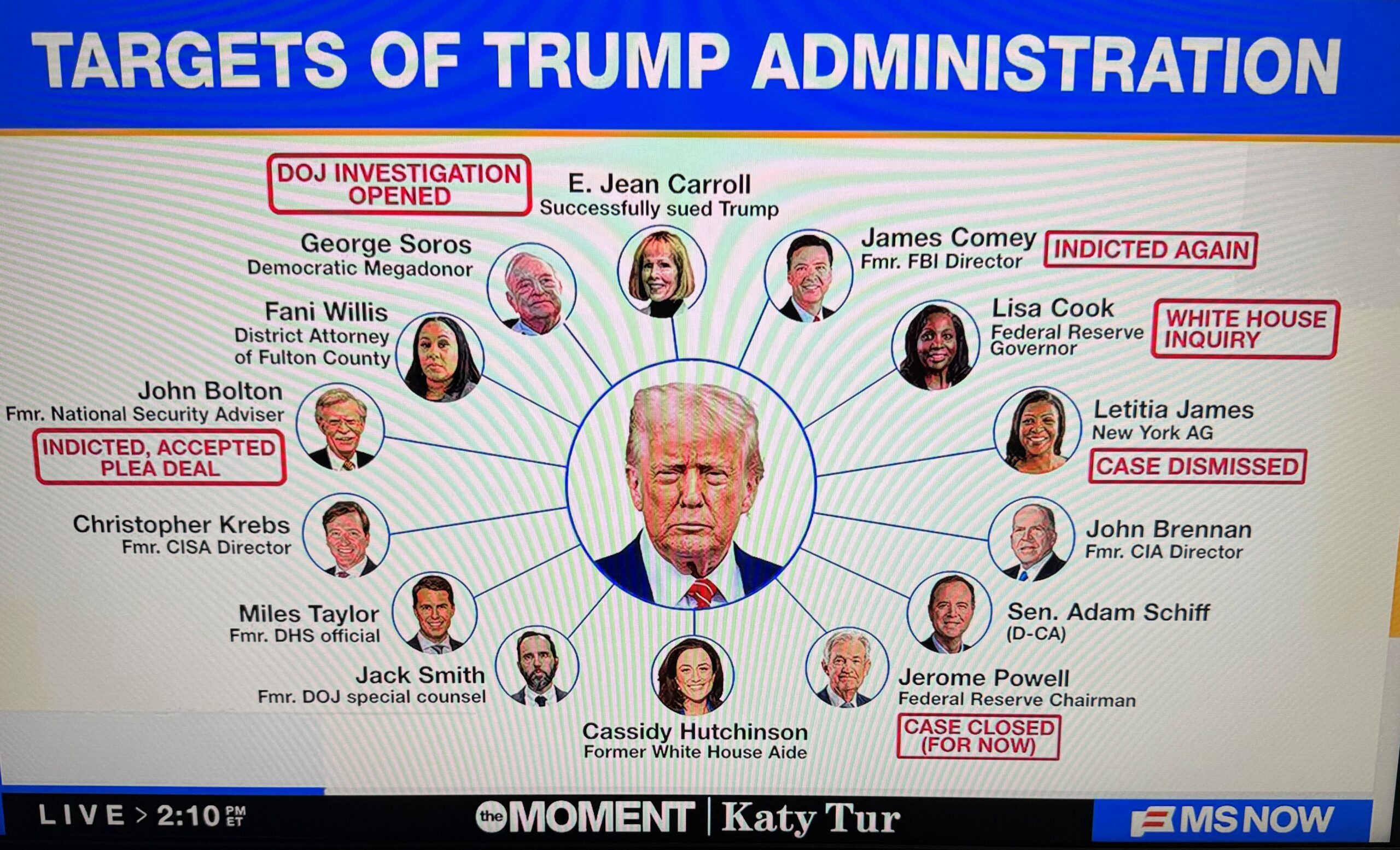
All The President’s Targets
October 13, 2026
Integrity Doesn’t Require a Megaphone
October 12, 2026
WHOSE PURPOSE DOES THIS SERVE?
October 9, 2026

Choreographer of Disaster
October 5, 2026
I Am Not a Politician, and I Have No Partisan Loyalties
October 2, 2026
A Man of Incorruptible Integrity
September 29, 2026

HUMAN VALUES: NOT SPECIFIED
September 23, 2026
Read More Articles
The Latest... And Sometimes Greatest
You Can’t Do That.
BREAKING: News organizations responded forcefully on Monday after President Trump barred CNN, MS NOW and Politico from the White House. They went to federal court—and,...
September 21, 2026
I AM SICKENED
Tonight, protesters are surrounding the Kennedy Center, the living memorial to John F. Kennedy and the heartbeat of Washington’s cultural life. They are there because...
September 18, 2026
The Courage to Defend a Principle
In 1998, at the height of the Clinton-Lewinsky scandal, Secret Service Director Lewis Merletti was driving to work when a radio report stopped him cold....
September 17, 2026
The Better Angels Among Us
By all appearances, we are becoming less the land of the brave than the land of resentment. Every day is Groundhog Day: same arguments, same...
September 14, 2026
We Remember
On September 11, 2001, nearly 3,000 people were killed in terrorist attacks in New York, at the Pentagon, and aboard Flight 93 in Pennsylvania. More...
September 11, 2026
Mister Roberts!
One of my favorite movies is Mister Roberts, the 1955 comedy-drama set aboard the USS Reluctant in the Pacific during World War II. Henry Fonda...
September 8, 2026