Published: April 8, 2020
By Jim Lichtman
During these extraordinary times, it’s easy to become overwhelmed with anxiety and fear. Will I be safe? Will my family be safe? How will I pay for food, rent, mortgage? When will it end?
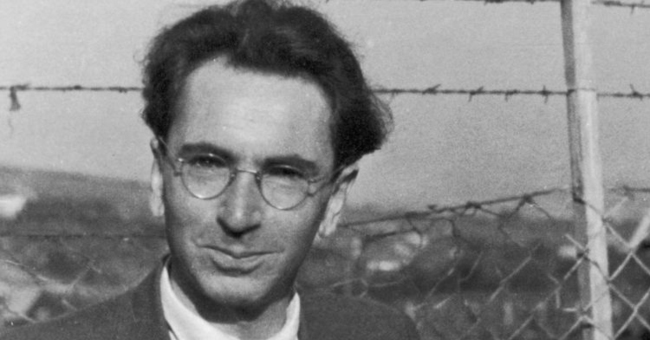
In his ground-breaking book, Man’s Search for Meaning, holocaust survivor Viktor Frankl describes his heartbreaking loss in a letter to friends after his liberation from Auschwitz.
“I have only sad news to communicate,” Frankly writes, “shortly before my departure from Munich, I learned that my mother was sent to Auschwitz a week after me. What that means, you know all too well. And I had scarcely arrived in Vienna when I was told that my wife is also dead. … So now I’m all alone. Whoever has not shared a similar fate cannot understand me. I am terribly tired, terribly sad, terribly lonely. I have nothing more to hope for and nothing more to fear.”
However, in the same letter, Frankl wrote these remarkable words:
“I take nothing away from my former affirmation of life, when I experience the things I have described. On the contrary, if I had not had this rock-solid, positive view of life —what would have become of me in these last weeks, in those months in the camp? But I now see things in a larger dimension. I see increasingly that life is so very meaningful, that in suffering and even in failure there must still be meaning.”
In the depths of loss and depression, Frankl teaches us that life remains meaningful.
Although faith is not an ethical value, its importance in driving ethical conduct should not be underestimated. In fact, the word faith comes from the Latin word, fidere, meaning ‘to trust.’
Trusting can sometimes be difficult, but it can uplift and strengthen our resolve to reach beyond ourselves to overcome momentary egocentric fear and open up to seeing ourselves in another. It’s acting “outside ourselves,” as former Marine Captain Dale Dye says.
“Faith,” Rev. Gaylon McDowell tells us, “is our ability to see the possibilities of life. Faith sees ideas where fear sees disbelief. Faith sees opportunities where fear sees obstacles. Faith sees potential where fear sees problems. Faith sees abundance where fear sees lack and limitation.”
During times of fear and uncertainty, we can look outside ourselves and accept that change is inevitable. If we can accept change and maintain faith, we can remove fear.
“Everything,” Frankl writes, “can be taken from a man but one thing: the last of the human freedoms – to choose one’s attitude in any given set of circumstances, to choose one’s own way.”
Comments
Leave a Comment
Recent Commentaries
You Can’t Do That.
September 21, 2026
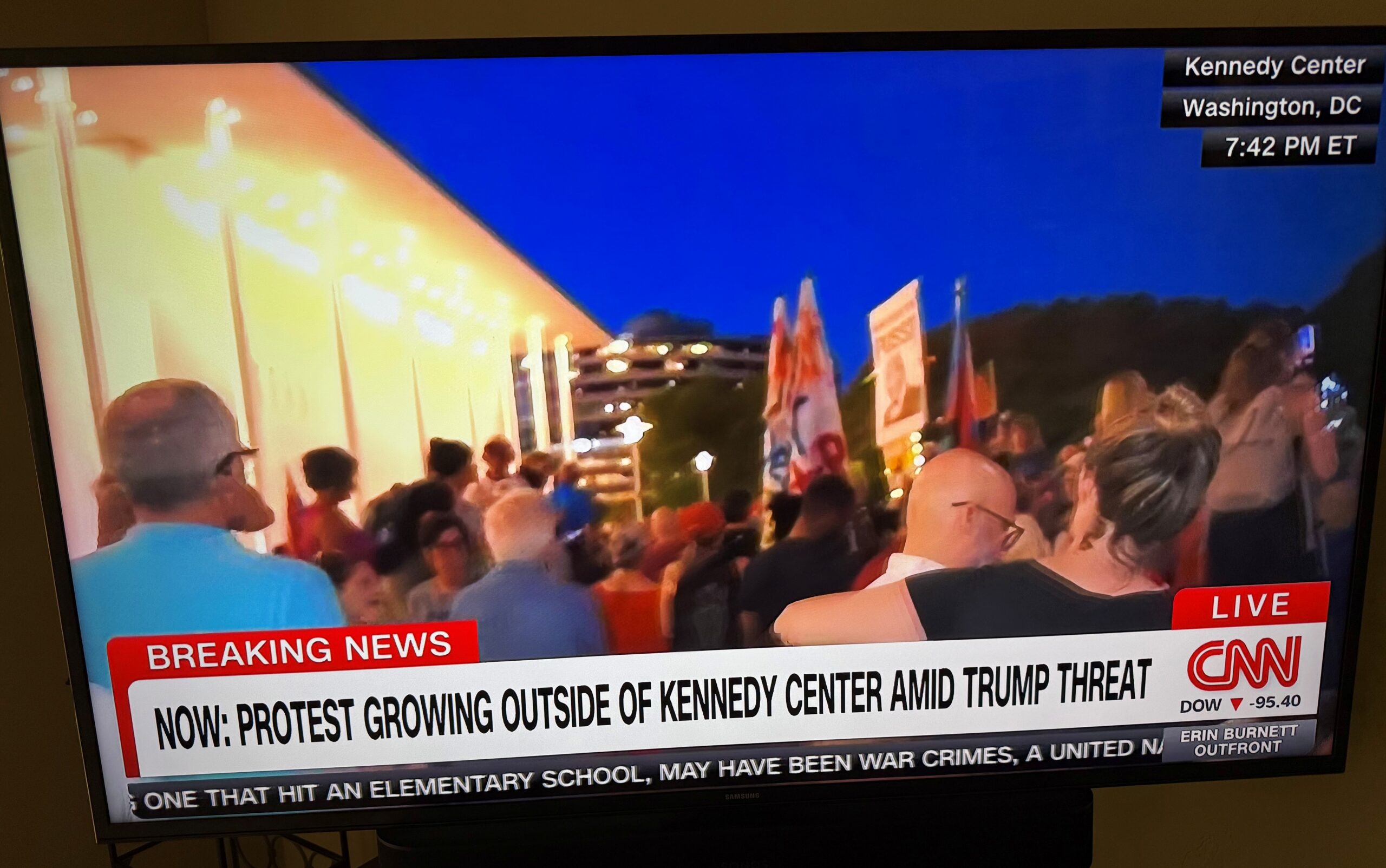
I AM SICKENED
September 18, 2026
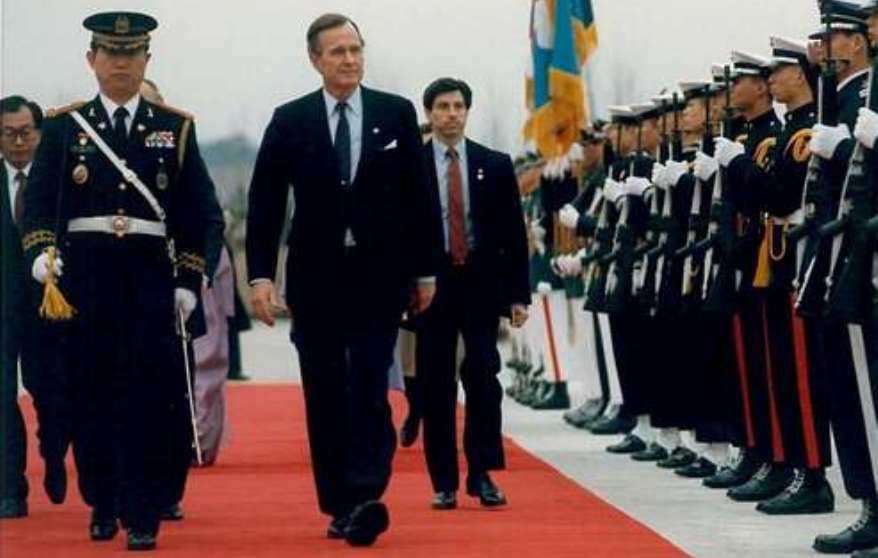
The Courage to Defend a Principle
September 17, 2026
The Better Angels Among Us
September 14, 2026
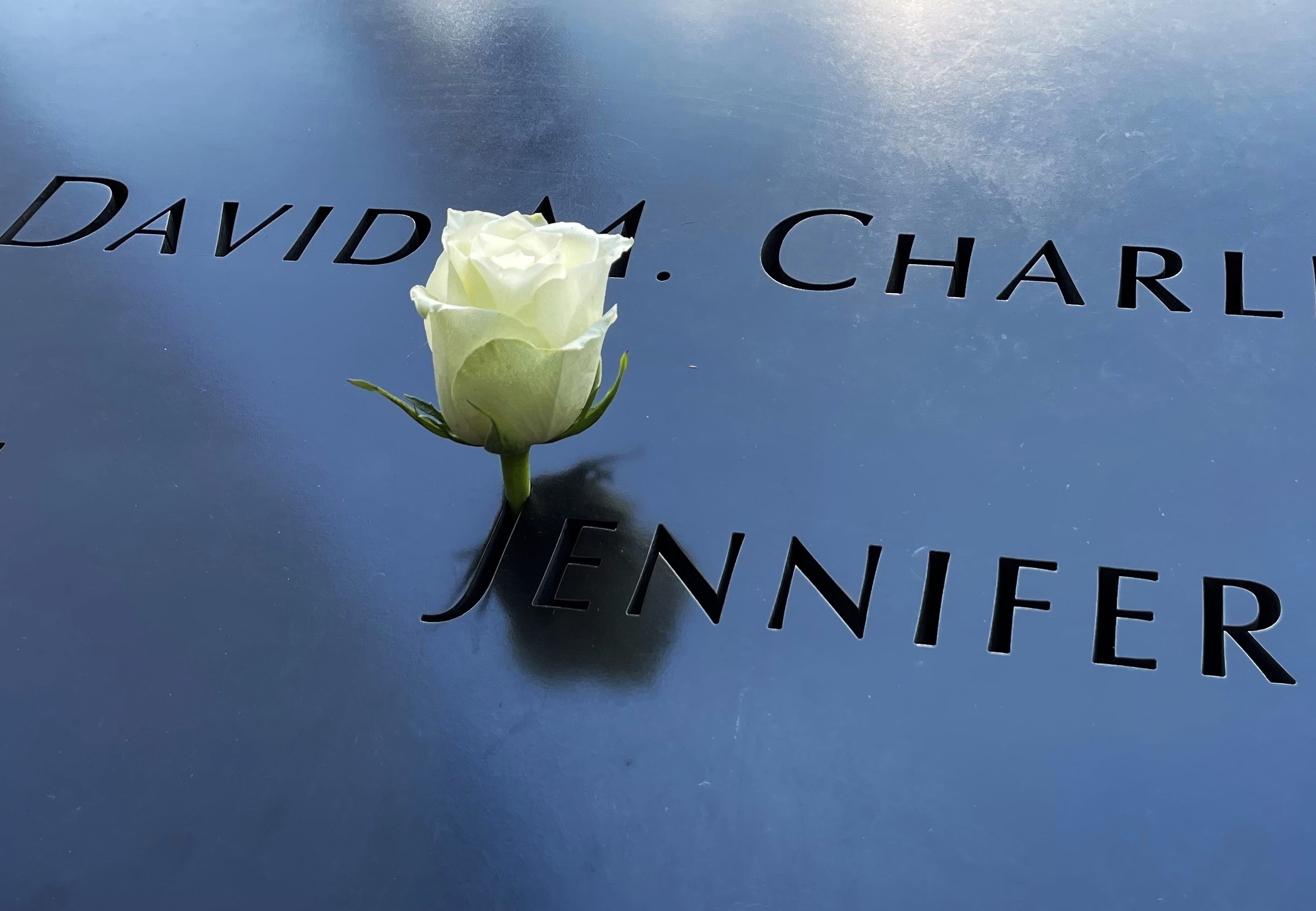
We Remember
September 11, 2026
Mister Roberts!
September 8, 2026
Where’s the Character
August 7, 2026
It Was Important Then. It is Important Today
August 3, 2026
When Political Identity Replaces Ethical Judgment
July 31, 2026
Principles Matter.
July 28, 2026
Read More Articles
The Latest... And Sometimes Greatest
All the President’s Men 2.0
“Politics had infiltrated every corner of government—a strong-arm takeover of the agencies by the Nixon White House.” —Bob Woodward and Carl Bernstein, All the President’s...
July 23, 2026
The Threat to November Is Already Here
“Cunning, ambitious, and unprincipled men will be enabled to subvert the power of the people and to usurp for themselves the reins of government.”—George Washington’s...
July 20, 2026
Jon Ossoff and the Conscience of Atticus Finch
I’ve written about Georgia Senator Jon Ossoff before, but after watching his questioning of Jay Clayton, President Trump’s nominee for director of national intelligence (DNI),...
July 17, 2026
Hearts and Minds
There’s a moment in Cool Hand Luke when Luke, played by Paul Newman, is returned to a prison camp after escaping. Determined to break his...
July 16, 2026
The Ethics of Belonging
I recently read a book by a man who has learned some of life’s hardest lessons and, by his own account, is still learning them...
July 14, 2026
The Best of Us
“We choose to go to the Moon in this decade and do the other things—not because they are easy, but because they are hard.” When...
July 9, 2026
Oh yes Jim, such a great quote from Dr. Frankl: ““Everything can be taken from a man but one thing: the last of the human freedoms – to choose one’s attitude.”