Published: June 27, 2025
By Jim Lichtman
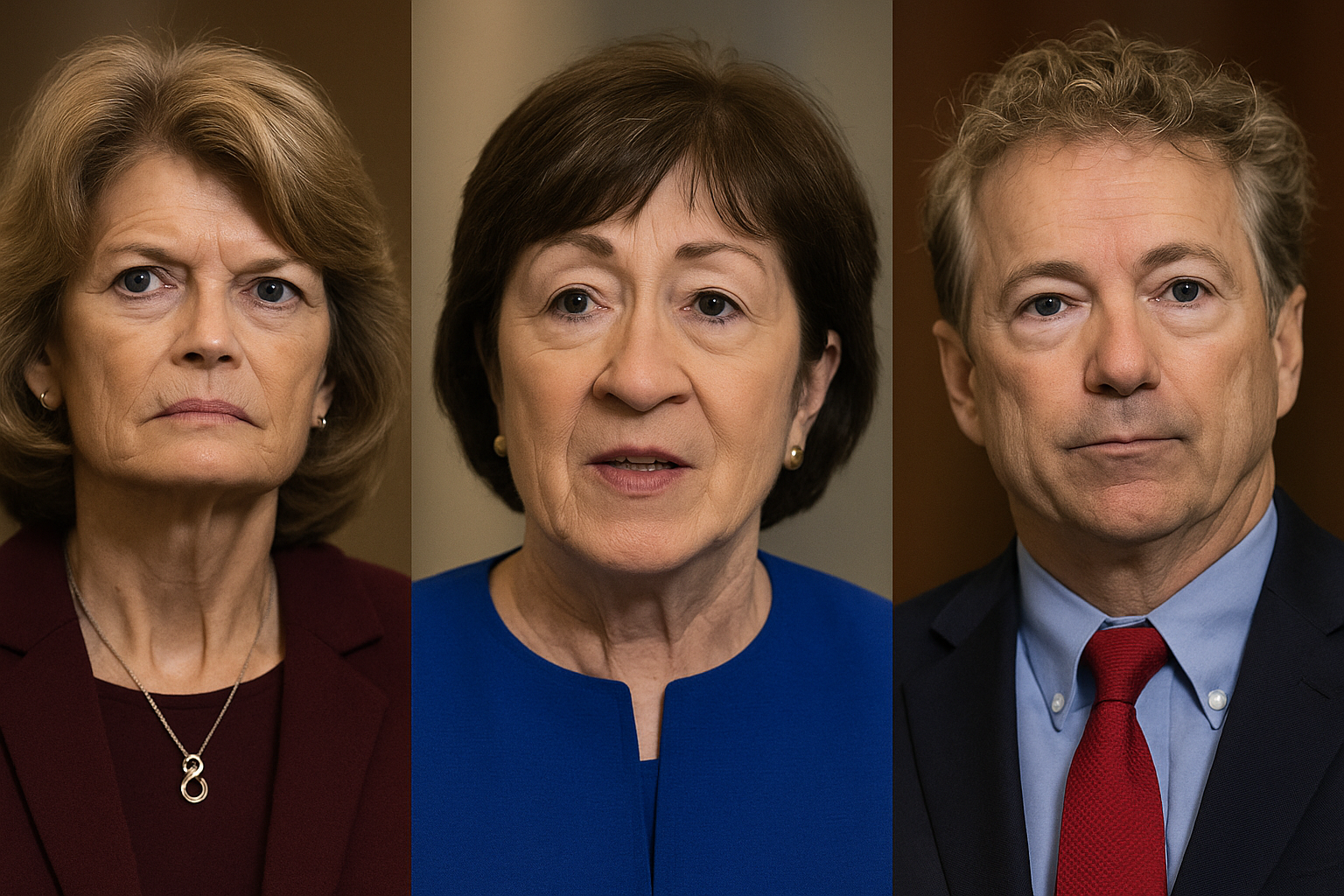
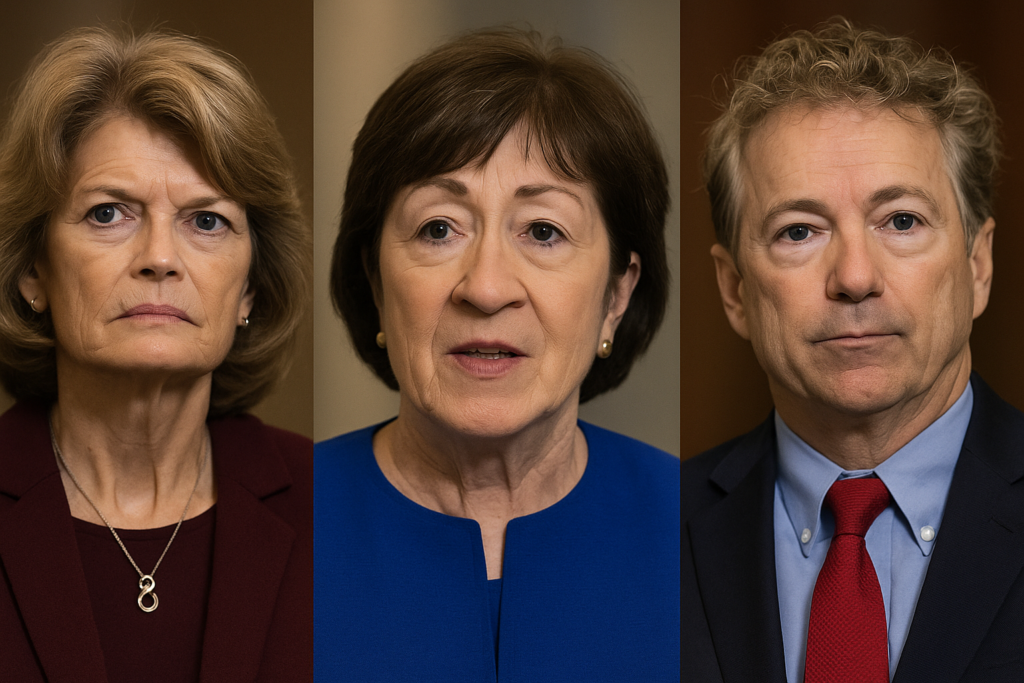
Three U.S. Senators. Three Republicans. All support the Constitution and their conscience: Lisa Murkowski of Alaska, Susan Collins of Maine, and Rand Paul of Kentucky—have shown that moral conviction and independent judgment can still find a place in public service.
Lisa Murkowski has emerged as one of the Senate’s most principled voices. Following the January 6 attack on the U.S. Capitol, she was one of only seven Republican senators to vote to convict Donald Trump during his second impeachment trial. “The president’s actions that preceded the riot were a betrayal of his oath of office,” she said. That decision brought political backlash, including a formal censure by the Alaska Republican Party. And yet, Murkowski stayed the course. She has continued to work across the aisle on critical issues—supporting bipartisan infrastructure legislation, voting rights protections, and efforts to preserve democratic norms. Her actions reflect a commitment to governance over grievance and to country over party.
Susan Collins has long walked the line between Republican orthodoxy and centrist independence. Like Murkowski, she voted to convict Trump following the Capitol insurrection—an act grounded in her defense of constitutional order. Collins also supported the confirmation of Justice Ketanji Brown Jackson—the only Republican to do so outside of Murkowski and Mitt Romney—placing qualifications above partisan considerations. While often criticized for her cautious tone, Collins has remained a steady advocate for institutional integrity, moderation, and the rule of law—values that once defined a more principled Republican tradition.
Then there is Rand Paul, whose libertarian philosophy frequently puts him at odds with both major parties. Paul’s convictions are rooted in constitutional principle. He has been a consistent defender of civil liberties—challenging warrantless surveillance, opposing unchecked executive authority, and speaking out against a widely supported TikTok ban on First Amendment grounds. While not the architect of any recent tariff rollback, Paul has voiced concern over the use of national emergency declarations to bypass congressional authority—especially in the context of trade policy. He’s also reached across the aisle to support reforms in animal welfare and scientific testing. His work reminds us that not every conviction need be shaped by the culture wars.
Each of these senators acts from a different philosophical base—Murkowski from a devotion to democratic institutions, Collins from a tradition of reasoned governance, and Paul from libertarian principle. What unites them is a willingness to act in accordance with conscience rather than convenience. They are not above criticism, and each has made controversial choices. But in a time when political courage is rare, their examples matter.
At a moment when too many elected officials chase polls or retreat into partisan echo chambers, Murkowski, Collins, and Paul offer something different. They show that character still matters. That standing for principle—even when unpopular—is not only possible, but essential to the health of a functioning democracy.
Comments

Recent Commentaries

November 4, 2026
October 20, 2026

Has America Lost Its Way?
October 16, 2026
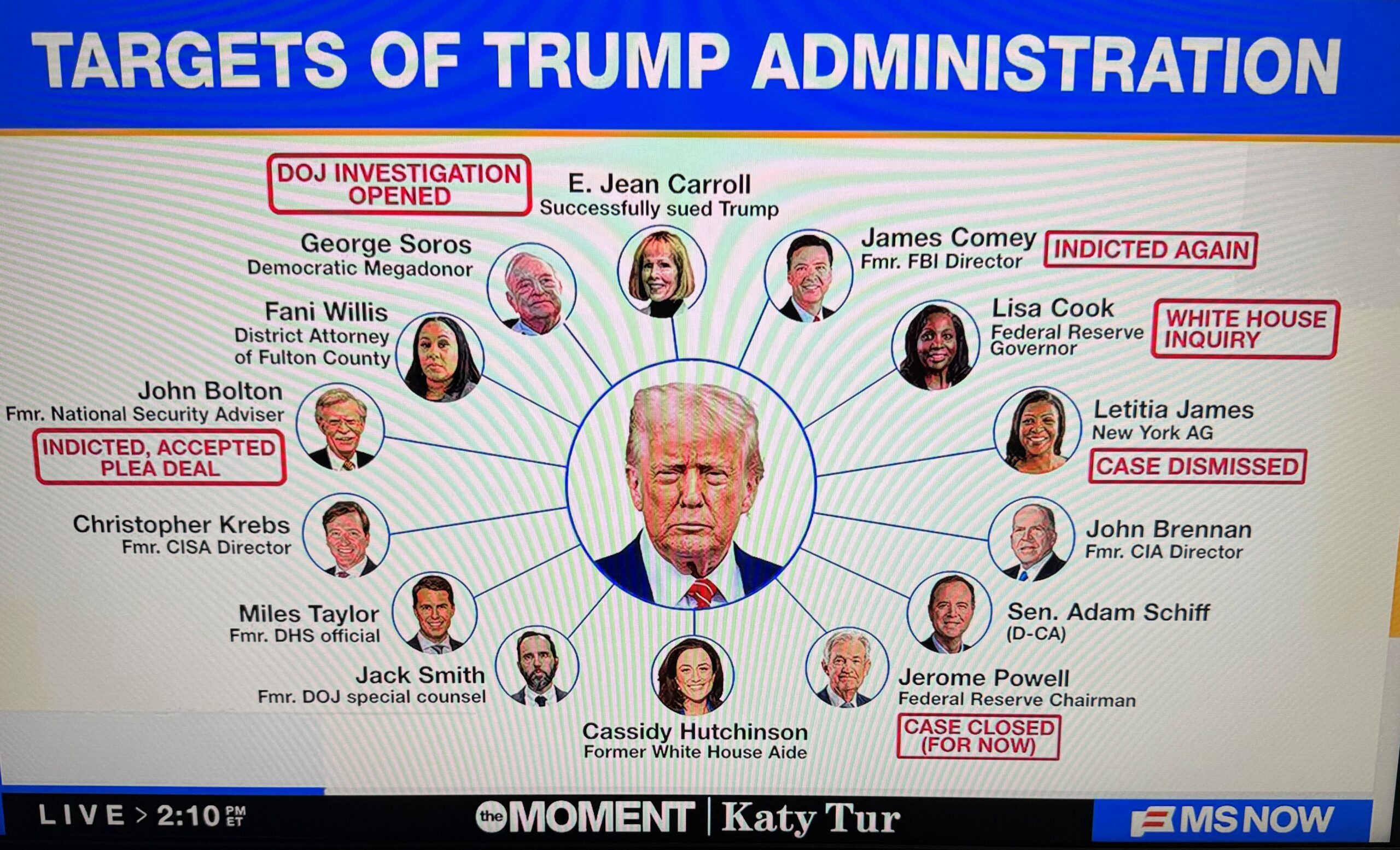
All The President’s Targets
October 13, 2026
Integrity Doesn’t Require a Megaphone
October 12, 2026
WHOSE PURPOSE DOES THIS SERVE?
October 9, 2026

Choreographer of Disaster
October 5, 2026
I Am Not a Politician, and I Have No Partisan Loyalties
October 2, 2026
A Man of Incorruptible Integrity
September 29, 2026

HUMAN VALUES: NOT SPECIFIED
September 23, 2026
You Can’t Do That.
September 21, 2026
Read More Articles
The Latest... And Sometimes Greatest
I AM SICKENED
Tonight, protesters are surrounding the Kennedy Center, the living memorial to John F. Kennedy and the heartbeat of Washington’s cultural life. They are there because...
September 18, 2026
The Courage to Defend a Principle
In 1998, at the height of the Clinton-Lewinsky scandal, Secret Service Director Lewis Merletti was driving to work when a radio report stopped him cold....
September 17, 2026
The Better Angels Among Us
By all appearances, we are becoming less the land of the brave than the land of resentment. Every day is Groundhog Day: same arguments, same...
September 14, 2026
We Remember
On September 11, 2001, nearly 3,000 people were killed in terrorist attacks in New York, at the Pentagon, and aboard Flight 93 in Pennsylvania. More...
September 11, 2026
Mister Roberts!
One of my favorite movies is Mister Roberts, the 1955 comedy-drama set aboard the USS Reluctant in the Pacific during World War II. Henry Fonda...
September 8, 2026
Where’s the Character
In 1984, Wendy’s ran a television commercial featuring the redoubtable Clara Peller, staring at an enormous hamburger bun. Inside was a burger patty smaller than...
August 7, 2026