Published: November 9, 2009
By Jim Lichtman
“I felt last night’s decision was the right decision for my district even though it was not the popular decision for my party.”
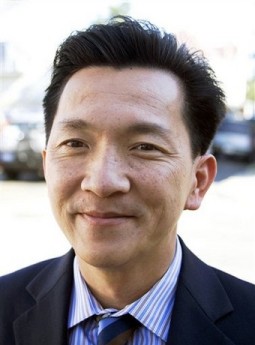
So said Anh “Joseph” Quang Cao (pronounced “gow”) the freshman Republican Representative from Louisiana after voting in favor of the health care bill Saturday. Mr. Cao, the only House Republican of 177, called his support of the Democrat sponsored bill a matter of “‘conscience,’ that would help the poor and uninsured in his district,” The Washington Post reported.
House Minority Whip Eric Cantor (R-VA) had earlier predicted that no Republican would support the bill. In fact, Cantor “had been by Cao’s side when the voting started,” The Post said. When Cao cast his vote, Cantor stood and walked away.
The Post also reported that, “White House aides had spoken several times to Cao in the days before the vote. But Cao, a devout Catholic… had largely ruled out backing the bill because of provisions that would allow abortions under programs created under the bill, although taxpayer funding would not directly be used.
“After a group of Democrats opposed to abortion successfully pushed Friday for a vote that would essentially bar new health programs created under the House bill from offering abortions, Cao said he called the White House on Friday night to say he would consider backing the bill.”
Cao, the first congressman of Vietnamese heritage and a strong social conservative, defeated nine-term Democratic Representative William Jefferson who was convicted of bribery when the FBI caught him with $90,000 in cash in his freezer. According to his official Web site, “Joseph first arrived in New Orleans in 1992. He left to earn a Master’s degree in philosophy from New York’s Fordham University, returning to Loyola University to teach philosophy and ethics… However, his confidence in government’s ability to care for those in need weakened by the day…
“In Washington, DC, he became an advocate for refugees, future Americans who embody a can-do spirit and strong work ethic. In pursuit of justice for all, he attained a law degree from Loyola Law School. He became the in-house legal counsel for Boat People S.O.S, Inc., an organization helping poor Vietnamese and other minorities.
“In 2002, he was chosen by Archbishop Alfred Hughes to become a member of the National Advisory Council of the U.S. Conference of Catholic Bishops, addressing women’s rights in the Catholic Church, social justice, child abuse, and the Catholic response to Hurricane Katrina.”
The health care issue is not the first time Mr. Cao has taken a position against his own party. “The soft-spoken Cao” The Post said, “had occasionally bucked his party in his first year in Congress, backing the Democratic-pushed resolution to condemn Representative Joe Wilson (R-S.C.) for shouting ‘you lie’ during Obama’s speech on health care in September and also a bill unpopular among Republicans to extend federal hate crimes laws to gays.”
In describing the demands on political figures in his book,Profiles in Courage, then Senator John F. Kennedy wrote, “[A politician] cannot ignore the pressure groups of his constituents, his party, the comradeship of his colleagues, the needs of his family, his own pride in office, the necessity for compromise and the importance of remaining in office.
“He must judge for himself which path to choose, which step will most help or hinder the ideals to which he is committed. He realizes that once he begins to weigh each issue in terms of his chances for re-election, once he begins to compromise away his principles on one issue after another for fear that to do otherwise would halt his career and prevent future fights for principles, then he has lost the very freedom of conscience which justifies his continuance in office. But to decide at which point and on which issue he will risk his career is a difficult and soul-searching decision.”
In choosing to respect his own conscience this early, Mr. Cao may be putting his future on the line, but he also demonstrates the kind of political courage and leadership that is sorely needed today.
Comments
Leave a Comment
Recent Commentaries

November 4, 2026
October 20, 2026

Has America Lost Its Way?
October 16, 2026
All The President’s Targets
October 13, 2026
Integrity Doesn’t Require a Megaphone
October 12, 2026
WHOSE PURPOSE DOES THIS SERVE?
October 9, 2026

Choreographer of Disaster
October 5, 2026
I Am Not a Politician, and I Have No Partisan Loyalties
October 2, 2026
A Man of Incorruptible Integrity
September 29, 2026

HUMAN VALUES: NOT SPECIFIED
September 23, 2026

You Can’t Do That.
September 21, 2026
Read More Articles
The Latest... And Sometimes Greatest
I AM SICKENED
Tonight, protesters are surrounding the Kennedy Center, the living memorial to John F. Kennedy and the heartbeat of Washington’s cultural life. They are there because...
September 18, 2026
The Courage to Defend a Principle
In 1998, at the height of the Clinton-Lewinsky scandal, Secret Service Director Lewis Merletti was driving to work when a radio report stopped him cold....
September 17, 2026
The Better Angels Among Us
By all appearances, we are becoming less the land of the brave than the land of resentment. Every day is Groundhog Day: same arguments, same...
September 14, 2026
We Remember
On September 11, 2001, nearly 3,000 people were killed in terrorist attacks in New York, at the Pentagon, and aboard Flight 93 in Pennsylvania. More...
September 11, 2026
Mister Roberts!
One of my favorite movies is Mister Roberts, the 1955 comedy-drama set aboard the USS Reluctant in the Pacific during World War II. Henry Fonda...
September 8, 2026
Where’s the Character
In 1984, Wendy’s ran a television commercial featuring the redoubtable Clara Peller, staring at an enormous hamburger bun. Inside was a burger patty smaller than...
August 7, 2026
Pingback: On Dishing it Out