Published: February 17, 2016
By Jim Lichtman
While Thomas Jefferson has been revered as perhaps the greatest literary force of all American presidents, by virtue of having written the Declaration of Independence, I connect more closely with the words and thoughts of Abraham Lincoln owing to his singular range: his address at Cooper Union, Emancipation Proclamation, Gettysburg Address, as well as his second inaugural address. Lincoln’s clarity and authority is simply breathtaking.
However, when it came to loss, no one was better than Lincoln in summoning the right words and wisdom. His eulogy for the larger-than-life Henry Clay must’ve seemed a daunting challenge, but Lincoln proved he was up to memorializing the man who was for him, the “beau ideal of a statesman.”
Nonetheless, Lincoln’s eulogy for Clay was more speech, summarizing the career of the great man. While it covered all the necessaries of a life spent in devoted service to his country, it lacked the deeply felt emotion that was the hallmark of his personal letters. Due, in part, to Stephen Spielberg’s film “Saving Private Ryan,” most are aware of that emotion through Lincoln’s 1864 letter to Mrs. Bixby, “…the mother of five sons who have died gloriously on the field of battle,” Lincoln wrote.
Lincoln’s prevailing sense of compassion and vulnerability was revealed in words like these:
“I feel how weak and fruitless must be any word of mine which should attempt to beguile you from the grief of a loss so overwhelming.”
But there is another condolence letter that was written two years before the Bixby letter that reveals more of Lincoln. The great civil war had already been underway for a year and the cost had been enormous in both resources and lives.
8th Grade History teacher Megan VanGorder points out, “By December of 1862, Abraham Lincoln had reached a markedly low point in his life. On December 17, Lincoln’s close confidant, Orville Browning, described the president’s state in his journal: ‘I saw in a moment that he was in distress – that more than usual trouble was pressing against him.’ Browning went on to record in that same entry that Lincoln confided that he felt more despondent than at any other point in his life, lamenting to Browning, ‘We are now at the brink of destruction…it appears to me the Almighty is against us, and I can hardly see a ray of hope.’ For Lincoln, 1862 had been a trial; he faced great tribulation and was at the precipice to either endure through it or collapse under the weight of the monumental tasks before him.”
In the context of Lincoln’s deep, emotional state, historian Harold Holzer writes in a Wall Street Journal essay, (Feb. 13), “…an obscure Union cavalry commander lost his life battling a nighttime ambush deep behind Confederate lines at Coffeeville, Miss. The remote dust-up at which Lt. Col. William McCullough died heroically earned scant notice in Washington – except from the president himself.
“Years before, as a circuit-riding lawyer, Lincoln had come to know McCullough and his family when the Bloomington, Ill., resident served as sheriff, and then as clerk of the county court. The two men had much in common. Both had served in their state militia during the Black Hawk War. Each married a woman named Mary. Both became Republicans. And each lost young children to disease. …
“…Lincoln became especially concerned when mutual friends reported that the hero’s 22-year-old daughter Mary Frances – known as ‘Fanny’ – was grieving with alarming intensity. The ‘afflicted’ young woman had shut herself off in her room, refusing to eat, ‘pacing the floor in violent grief, or sitting in lethargic silence.’ Her family feared ‘for her consequences.’ ”
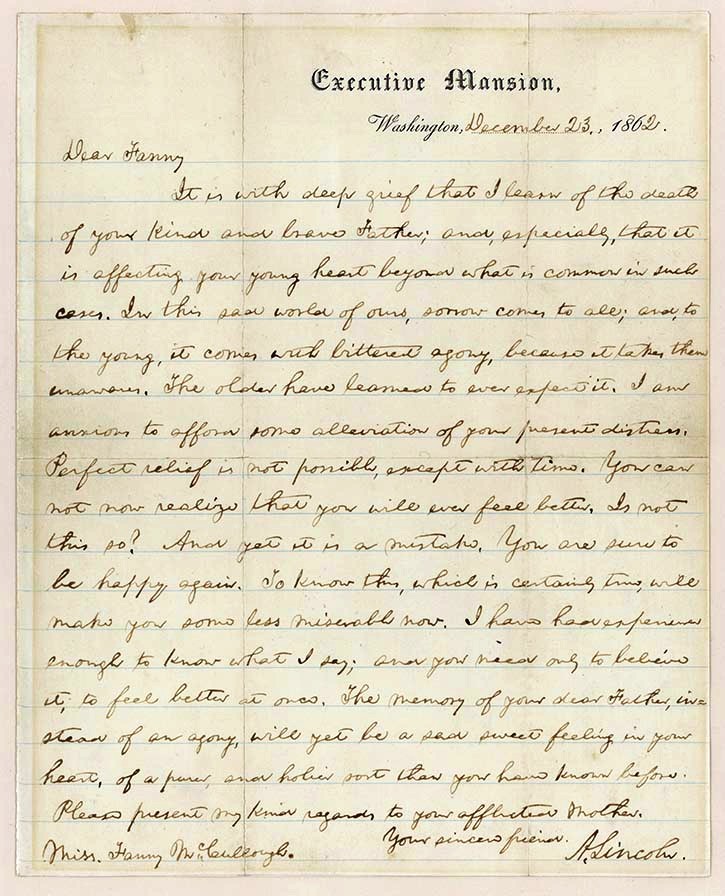
With his own history of loss, Lincoln more than understood what the young woman was feeling and connected with 166 words that were understated, yet powerful:
Dear Fanny,
It is with deep grief that I learn of the death of your kind and brave Father; and, especially, that it is affecting your young heart beyond what is common in such cases. In this sad world of ours, sorrow comes to all; and, to the young it comes with bitterest agony, because it takes them unawares. The older have learned to ever expect it. I am anxious to afford some alleviation of your present distress. Perfect relief is not possible, except with time. You can not now realize that you will ever feel better. Is not this so? And yet it is a mistake. You are sure to be happy again. To know this, which is certainly true, will make you some less miserable now. I have had experience enough to know what I say; and you need only to believe it, to feel better at once. The memory of your dead Father, instead of an agony, will yet be a sad sweet feeling in your heart, of a purer, and holier sort than you have known before.
Please present my kind regards to your afflicted mother.
Your sincere friend
A. Lincoln.
“Fanny” McCullough did recover from her grief and kept Lincoln’s letter for the rest of her life.
Comments


Recent Commentaries

November 4, 2026
October 20, 2026

Has America Lost Its Way?
October 16, 2026
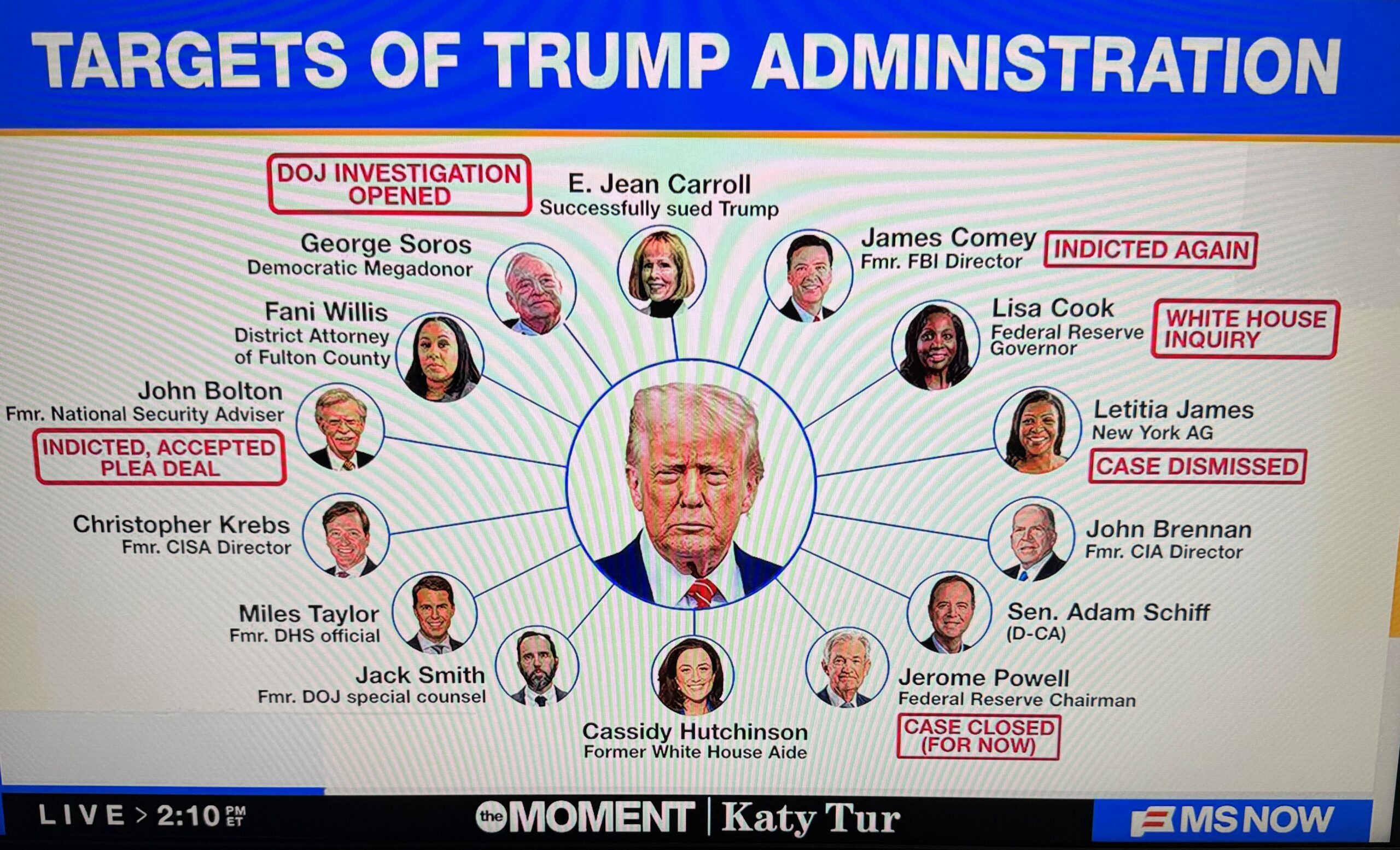
All The President’s Targets
October 13, 2026
Integrity Doesn’t Require a Megaphone
October 12, 2026

WHOSE PURPOSE DOES THIS SERVE?
October 9, 2026

Choreographer of Disaster
October 5, 2026
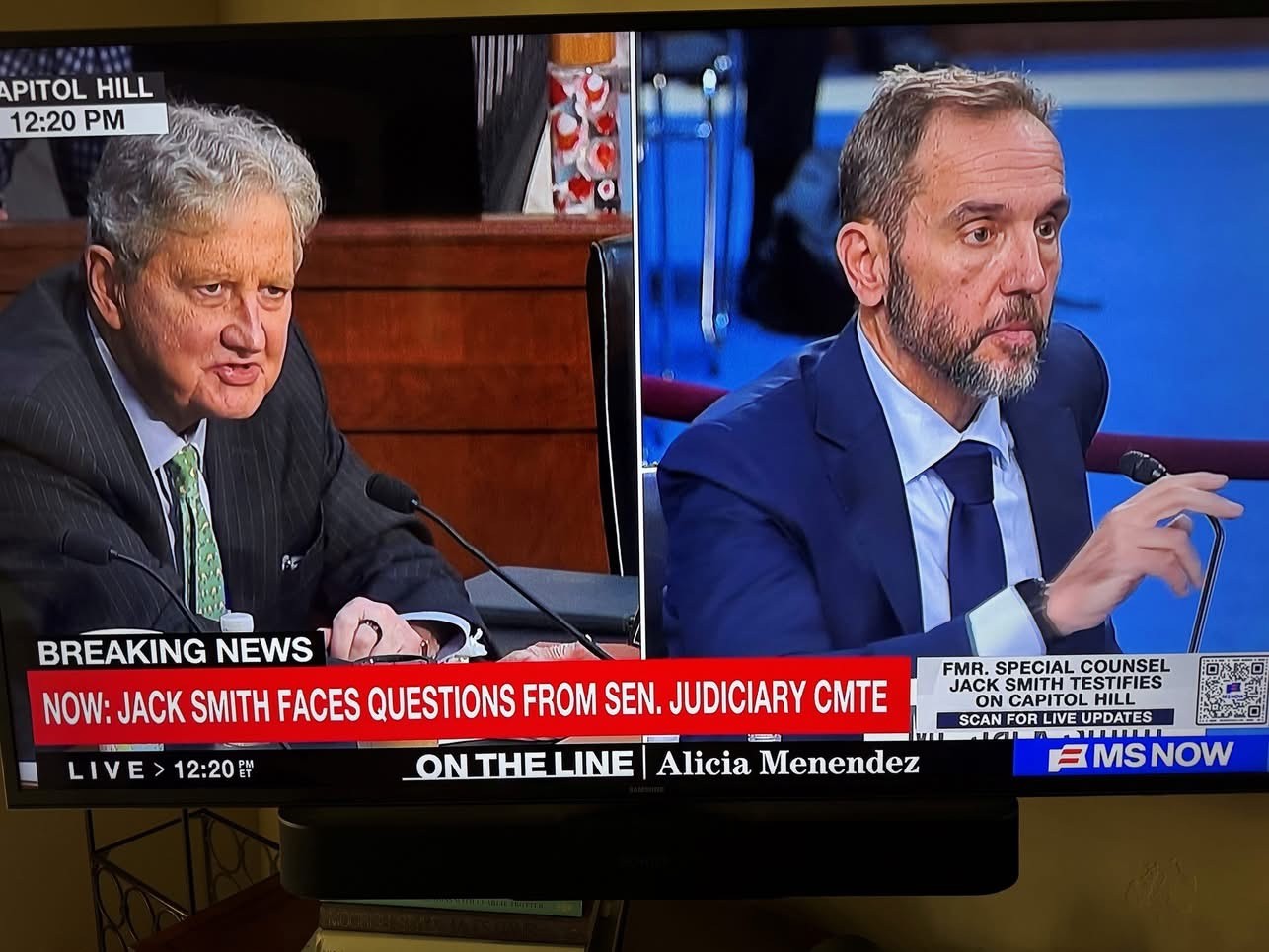
I Am Not a Politician, and I Have No Partisan Loyalties
October 2, 2026
A Man of Incorruptible Integrity
September 29, 2026

HUMAN VALUES: NOT SPECIFIED
September 23, 2026
You Can’t Do That.
September 21, 2026
Read More Articles
The Latest... And Sometimes Greatest
I AM SICKENED
Tonight, protesters are surrounding the Kennedy Center, the living memorial to John F. Kennedy and the heartbeat of Washington’s cultural life. They are there because...
September 18, 2026
The Courage to Defend a Principle
In 1998, at the height of the Clinton-Lewinsky scandal, Secret Service Director Lewis Merletti was driving to work when a radio report stopped him cold....
September 17, 2026
The Better Angels Among Us
By all appearances, we are becoming less the land of the brave than the land of resentment. Every day is Groundhog Day: same arguments, same...
September 14, 2026
We Remember
On September 11, 2001, nearly 3,000 people were killed in terrorist attacks in New York, at the Pentagon, and aboard Flight 93 in Pennsylvania. More...
September 11, 2026
Mister Roberts!
One of my favorite movies is Mister Roberts, the 1955 comedy-drama set aboard the USS Reluctant in the Pacific during World War II. Henry Fonda...
September 8, 2026
Where’s the Character
In 1984, Wendy’s ran a television commercial featuring the redoubtable Clara Peller, staring at an enormous hamburger bun. Inside was a burger patty smaller than...
August 7, 2026