Published: April 29, 2011
By Jim Lichtman
No sooner had the White House released the long-form birth record of President Obama than speculation began anew by “birthers.” Is it real or fake? Why did it take so long to produce?
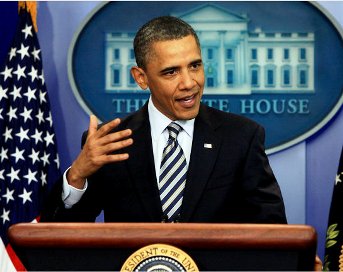
“It raises far more questions than it answers,” said Joseph Farah, editor-in-chief of WorldNetDaily and grand-high-exalted poobah of “birthers.” (Where’s the Birth Certificate? by Harvard Ph.D. Jerome Corsi is due for release May 17.)
Why do so many continue to believe that President Obama isnot a U.S. citizen in spite of the facts? That’s the question I asked Cultural Studies analyst Jamie O’Boyle. His answer: it’s a little thing called confirmation bias.
“The human brain is a meaning-seeking device,” O’Boyle writes in my new book, Shameless. “Although Western culture has a strong bias toward the importance of conscious ‘rational’ thought, over 90% of our decisions are made at an unconscious level. Thanks to brain imaging, we now know that, when the brain inputs data, the emotional centers light up first (what does this mean to me?), followed by the logic centers (what do I do with it?). To a very large degree, this means that ‘facts’ are what people use to validate decisions already made at an unconscious level.
“One of the outcomes of this process is a confirmation bias – the tendency of our brain to easily accept information compatible with what we already know and – more importantly – minimize information that contradicts what we already know,even if what we ‘know’ isn’t true!
“The unconscious weighing of information is one of the reasons it is so difficult to change people’s minds using logic. The information goes in but the importance the brain allots to each bit minimizes the effect of negative data while weighting more heavily the bits that already fit their preconceptions and worldview.
“This is a principal reason,” O’Boyle concludes, “why people don’t recall that commentators have given them information that was proven to be false. Their unconscious brain simply diminished its importance in favor of some other bit of information, and even the little that did get through faded rapidly from memory.”
NEWSWEEK magazine’s science editor and author, Sharon Begley, writes (Aug. 5, 2010) “Women are bad drivers, Saddam plotted 9/11, Obama was not born in America, and Iraq had weapons of mass destruction: to believe any of these requires suspending some of our critical-thinking faculties and succumbing instead to the kind of irrationality that drives the logically minded crazy.
“It helps, for instance, to use confirmation bias (seeing and recalling only evidence that supports your beliefs, so you can recount examples of women driving 40mph in the fast lane). It also helps not to test your beliefs against empirical data (where, exactly, are the WMD, after seven years of U.S. forces crawling all over Iraq?); not to subject beliefs to the plausibility test (faking Obama’s birth certificate would require how widespread a conspiracy?); and to be guided by emotion (the loss of thousands of American lives in Iraq feels more justified if we are avenging 9/11).”
In a New York Times Op-Ed (Mar. 25, 2010) about the myths surrounding the newly passed health care bill, political scientist and health policy researcher Brendan Nyhan at the University of Michigan writes, “Jason Reifler, a political scientist at Georgia State, and I conducted a series of experiments in which participants read mock news articles with misleading statements by a politician. Some were randomly assigned a version of the article that also contained information correcting the misleading statement.
“Our results indicate that this sort of journalistic fact-checking often fails to reduce misperceptions among ideological or partisan voters. In some cases, we found that corrections can even make misperceptions worse. For example, in one experiment we found that the proportion of conservatives who believed that President George W. Bush’s tax cuts actually increased federal revenue grew from 36 percent to 67 percent when they were provided with evidence against this claim. People seem to argue so vehemently against the corrective information that they end up strengthening the misperception in their own minds.
“We’ve seen this happen already with Sarah Palin’s claim that her parents and baby would ‘have to stand in front of Obama’sdeath panel.’ After this claim was widely discredited in the press, some conservative pundits retreated to claims that future rationing of health care would amount to ‘de facto death panels.’ ”
Regardless of our own bias, the ethical value of fairness asks us to evaluate issues and individuals based on the facts not rumor, speculation or innuendo. An ethical decision-maker strives to be impartial and objective avoiding favoritism and prejudice.
Delivering a commencement address at Yale University, President Kennedy said, “The great enemy of the truth is very often not the lie – deliberate, contrived and dishonest, but the myth, persistent, persuasive and unrealistic. Belief in myths allows the comfort of opinion without the discomfort of thought.”
Comments

Recent Commentaries
I Am Not a Politician, and I Have No Partisan Loyalties
October 2, 2026
A Man of Incorruptible Integrity
September 29, 2026

HUMAN VALUES: NOT SPECIFIED
September 23, 2026
You Can’t Do That.
September 21, 2026
I AM SICKENED
September 18, 2026
The Courage to Defend a Principle
September 17, 2026

The Better Angels Among Us
September 14, 2026

We Remember
September 11, 2026
Mister Roberts!
September 8, 2026
Where’s the Character
August 7, 2026
Read More Articles
The Latest... And Sometimes Greatest
It Was Important Then. It is Important Today
Freedom of speech in America is under attack, not only when people are denied the right to speak, but when lies, intimidation and the deliberate...
August 3, 2026
When Political Identity Replaces Ethical Judgment
The political and cultural landscape has become a minefield of conflicting beliefs, many now rooted less in public policy than in personal identity. One of...
July 31, 2026
Principles Matter.
A few nights ago, I was watching The Way We Were, a film I’ve seen more times than I can count. This time, a single...
July 28, 2026
All the President’s Men 2.0
“Politics had infiltrated every corner of government—a strong-arm takeover of the agencies by the Nixon White House.” —Bob Woodward and Carl Bernstein, All the President’s...
July 23, 2026
The Threat to November Is Already Here
“Cunning, ambitious, and unprincipled men will be enabled to subvert the power of the people and to usurp for themselves the reins of government.”—George Washington’s...
July 20, 2026
Jon Ossoff and the Conscience of Atticus Finch
I’ve written about Georgia Senator Jon Ossoff before, but after watching his questioning of Jay Clayton, President Trump’s nominee for director of national intelligence (DNI),...
July 17, 2026