Published: February 5, 2010
By Jim Lichtman
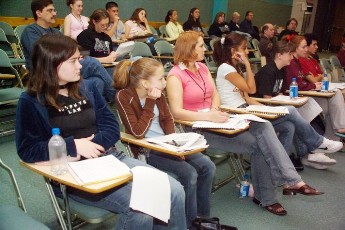
Last week, I spoke to four High School classes about the importance of honesty and trust.
As part of their take-home assignment, I asked them to answer a six question survey – part of a national survey given to High School students across the country by The Josephson Institute of Ethics. They only have to respond “Yes,” or “No.”
1. In personal relationships, honesty and trust are essential to me.
2. It’s important for me that people trust me.
3. It’s important for me that I am a person of good character.
4. I have cheated at least once during this past year.
5. I know someone who has cheated at least once during this year.
6. In the real world, successful people do what they have to do in order to win, even if others consider it cheating.
The students overwhelming responded Yes to the first three questions (98%, 97%, 96%). However, almost 60% admitted to having cheated at least once during the year, and an overwhelming majority (93%) knew someone who has cheated.
Most unsettling is the response to the final question. Only 20%disagree with the statement that in order to be successful you have to cheat.
Last October (2009), The Josephson Institute of Ethics released the results of their Study on High School Character and Adult Behavior. Among the key findings:
“The most emphatic finding is that younger generations are significantly more likely to engage in dishonest conduct than those in older cohorts:
- “Teens 17 or under are five times more likely than those over 50 to hold the cynical belief that lying and cheating are necessary to succeed (51% v 10%).
- “Young adults (18-24) are more than three times more likely to have inflated an insurance claim than those over 40 (7% vs. 2%) and more than twice as likely to lie to their spouse, boyfriend, girlfriend, or partner about something significant (48% v. 18%).
“Regardless of age, people who believe lying and cheating are a necessary part of success (the report calls them cynics) are more likely to lie and cheat. In fact, this belief is one of the most significant and reliable predictors of dishonest behavior in the adult world. Cynics are:
- “Three times more likely to lie to a customer (22% vs. 7%), inflate an expense claim (13% v. 4%), or inflate an insurance claim (6% vs. 2%).
- “More than twice as likely to conceal or distort information when communicating with their boss (24% vs. 10%).
- “Twice as likely to lie to their spouse or significant other about something important (45% vs. 22%) or to keep change given by mistake (32% vs. 16%) and one-and-a half-times more likely to cheat on their taxes (20% vs. 13%).”
A few responses in my own survey reflected a troubling level of cynicism. In defining integrity, one student wrote: “Load of B.S., what gets between you and success.” During a classroom discussion on trust, another student admitted that they would not be surprised to catch a family member or friend in a lie.
In the talks I’ve given to various organizations, it’s not unusual to come across at least one adult cynic. However, cynicism in the young is not only heartbreaking, but calls out to all of us to work harder to change attitudes.
No one doubts that pressure on teachers, students, as well as administrators is greater than ever. However, students need to learn to increase their awareness of the ethical dimension of choices and make a stronger commitment to making the right choices in their lives if we ever hope to see a decline in ethics-related scandals.
The task of including character education in the curriculum may not be easy, but the consequences of not including it are more troubling to consider.
Comments
Recent Commentaries

When the Story Becomes the Scandal
January 5, 2026

A Light from Christmas Past – Conclusion
December 24, 2025
A Light From Christmas Past – Part II
December 23, 2025

A Light from Christmas Past
December 22, 2025
Nothing Beside Remains
December 16, 2025
Finding Common Ground, and Why It Matters
December 15, 2025
What Dickens Meant Us to Remember
December 11, 2025
Looking for America’s Soul
December 8, 2025
Here We Are Again
December 5, 2025
The Steady Endurance of Leadership
December 1, 2025
Read More Articles
The Latest... And Sometimes Greatest
Under the Wild Sky, We Gather
Wisconsin’s night sky opened to a rare sight, one usually reserved for places far colder and farther north—the Northern Lights. The colors pulled against each...
November 27, 2025
London, 1943.
In a war that hammered away and left families lying awake at night counting the seconds between sirens, John Gilbert Winant, America’s ambassador to Britain,...
November 25, 2025
Faith in The Goodness of Ordinary People, Even in The Darkest Hours
During his years in wartime London, U.S. Ambassador John Gilbert Winant absorbed the suffering around him. He was known for walking the streets during the...
November 24, 2025
The Forgotten Statesman and the Freedom He Helped Preserve
John Gilbert Winant was one of the rarest of figures in public life: a three-term Republican governor from New Hampshire whose leadership wasn’t calculated but...
November 20, 2025
“What Is Essential Is Invisible to The Eye.”
That line from The Little Prince by French aviator and author, Antoine de Saint-Exupéry is the essence of the story and the essence of what...
November 17, 2025
The Move That Mattered Most
I’ve played chess about two dozen times, and every match feels less like a game and more like mental boot camp. It’s not difficult; it’s...
November 13, 2025