Published: September 16, 2009
By Jim Lichtman
This is one judge you never want to face.
If you’re an executive at the Securities and Exchange Commission and Bank of America, Judge Jed S. Rakoff is one court official you don’t want to mess with.
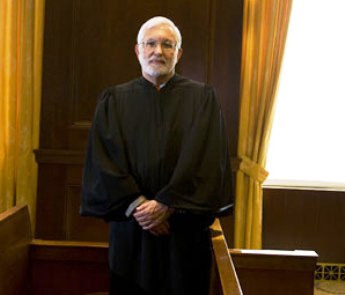
During the takeover of troubled financial giant Merrill Lynch by Bank of America in 2008, the S.E.C. gave its blessing to the deal. However, “Judge Rakoff,” the New York Times reported, “refused to approve a $33 million deal that would have settled a lawsuit filed by the Securities and Exchange Commission against the Bank of America. The lawsuit alleged that the bank failed to adequately disclose the bonuses that were paid by Merrill before the merger, which was completed in January at regulators’ behest.”
Judge Rakoff “accused the S.E.C. of failing in its role as Wall Street’s top cop by going too easy on one of the biggest banks it regulates,” the Times wrote. “And he accused executives of the Bank of America of failing to take responsibility for actions that blindsided its shareholders and the taxpayers who bailed out the bank at the height of the crisis.”
Who is this guy?
Jed S. Rakoff is a United States District Judge for the Southern District of New York. In July of 2003, Judge Rakoff presided over the S.E.C.s accounting fraud suit against telecommunications giant WorldCom. During that time, Rakoff appointed former Chairman of the S.E.C. Richard Breeden to serve as Corporate Monitor. During his work with WorldCom, Breeden prepared a report for Judge Rakoff entitled, “Restoring Trust,” which detailed a series of corporate governance reforms.
In his statement, Judge Rakoff “accused Bank of America and the S.E.C. of concocting the settlement to effectively absolve themselves of further responsibility,” the Times said.”
“The S.E.C. gets to claim that it is exposing wrongdoing on the part of the Bank of America in a high-profile merger,” Judge Rakoff said, and “the Bank’s management gets to claim that they have been coerced into an onerous settlement by overzealous regulators.”
“The sharply worded ruling,” the Times said, “which invoked justice and morality, seemed to speak not only to the controversial deal, but also to the anger across the nation over the excesses that led to the financial crisis, and the lax regulation in Washington that permitted those excesses to flourish.”
Judge Rakoff said that the $33 million settlement was both unfair and inadequate, and “ordered Bank of America and the S.E.C. to prepare for a possible trial that would begin by February 1.”
“Implicit in the judge’s remarks,” the Times pointed out, “were broader questions on the anniversary of one of the most tumultuous weeks in Wall Street’s history: What do the giants of finance owe their shareholders and the investing public? And who will adequately oversee these behemoths?”
These are the critical questions that need to be seriously answered if Wall Street is to avoid the “reckless behavior and unchecked excess” as President Obama said in his speech to banking executives and lawmakers yesterday that marked the greatest financial crisis since the Great Depression.
Comments
Recent Commentaries
November 4, 2026
October 20, 2026
Has America Lost Its Way?
October 16, 2026
All The President’s Targets
October 13, 2026
Integrity Doesn’t Require a Megaphone
October 12, 2026
WHOSE PURPOSE DOES THIS SERVE?
October 9, 2026

Choreographer of Disaster
October 5, 2026
I Am Not a Politician, and I Have No Partisan Loyalties
October 2, 2026
A Man of Incorruptible Integrity
September 29, 2026

HUMAN VALUES: NOT SPECIFIED
September 23, 2026
You Can’t Do That.
September 21, 2026
Read More Articles
The Latest... And Sometimes Greatest
I AM SICKENED
Tonight, protesters are surrounding the Kennedy Center, the living memorial to John F. Kennedy and the heartbeat of Washington’s cultural life. They are there because...
September 18, 2026
The Courage to Defend a Principle
In 1998, at the height of the Clinton-Lewinsky scandal, Secret Service Director Lewis Merletti was driving to work when a radio report stopped him cold....
September 17, 2026
The Better Angels Among Us
By all appearances, we are becoming less the land of the brave than the land of resentment. Every day is Groundhog Day: same arguments, same...
September 14, 2026
We Remember
On September 11, 2001, nearly 3,000 people were killed in terrorist attacks in New York, at the Pentagon, and aboard Flight 93 in Pennsylvania. More...
September 11, 2026
Mister Roberts!
One of my favorite movies is Mister Roberts, the 1955 comedy-drama set aboard the USS Reluctant in the Pacific during World War II. Henry Fonda...
September 8, 2026
Where’s the Character
In 1984, Wendy’s ran a television commercial featuring the redoubtable Clara Peller, staring at an enormous hamburger bun. Inside was a burger patty smaller than...
August 7, 2026