Published: November 9, 2021
By Jim Lichtman
“Courage shows up all the time in this world and often without any fanfare.”—Michael Keaton, in a 2018 speech honoring the centennial celebration of the founding of the Carnegie Hero Fund Commission by Andrew Carnegie.
On July 20, 2012 the horrific shooting an Aurora, Colorado movie theater left 12 dead, and 70 wounded. Heroism arrived on the scene when first responders and medical teams saved lives. Some carried the wounded to safety, others sacrificed themselves to save others – specifically Jonathan Blunk, 26; John Larimer, 27; Matt McQuinn, 27; and Alex Teves, 2424, whose lives were taken while shielding others during the shooting.
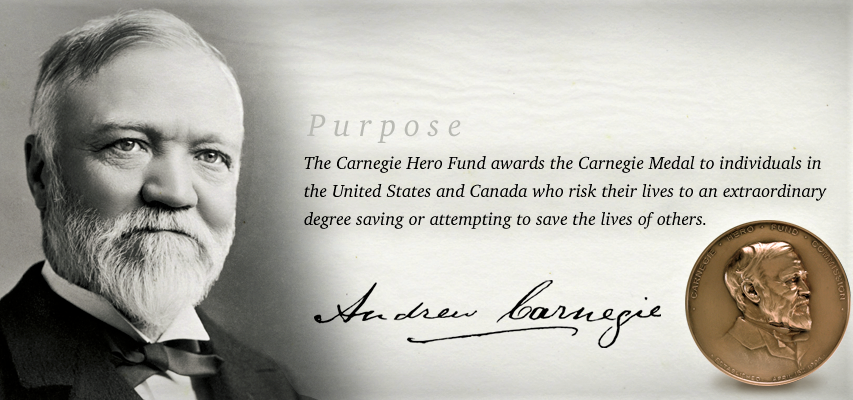
Andrew Carnegie was an industrialist responsible for making the highest-grade steel in the world. He was arguably the greatest philanthropist the United States has ever seen.
During the last 18 years of his life, Carnegie gave away around $350 million (roughly $5.2 billion in 2020) to a variety of special interests: Carnegie Hall, Carnegie Institute, Carnegie Mellon University, Carnegie Institute of Washington, the Carnegie Dunfermline Trust, the Carnegie Foundation for the Advancement of Teaching, the Carnegie Foundation for International Peace, Carnegie Corporation of New York, Carnegie Council for Ethics in International Affairs, and the Carnegie Hero Fund Commission.
A 1904 coal mine disaster in Pittsburgh motivated Carnegie to form the Hero Fund to formally recognize heroic acts.
“We live in a heroic age,” Andrew Carnegie wrote in the opening lines of the Commission’s founding in 1904. “Not seldom are we thrilled by deeds of heroism where men or women are injured or lose their lives in attempting to preserve or rescue their fellows.”
“To date, more than 10,000 medals have been awarded, the recipients selected from more than 100,000 nominees. About 20 percent of the Medals are awarded posthumously.”
Among those to be awarded this past September: “John D. Colter, 66, who rushed into his daughter’s home after hearing gunshots and confronted her estranged husband, who had shot and wounded her. As he wrestled over control of the gun, Colter yelled for his daughter to go get help. Minutes later, the gunman shot and killed Colter, and fled.
“Evan Patrick Ishima, 24, and Gabriel Cedrik Saechao, 20, attempted to rescue another man who had submerged at the top of a waterfall along a hiking trail; Draven M. Starr-Howell, 20; Edgar F. Moreno Alba, 17; and Sivad H. Johnson, 49, all drowned while attempting to rescue children who were struggling in deep water in three separate incidents. Allen Robert Linder will also receive the Carnegie Medal posthumously; he died attempting to save a young woman who suffocated inside the tank of a tanker truck that she was cleaning. Shortly after entering, Linder lost consciousness and could not be revived.”
Retired Marine Captain, Dale Dye offers the clearest definition of a hero.
“I would say a hero has two basic qualities: a selfless devotion to what’s right, whether that’s his duty or not, and the courage of his convictions. That’s simplistic but the classic example, of course, is the firemen and policemen who went into the World Trade Center and the Pentagon.
“Look, that was a dangerous situation. Everybody knew it was a dangerous situation. But those folks had a higher devotion of doing something larger than themselves. It wasn’t just about a job at that point. Nobody is going to die for a job. They were outside themselves . . . people, who demonstrated a larger view of things, who think, feel and respond outside themselves. And thinking is sometimes a confusing term. I don’t think genuine heroes spend a lot of time contemplating that issue. I think they instinctively feel it as – this is right. And if you were to press them, in many cases, they probably couldn’t tell you why other than some vague notion. And that’s okay. It’s not necessary that our heroes be massive intellectuals. It’s only important that they do what needs doing in critical situations.”
No matter the battlefield, we need more heroes: military, medical, corporate, institutional, and political. We need heroes to remind us that individual courage inspires us all to act outside ourselves and do what is necessary to help others.
This past July, US Representatives Ed Perlmutter and Jason Crow of Colorado introduced a resolution in the House to designate July 20 as “National Heroes Day” to honor the sacrifices of everyday heroes.
Comments

Recent Commentaries

HUMAN VALUES: NOT SPECIFIED
September 23, 2026

You Can’t Do That.
September 21, 2026

I AM SICKENED
September 18, 2026
The Courage to Defend a Principle
September 17, 2026
The Better Angels Among Us
September 14, 2026
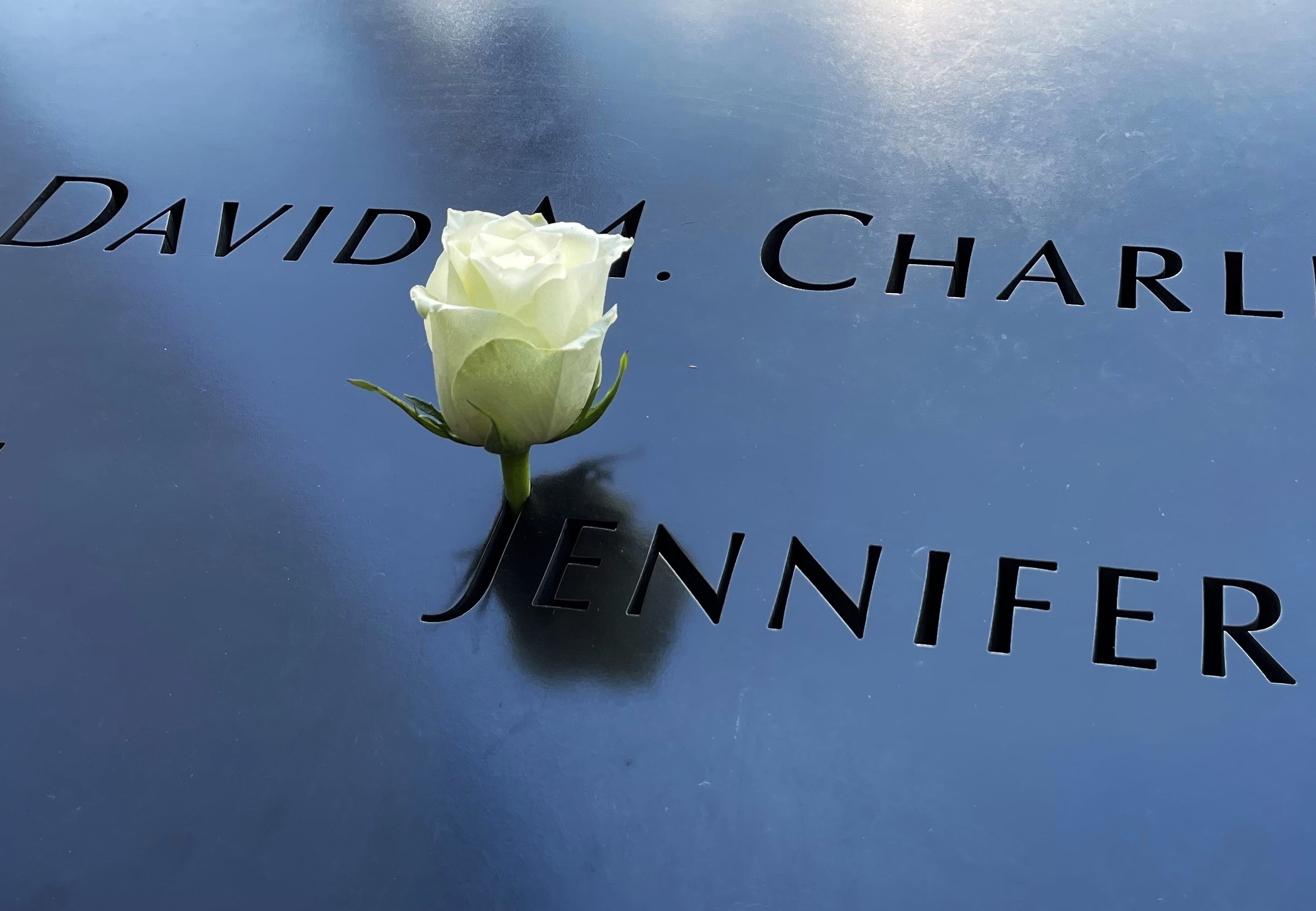
We Remember
September 11, 2026
Mister Roberts!
September 8, 2026

Where’s the Character
August 7, 2026

It Was Important Then. It is Important Today
August 3, 2026

When Political Identity Replaces Ethical Judgment
July 31, 2026
Read More Articles
The Latest... And Sometimes Greatest
Principles Matter.
A few nights ago, I was watching The Way We Were, a film I’ve seen more times than I can count. This time, a single...
July 28, 2026
All the President’s Men 2.0
“Politics had infiltrated every corner of government—a strong-arm takeover of the agencies by the Nixon White House.” —Bob Woodward and Carl Bernstein, All the President’s...
July 23, 2026
The Threat to November Is Already Here
“Cunning, ambitious, and unprincipled men will be enabled to subvert the power of the people and to usurp for themselves the reins of government.”—George Washington’s...
July 20, 2026
Jon Ossoff and the Conscience of Atticus Finch
I’ve written about Georgia Senator Jon Ossoff before, but after watching his questioning of Jay Clayton, President Trump’s nominee for director of national intelligence (DNI),...
July 17, 2026
Hearts and Minds
There’s a moment in Cool Hand Luke when Luke, played by Paul Newman, is returned to a prison camp after escaping. Determined to break his...
July 16, 2026
The Ethics of Belonging
I recently read a book by a man who has learned some of life’s hardest lessons and, by his own account, is still learning them...
July 14, 2026