Published: October 26, 2021
By Jim Lichtman
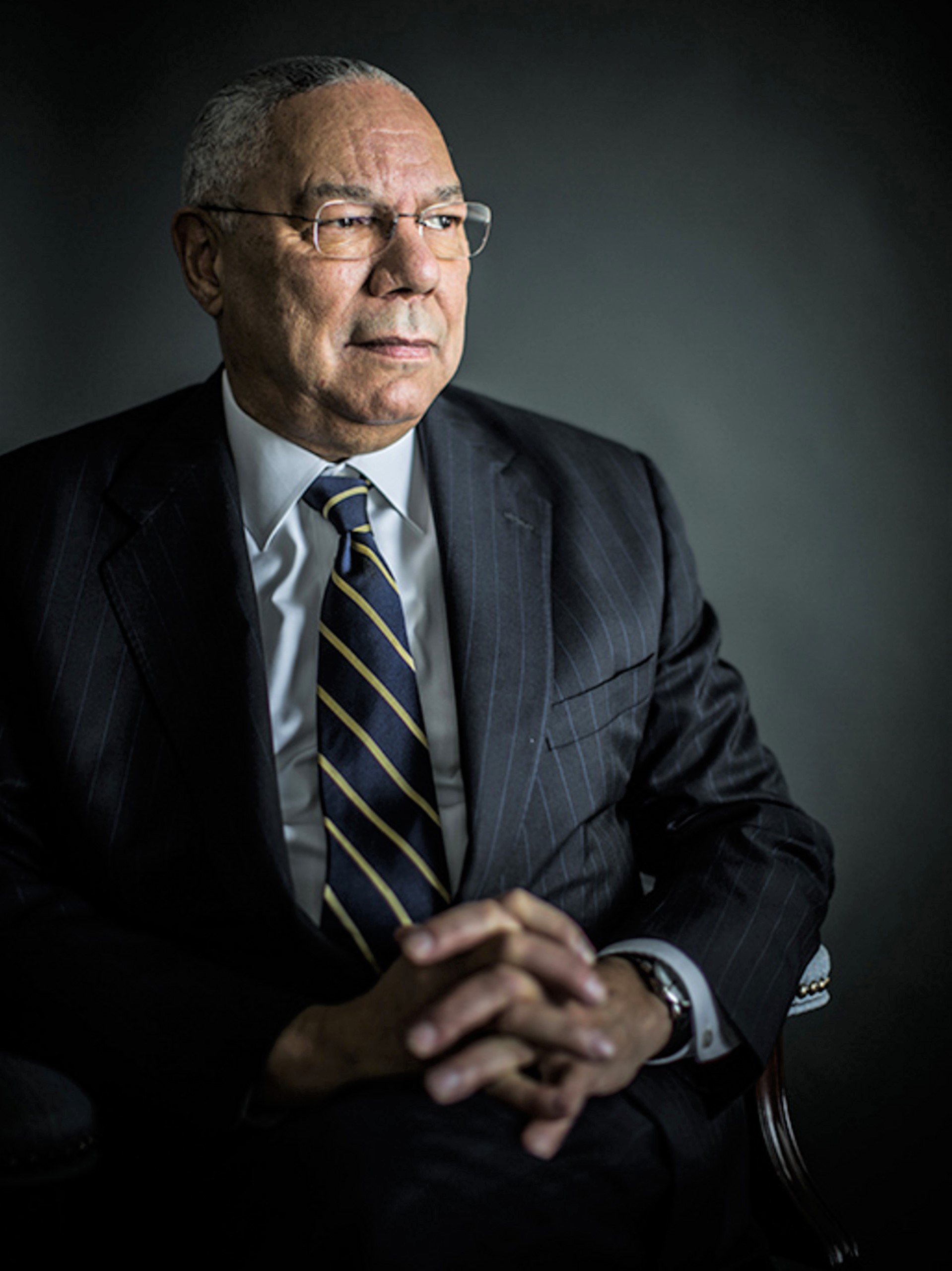
That’s what Harry Truman said of Gen. George C. Marshall–a characterization that easily applies to Gen. Colin L. Powell.
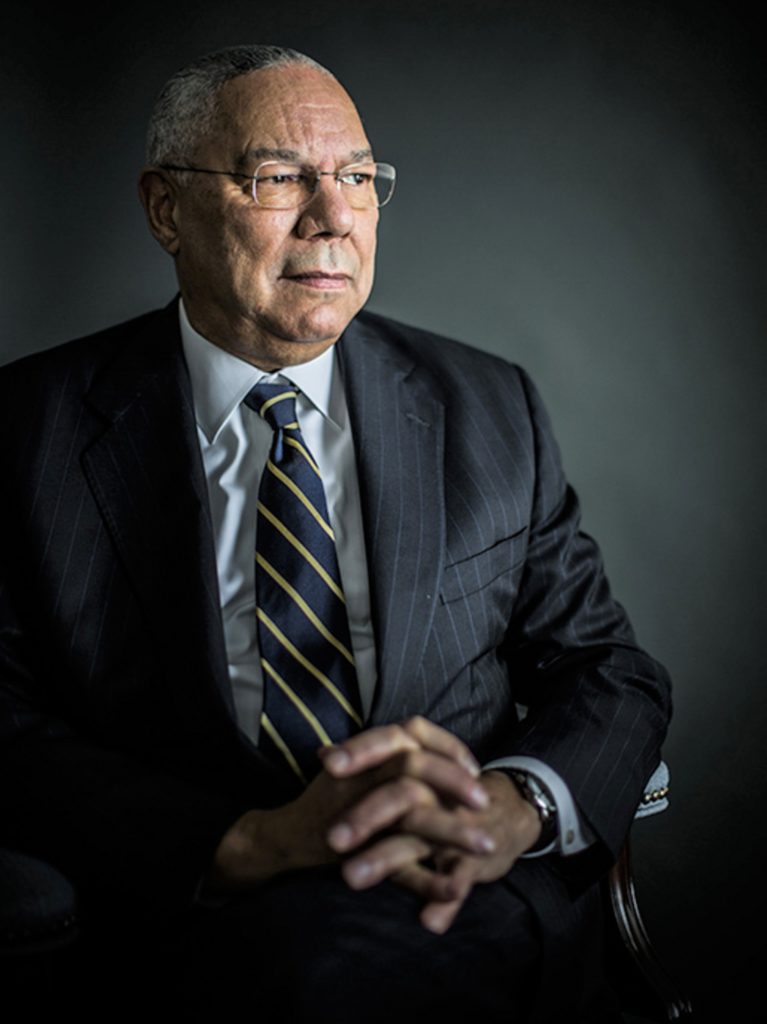
Stephen Voss/Redux Pictures
You won’t find a picture of Colin Powell next to Leadership in the dictionary, but you should. You also won’t find him alongside Merriam-Webster’s definition of a Statesman, but no one can deny that Powell was “a wise, skillful, and respected political leader.”
For four decades, Colin Powell served his country in a variety of distinguished leadership roles as chairman of the joint chiefs of staff, national security advisor, and secretary of state. Powell died last week from complications due to Covid-19. He was undergoing treatment for multiple myeloma, a disease that compromises the immune system.
Powell is one of only two individuals to receive two Presidential Medal of Freedom awards for “an especially meritorious contribution to the security or national interests of the United States, world peace, cultural or other significant public or private endeavors.” Ellsworth Bunker, US Ambassador to Vietnam, was the other.
However, it was as secretary of state where Powell’s most controversial moment occurred when he addressed the UN security council.
Prior to his speech, Powell spent two and a half hours explaining to president George W. Bush “the consequences of going into an Arab country and becoming the occupiers.” He insisted that the best option was to go to the United Nations, but if he failed to convince the delegates, he would support invasion. “I also had to say to him that you are the President, you will have to make the ultimate judgment, and if the judgment is this isn’t working and we don’t think it is going to solve the problem, then if military action is undertaken I’m with you, I support you.”
With the whole world watching, Powell gave a stark intelligence briefing about the risks posed by Iraq to the world.
“There can be no doubt,” Powell told the council, “that Saddam Hussein has biological weapons and the capability to rapidly produce more, many more.”
The intelligence was wrong. It had been cherry-picked to justify the rationales offered by Vice President Dick Cheney and Defense Secretary Donald Rumsfeld.
Powell later called the speech a “blot” on his record.
In response to a commentary I wrote on General Powell, Lorance R. Gomez, SFC, US Army Retired 1962-83, said, “In my estimation, General Powell was a true statesman, one who could recognize his mistakes and take ownership of said mistakes.”
Nonetheless, Gomez writes, “He could offer the best thought-out advice to our leaders, from lessons learned over the years never forgetting that it was the simple soldiers that helped launch his career making him one of our finest leaders in American history.
“General Powell ultimately found his calling by wrapping himself in the minds of our children, teaching and fortifying their abilities.
“I served during most of the same years the general served 1962-83. I never ran across him although I wish I had. I like to think that the soldiers of those years were different, tougher as they had to be because of the political climate at home but—as tradition has it from the beginning of our country—our soldiers always found a way to be there when the nation called.
“May the General Rest In Peace… I surrender unto him my final salute: DUTY, HONOR, COUNTRY, IN DIGNITY, ALWAYS!”
Friday: Lessons from Powell’s principles.
Comments
Recent Commentaries
We Remember
September 11, 2026
Mister Roberts!
September 8, 2026
Where’s the Character
August 7, 2026
It Was Important Then. It is Important Today
August 3, 2026
When Political Identity Replaces Ethical Judgment
July 31, 2026

Principles Matter.
July 28, 2026
All the President’s Men 2.0
July 23, 2026
The Threat to November Is Already Here
July 20, 2026
Jon Ossoff and the Conscience of Atticus Finch
July 17, 2026
Hearts and Minds
July 16, 2026
Read More Articles
The Latest... And Sometimes Greatest
The Ethics of Belonging
I recently read a book by a man who has learned some of life’s hardest lessons and, by his own account, is still learning them...
July 14, 2026
The Best of Us
“We choose to go to the Moon in this decade and do the other things—not because they are easy, but because they are hard.” When...
July 9, 2026
The Standard Washington Set
Much has been written about George Washington, our first American president: his command of the Continental Army, his leadership in the fragile birth of a...
July 6, 2026
Who We Were. Who We Are…
Today, America is 250 years old. This Fourth of July, amid deep national division, it seems worth asking a simple question: Which of our country’s...
July 4, 2026
Are We Still Worthy of What They Declared?
Conclusion: The Words That Made Us and Still Must. In December of 1776, the Revolution was not moving toward triumph. It was close to collapse....
July 3, 2026
Are We Still Worthy of What They Declared?
Part 2: Common Sense Are we still capable of that kind of clarity when it matters most? There was a moment in the birth of...
July 1, 2026