Published: June 26, 2008
By Jim Lichtman
Recently, a friend made this comment about a (June 21) commentary I posted about fairness: “Fairness,” she said, borrowing from a previous statement about torture, “is basically subject to perception.”
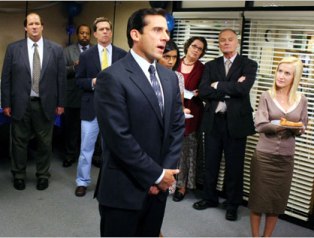
Is fairness perceptual? What is a practical definition of fairness?
“All virtue,” Aristotle wrote, “is summed up in dealing justly.”
But what is justice? What is a just or fair individual?
Determining what is fair can indeed be daunting. Whether it’s considering an equal share of pie or equal opportunity, a variety of stakeholders, each with his or her own conflicting interests, can have very different opinions.
At its core, fairness is about being impartial, open-minded, and committed to the equitable treatment of all stakeholders, as well as having a willingness to suspend prejudice and consider all relevant information.
The workplace is the one area where issues of justice and fairness crop up most, particularly when money, position, competition and self-image are involved.
A commercial real estate agent told me of a recent incident at his workplace. A longstanding client group had asked him to represent their interests in a real estate deal. The terms of compensation to the agent would be the same as in previous deals. However, at the conclusion of this particular property deal, the client group decided to change the agent’s compensation arrangement.
Needless to say, the agent was angry and felt insulted due to the unfair tactics of his clients. “I thought I knew them. I thought they would never pull something like this, but I was wrong.”
Consistency in treating others is another factor in fairness. Treating people inconsistently in the workplace inevitably leads to lower morale and supports a “get-even” mentality that ultimately hurts everyone in the long run.
Ethicist Michael Josephson says that “fairness requires that:
- “All people should be treated equitably based on their merits and abilities and all situations that are essentially similar should be handled similarly and with consistency.
- “All decisions should be made only on appropriate criteria, without undue favoritism or improper prejudice.
- “People should never be blamed or punished for what they did not do and those who violate moral obligations or laws should be appropriately sanctioned.
- “Personal and institutional mistakes and improprieties should be promptly and voluntarily corrected when discovered.
- “No person should take unfair advantage of the mistakes or ignorance of others.
- “In making decisions of importance, fully consider the rights, interests, and perspectives of all stakeholders, approach the judgment with open-minded impartiality, gather and verify facts, provide critical stakeholders with an opportunity to explain or clarify, and carefully evaluate the information.
Although fairness can be complex, we should always strive to treat others as fairly as possible if we want to insure the highest level of long term trust.
Perhaps the oldest and most fundamental ethical tenet offers the best solution: “Do to others what you would have them do to you.”
Comments


Recent Commentaries
Integrity Doesn’t Require a Megaphone
October 12, 2026

WHOSE PURPOSE DOES THIS SERVE?
October 9, 2026

Choreographer of Disaster
October 5, 2026
I Am Not a Politician, and I Have No Partisan Loyalties
October 2, 2026
A Man of Incorruptible Integrity
September 29, 2026

HUMAN VALUES: NOT SPECIFIED
September 23, 2026
You Can’t Do That.
September 21, 2026
I AM SICKENED
September 18, 2026
The Courage to Defend a Principle
September 17, 2026

The Better Angels Among Us
September 14, 2026
Read More Articles
The Latest... And Sometimes Greatest
We Remember
On September 11, 2001, nearly 3,000 people were killed in terrorist attacks in New York, at the Pentagon, and aboard Flight 93 in Pennsylvania. More...
September 11, 2026
Mister Roberts!
One of my favorite movies is Mister Roberts, the 1955 comedy-drama set aboard the USS Reluctant in the Pacific during World War II. Henry Fonda...
September 8, 2026
Where’s the Character
In 1984, Wendy’s ran a television commercial featuring the redoubtable Clara Peller, staring at an enormous hamburger bun. Inside was a burger patty smaller than...
August 7, 2026
It Was Important Then. It is Important Today
Freedom of speech in America is under attack, not only when people are denied the right to speak, but when lies, intimidation and the deliberate...
August 3, 2026
When Political Identity Replaces Ethical Judgment
The political and cultural landscape has become a minefield of conflicting beliefs, many now rooted less in public policy than in personal identity. One of...
July 31, 2026
Principles Matter.
A few nights ago, I was watching The Way We Were, a film I’ve seen more times than I can count. This time, a single...
July 28, 2026