Published: April 23, 2021
By Jim Lichtman
Normally, I’m against passing any legislation that forces a health decision on anyone. But we are not living in normal times. We continue to live with a contagious virus that affects the entire world – a pandemic.
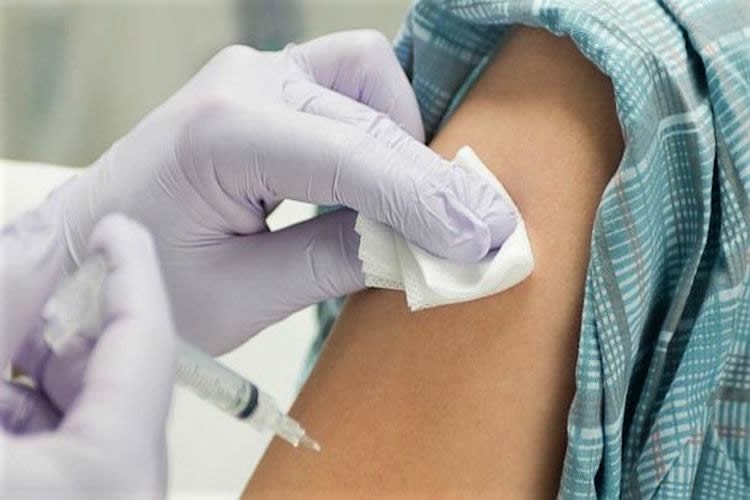
According to Johns Hopkins University and Medicine, more than 3 million have died worldwide. As of Wednesday, deaths in the United States have reached 528,603.
“The takeaway,” PolitiFact reports (Mar. 21), is that the coronavirus killed more Americans in the past year than any cause of death in 2019, other than heart disease and cancer. And if the University of Washington model proves accurate, then by June, the 15-month toll from the coronavirus will be close to matching the annual number of deaths from cancer.”
On Sunday, the CDC reported that about half, 130 million adults, have received at least one dose of the vaccine, but that still leaves the remaining half vulnerable to the disease. “State health officials, business leaders, policymakers and politicians are struggling to figure out how to tailor their messages, and their tactics, to persuade not only the vaccine-hesitant but also the indifferent,” The New York Times writes (April 21).
Considering the seriousness of a highly communicable and deadly disease, how do we convince the undecideds or the reluctant to get vaccinated?
The obvious first step, some of which is already in place, are commercial television messages encouraging all to step up and take the vaccine not just to protect themselves but family, friends, co-workers, and others. One way to make the messages persuasive is to have celebrities from sports, entertainment, and business leaders like Jeff Bezos, Bill Gates, Warren Buffet, Mark Cuban, Elon Musk, and anyone else with a high profile, even the Kardashians. And there’s a role for local ministers and community leaders to play. The national ads could allow a gap at the end for a 5 or 10-second message from community leaders.
Nevertheless, if we can’t persuade the unwilling, would it be ethical to require that all receive the vaccine?
Putting aside the issue that it would be virtually impossible to police, let’s look at it using an ethical decision-making model.
- Who would be helped or harmed by such a requirement?
Certainly, there is considerable upside in helping not only the reluctant but hundreds of others with whom the disease would spread including teens and the yet-to-be-vaccinated. The only downside I see would come from those protesting that their rights were being violated by federal and state officials. However, government entities already have requirements. You are required to register your car, have a valid license to drive, wear a seatbelt, provide proper protection for children, and obey all traffic laws. Sports have rules of their own.
Many schools require that school-age children be vaccinated against common childhood diseases like polio, chickenpox, measles, and mumps. So, there are some health standards in place.
But again, enforcement would be extremely difficult.
- Which ethical values are involved?
When it comes to the possibility of causing harm to others, certainly responsibility, respect, as well as civic duty. Each of us has an obligation to contribute to the overall well-being of the communities in which we live.
- If it is necessary to choose one ethical value over another, the ethical decision-maker will do the thing that he or she sincerely believes to be best for society in the long run.
One could argue that respect conflicts with civic duty. Respect includes accepting individual differences without prejudice. However, civic duty asks us to look beyond ourselves and consider how our decisions might affect others.
While I believe that it is wiser to look to the needs of the many, there will always be those that resist. And even though a strong case can be made for such a requirement, ultimately, it would only exacerbate existing divisions in the country likely to cause greater harm than help. In that context, I believe it best to avoid forcing vaccinations on anyone.
The best recourse, in the long run, is to appeal to the overall health of the country. The sooner all of us get vaccinated, the sooner we recover physically, emotionally, and economically.
Comments
Leave a Comment

Recent Commentaries

HUMAN VALUES: NOT SPECIFIED
September 23, 2026
You Can’t Do That.
September 21, 2026
I AM SICKENED
September 18, 2026
The Courage to Defend a Principle
September 17, 2026
The Better Angels Among Us
September 14, 2026
We Remember
September 11, 2026
Mister Roberts!
September 8, 2026

Where’s the Character
August 7, 2026
It Was Important Then. It is Important Today
August 3, 2026
When Political Identity Replaces Ethical Judgment
July 31, 2026
Read More Articles
The Latest... And Sometimes Greatest
Principles Matter.
A few nights ago, I was watching The Way We Were, a film I’ve seen more times than I can count. This time, a single...
July 28, 2026
All the President’s Men 2.0
“Politics had infiltrated every corner of government—a strong-arm takeover of the agencies by the Nixon White House.” —Bob Woodward and Carl Bernstein, All the President’s...
July 23, 2026
The Threat to November Is Already Here
“Cunning, ambitious, and unprincipled men will be enabled to subvert the power of the people and to usurp for themselves the reins of government.”—George Washington’s...
July 20, 2026
Jon Ossoff and the Conscience of Atticus Finch
I’ve written about Georgia Senator Jon Ossoff before, but after watching his questioning of Jay Clayton, President Trump’s nominee for director of national intelligence (DNI),...
July 17, 2026
Hearts and Minds
There’s a moment in Cool Hand Luke when Luke, played by Paul Newman, is returned to a prison camp after escaping. Determined to break his...
July 16, 2026
The Ethics of Belonging
I recently read a book by a man who has learned some of life’s hardest lessons and, by his own account, is still learning them...
July 14, 2026
Yes Jim, Americans “are required to register your car, have a valid license to drive, wear a seatbelt, provide proper protection for children, and obey all traffic laws.” Considering our current polarized country, I don’t think we could get approval to make it mandatory. When sports and other entertainment venues require it, more will join in. When community leaders, religious leaders and employers require it, more will join in. When we treat alcoholics and addicts the negative and expensive consequences on society are diminished. Please encourage everyone you know to get vaccinated for themselves, their friends, kids, parents and grandparents.