Published: July 17, 2026
By Jim Lichtman
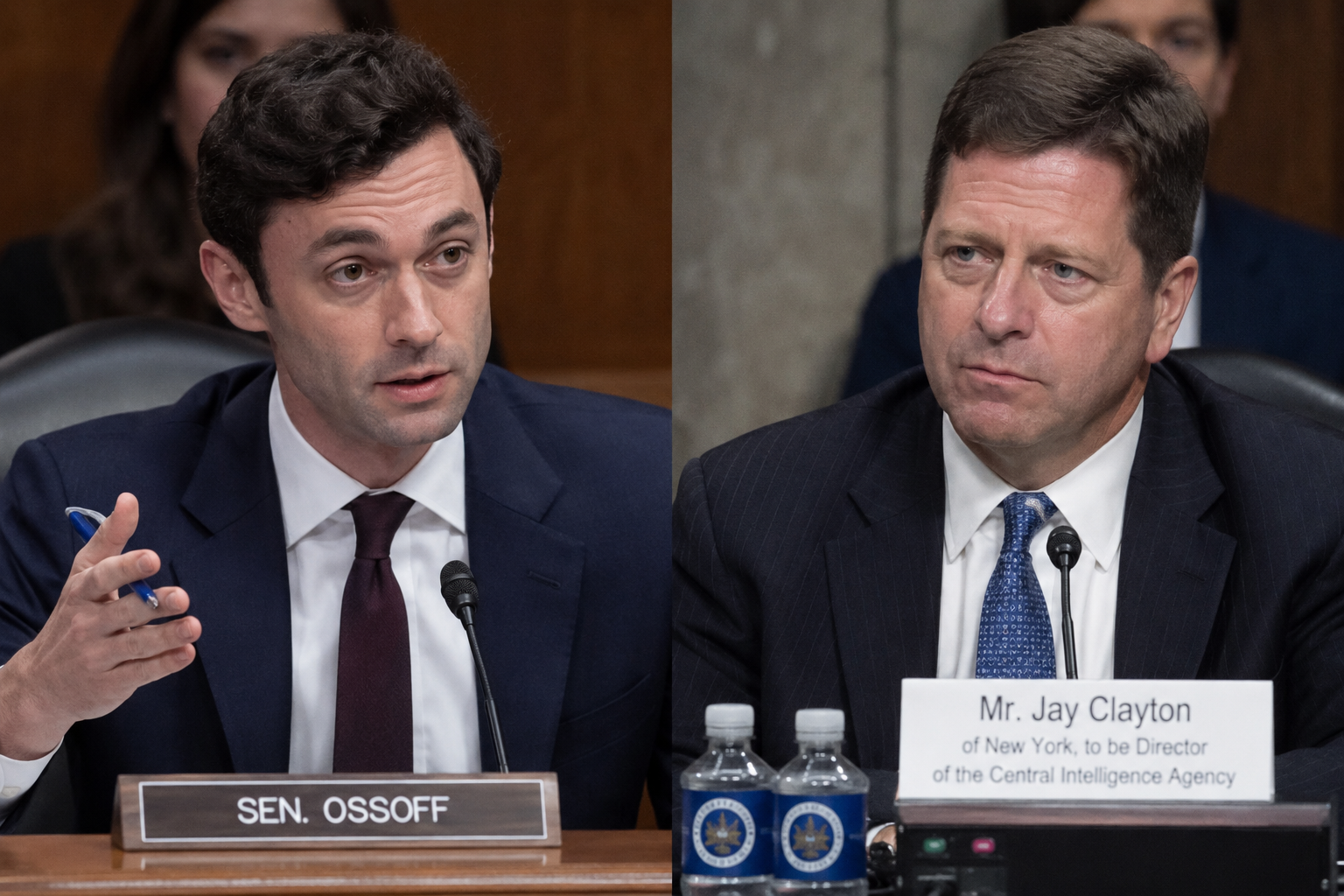
I’ve written about Georgia Senator Jon Ossoff before, but after watching his questioning of Jay Clayton, President Trump’s nominee for director of national intelligence (DNI), I think he deserves another look—particularly in comparison with Atticus Finch, the central character in Harper Lee’s To Kill a Mockingbird.
The comparison is not exact, nor should it be. Atticus is a fictional Alabama lawyer defending an innocent Black man facing a capital charge in the segregated South. Ossoff is a United States senator with the authority, resources and political ambitions that accompany national office.
Still, the comparison becomes persuasive when we consider their temperaments. Both rely on facts rather than theatrics. Both display a controlled moral seriousness. And both understand that public institutions are only as strong as the individuals willing to speak plainly and tell the truth.
Atticus Finch’s strength is rarely expressed through anger. In the courtroom, he does not overpower witnesses through volume, ridicule or humiliation. He proceeds methodically, reducing a web of fear, prejudice and dishonesty to a few unavoidable facts. His restraint is not weakness. It is discipline, a way of placing the moral burden on the person being questioned.
Ossoff employed much of the same technique with Clayton. He repeatedly asked one simple question: “Who won the 2020 election?”
Clayton would not answer directly, insisting that he would not participate in what he called “the theater.” But it was Clayton’s refusal—not Ossoff’s question—that turned the exchange into theater. A routine confirmation hearing became a test of whether a prospective intelligence director could acknowledge an established fact when doing so might displease the president who nominated him.
Ossoff finally told Clayton:
“We know, you know, everybody in this room knows the truthful answer to that question.”
The sentence sounds as though it might have been spoken by Atticus. It is plain and almost conversational, yet morally accusatory. Ossoff is not suggesting that Clayton lacks the information necessary to answer. He is saying that Clayton knows the truth and is consciously refusing to state it.
The issue is not knowledge. It’s character.
Atticus expresses much the same principle when he tells Scout:
“The one thing that doesn’t abide by majority rule is a person’s conscience.”
That observation captures the connection between the two men. Truth does not become less true because a powerful person, an angry crowd or a political movement refuses to accept it. Facts are not determined by applause, intimidation or political convenience.
Institutions do not sustain themselves. Courts, legislatures and intelligence agencies retain their legitimacy only when those serving within them place fact and conscience above fear and popularity.
Rules may establish an institution, but it’s character that sustains it. It’s character that gives it moral authority. And it’s character that determines whether it deserves the public’s trust.
Ossoff’s composure makes Clayton’s evasiveness more conspicuous. Had Ossoff shouted or delivered an angry speech, the exchange might have appeared to be another partisan battle. Instead, by returning to the same factual question, he allowed the refusal itself to become the story.
His questioning of Clayton was not an isolated performance. It was consistent with the way he has approached public office: preparing carefully, following the facts, pressing witnesses for answers, and insisting that those entrusted with power be held accountable for how they use it. That persistence matters because accountability is not merely a political virtue. It is one of the conditions that allows a democracy to survive.
Atticus Finch understood that conscience begins where the crowd’s approval ends. In that Senate hearing room, Jon Ossoff understands that.
We should, too.
Comments


Recent Commentaries
You Can’t Do That.
September 21, 2026

I AM SICKENED
September 18, 2026

The Courage to Defend a Principle
September 17, 2026

The Better Angels Among Us
September 14, 2026

We Remember
September 11, 2026

Mister Roberts!
September 8, 2026

Where’s the Character
August 7, 2026
It Was Important Then. It is Important Today
August 3, 2026
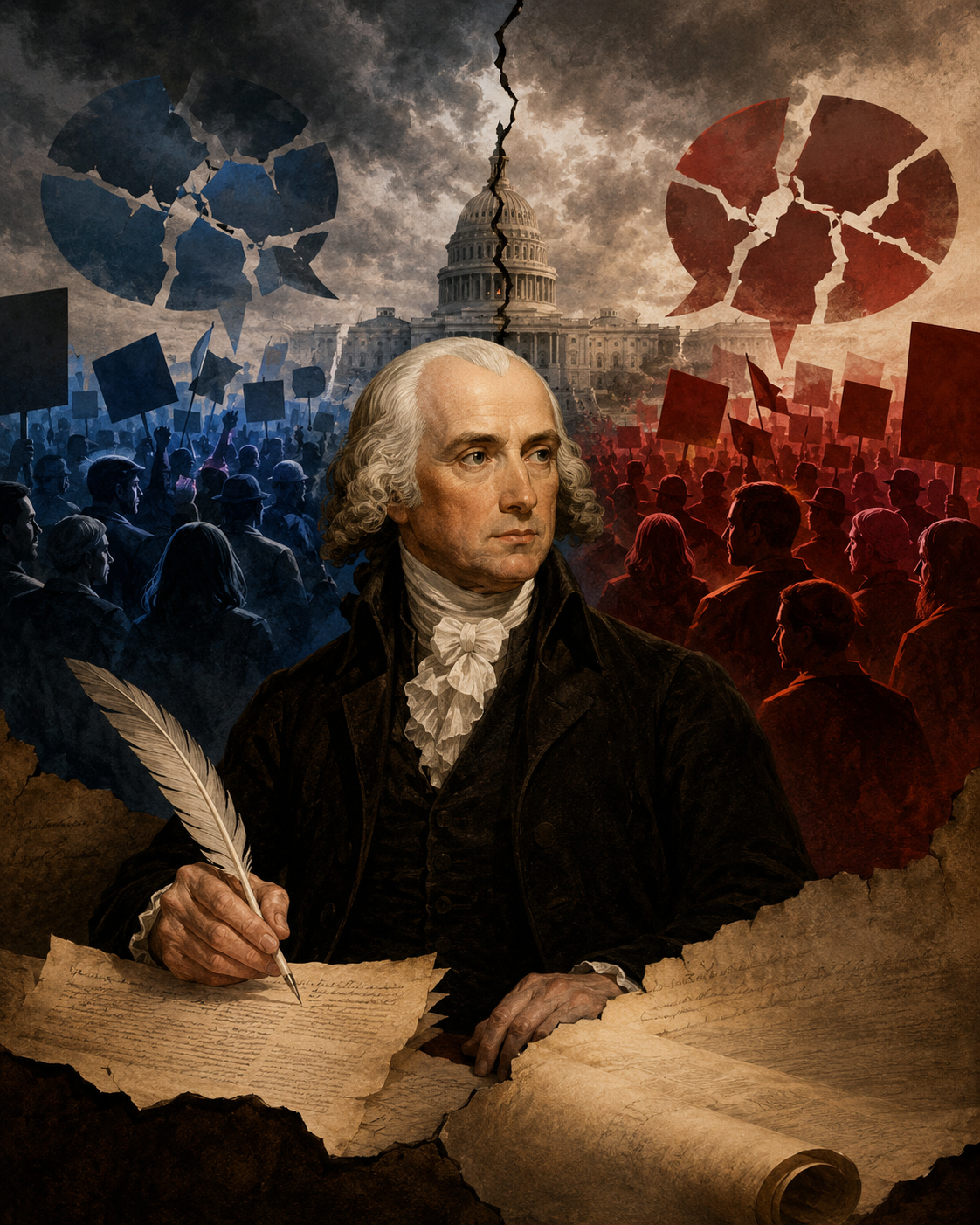
When Political Identity Replaces Ethical Judgment
July 31, 2026

Principles Matter.
July 28, 2026
Read More Articles
The Latest... And Sometimes Greatest
All the President’s Men 2.0
“Politics had infiltrated every corner of government—a strong-arm takeover of the agencies by the Nixon White House.” —Bob Woodward and Carl Bernstein, All the President’s...
July 23, 2026
The Threat to November Is Already Here
“Cunning, ambitious, and unprincipled men will be enabled to subvert the power of the people and to usurp for themselves the reins of government.”—George Washington’s...
July 20, 2026
Jon Ossoff and the Conscience of Atticus Finch
I’ve written about Georgia Senator Jon Ossoff before, but after watching his questioning of Jay Clayton, President Trump’s nominee for director of national intelligence (DNI),...
July 17, 2026
Hearts and Minds
There’s a moment in Cool Hand Luke when Luke, played by Paul Newman, is returned to a prison camp after escaping. Determined to break his...
July 16, 2026
The Ethics of Belonging
I recently read a book by a man who has learned some of life’s hardest lessons and, by his own account, is still learning them...
July 14, 2026
The Best of Us
“We choose to go to the Moon in this decade and do the other things—not because they are easy, but because they are hard.” When...
July 9, 2026