Published: March 23, 2016
By Jim Lichtman
Supreme Court Justice Potter Stewart once said, “Ethics is knowing the difference between what you have a right to do and what is right to do.”
When it comes to considering President Obama’s selection of Judge Merrick Garland for the Supreme Court, Senate Republicans are opting for their right over what is right.
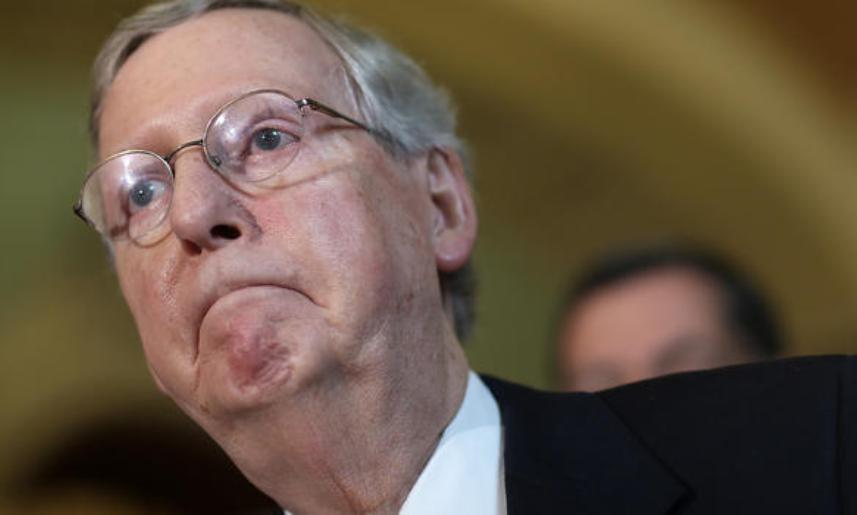
Congress has a long history of not doing much, regardless of who’s in the White House.
In his 1988 book, Let the Word Go Forth, President Kennedy advisor and speechwriter Ted Sorensen writes, “Theodore Roosevelt was not popular in the Congress… And the feeling was mutual, Roosevelt saying: ‘I do not much admire the Senate, because it is such a helpless body when efficient work is to be done.’
“And Woodrow Wilson was even more bitter after his frustrating quarrels. Asked if he might run for the Senate in 1920, he replied: ‘Outside of the United States, the Senate does not amount to a damn. And inside the United States the Senate is mostly despised. They haven’t had a thought down there in fifty years.’
“Under our government of ‘power as the rival of power,’ to use Hamilton’s phrase, Congress must not surrender its responsibilities. But neither should it dominate,” Sorensen emphasizes.
“…the President must initiate policies and devise laws to meet the needs of the nation. And he must be prepared to use all the resources of his office to insure the enactment of that legislation – even when conflict is the result.”
Approximately one hour after the death of Supreme Court Justice Antonin Scalia’s, Senate Majority Leader Mitch McConnell said (Feb. 13), “The American people should have a voice in the selection of their next Supreme Court Justice. Therefore, this vacancy should not be filled until we have a new president.”
Ten days before Scalia’s untimely death, Chief Justice John Roberts, speaking at a private law school in Boston, made a point that the confirmation process had become far too political.
“The process is not functioning very well,” Roberts said. “Look at my more recent colleagues, all extremely well qualified for the court, and the votes were, I think, strictly on party lines for the last three of them, or close to it, and that doesn’t make any sense. That suggests to me that the process is being used for something other than ensuring the qualifications of the nominees.”
Admonishing the Senate, Roberts said, “When you have a sharply political, divisive hearing process it increases the danger that whoever comes out of it will be viewed in those terms.”
And Mr. McConnell’s response?
No hearings. No meetings. No way.
Days later, thorough a spokesman, McConnell confirmed his stance. “The leader reiterated his position that the American people will have a voice in this vacancy and that the Senate will appropriately revisit the matter when it considers the qualifications of the person the next president nominates. And since the Senate will not be acting on this nomination, he would not be holding a perfunctory meeting, but he wished Judge Garland well.”
And what do the people think?
In a Monmouth University Poll (Mar. 17-20), Fifty-three percent of voters surveyed said that the “Senate should consider… nominations even if they occur at the very end of a president’s term.”
In a follow-up, Monmouth asked, “Now that the nomination has been made, do you think the U.S. Senate should or should not hold hearings to consider Obama’s nominee?”
Sixty-nine percent of Republicans, Democrats and Independents said the Senate “should hold hearings.”
And when that same group was asked, “Do you think Senate Republicans who say they will refuse to hold hearings on the nomination are doing this more to give the American people a voice in the process, or more because they are playing politics?,” 77 percent said “they are playing politics.”
So much for the voice of the people.
“We don’t work as Democrats or Republicans,” Roberts said at his talk in Boston, “and I think it’s a very unfortunate impression the public might get from the confirmation process.”
“In 2007,” The New York Times writes (Mar. 22), “speaking to a bar group in Memphis, Justice Scalia reflected on what he said had become ‘a controversial, bitter confirmation process.’
“ ‘I was confirmed 98 to 0,’ he said. ‘I was known as a conservative then, but I was perceived to be an honest person. I couldn’t get 60 votes today.’ ”
Elaine Harmon Update: In a message received last night from Tiffany Miller, HR-4336, (WASP A.I.R. Act), passed the U.S. House of Representatives in a unanimous vote. If passed by the Senate, the act would allow women who served as WASPs to be buried in Arlington National Cemetery, if they choose.
Comments


Recent Commentaries

Lindsay Vonn’s Gold Medal Moment
March 12, 2026

Teaching an Algorithm Right from Wrong
March 9, 2026
Now, More Than Ever
March 6, 2026

Peace Is Not an Elective
March 2, 2026
Revelations
February 26, 2026

The Story of Chips, and The Cost of Looking Away
February 23, 2026

It’s Time to Talk About Respect
February 18, 2026

Adversity and Perseverance
February 16, 2026
Who Decides What’s Seen?
February 12, 2026
The Death of Shame
February 9, 2026
Read More Articles
The Latest... And Sometimes Greatest
Because We Need It
From the man who invented The Tonight Show. What Steve Allen understood—long before humor became sharper and more performative—is that laughter can be light and...
February 5, 2026
Why George Marshall Still Matters
There are moments in history when power reveals its true character. During World War II, no American general was more central to victory than George...
February 2, 2026
The Most Sacred Thing
We toss the word “sacred” around as if it were a mood, something reserved for private faith. But in public life, “sacred” has a harder...
January 29, 2026
THIS Cannot Be Ignored
New information has now confirmed what many feared from the start: Alex Pretti was disarmed before he was shot—multiple times—by federal agents in Minneapolis. Whatever...
January 25, 2026
Year One
Not long ago, I stopped watching the national news. I told myself I was stepping away from the noise and the churn for some peace...
January 20, 2026
Removed
First an update: Not long ago, 60 Minutes, the CBS news program, pulled a segment a few hours before it was set to air. The...
January 18, 2026