Published: December 7, 2009
By Jim Lichtman
“It is in everybody’s interest to seek those [actions] that lead to happiness and avoid those which lead to suffering. And because our interests are inextricably linked, we are compelled to accept ethics as the indispensable interface between my desire to be happy and yours.”
– His Holiness the Fourteenth Dalai Lama
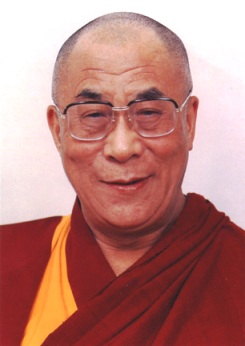
What is clear from the writings of the Dalai Lama (“Lama” is the designation given to teachers in Tibetan Buddhism) is the importance he places on ethical conduct.
“Human qualities as morality, compassion, decency, wisdom and so forth have been the foundations of all civilizations. These qualities must be cultivated and sustained through systematic moral education in a conducive social environment, so that a more human world may emerge. The qualities required to create such a world must be inculcated right from the beginning, from childhood. We cannot wait for the next generation.”
Unlike the Greek philosophers who taught right conduct through the practice of virtuous behavior, the Dalai Lama talks about “…the ethics of abandoning the ten non-virtues.”
“The three physical non-virtues are:
1. Taking the life of a living being; ranging from killing an insect to killing a human.
2. Stealing; taking away another’s property without his consent, regardless of its value, whether the deed is done by oneself or through another.
3. Sexual misconduct; committing adultery.
“The four verbal non-virtues are:
4. Lying; deceiving others through spoken words or physical gestures.
5. Divisiveness: creating dissension by causing those in agreement to disagree or by causing those in disagreement to disagree still further.
6. Harshness; abusing others.
7. Senselessness: talking about foolish things motivated by desire and so forth.
“The three mental non-virtues are:
8. Covetousness: thinking, “May this become mine,” desiring something that belongs to another.
9. Harmful intent: wishing to injure others, be it great or small injury.
10. Wrong view: viewing some existent ting, such as rebirth, cause and effect, or Three Jewels,* as non-existent. (*The core of Buddhism: Buddha, his doctrine, Dharma, and the Spiritual Community).”
Whether you view ethics through the lens of virtues or non-virtues, the goal remains the same: good conduct can most effectively be brought about through a consciousness of andcommitment to ethical values in our lives.
“It is not enough to make noisy calls to halt oral degeneration; we must do something about it. Since present-day governments do not shoulder such ‘religious’ responsibilities, humanitarian and religious leaders must strengthen the existing civic, social, cultural, educational and religious organizations to revive human and spiritual values. Where necessary we must create new organizations to achieve these goals.
“Only in so doing can we hope to create a more stable base for world peace.”
Amen.
Comments

Recent Commentaries

We Remember
September 11, 2026

Mister Roberts!
September 8, 2026
Where’s the Character
August 7, 2026
It Was Important Then. It is Important Today
August 3, 2026

When Political Identity Replaces Ethical Judgment
July 31, 2026

Principles Matter.
July 28, 2026

All the President’s Men 2.0
July 23, 2026

The Threat to November Is Already Here
July 20, 2026

Jon Ossoff and the Conscience of Atticus Finch
July 17, 2026

Hearts and Minds
July 16, 2026
Read More Articles
The Latest... And Sometimes Greatest
The Ethics of Belonging
I recently read a book by a man who has learned some of life’s hardest lessons and, by his own account, is still learning them...
July 14, 2026
The Best of Us
“We choose to go to the Moon in this decade and do the other things—not because they are easy, but because they are hard.” When...
July 9, 2026
The Standard Washington Set
Much has been written about George Washington, our first American president: his command of the Continental Army, his leadership in the fragile birth of a...
July 6, 2026
Who We Were. Who We Are…
Today, America is 250 years old. This Fourth of July, amid deep national division, it seems worth asking a simple question: Which of our country’s...
July 4, 2026
Are We Still Worthy of What They Declared?
Conclusion: The Words That Made Us and Still Must. In December of 1776, the Revolution was not moving toward triumph. It was close to collapse....
July 3, 2026
Are We Still Worthy of What They Declared?
Part 2: Common Sense Are we still capable of that kind of clarity when it matters most? There was a moment in the birth of...
July 1, 2026