Published: July 13, 2012
By Jim Lichtman
According to a recent Gallup poll (July 10) “Confidence in newspapers is now half of what it was at its peak of 51% in 1979.”
However, I recently came across an example where a reporter remained committed to doing the right thing in spite of professional and social pressures.
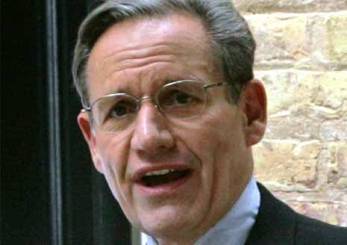
With people closing in on the identity of Deep Throat – the mystery man who secretly guided Washington Post reporters Woodward and Bernstein to uncovering the scandal that was Watergate – Bob Woodward faced an ethical dilemma. Deputy FBI Director Mark Felt, Woodward’s inside source, had extracted an unshakable promise from the Post reporter not to reveal his identity until after Felt’s death.
“It was the old question,” Woodward writes, “Was Felt patriot or traitor?”
Woodward writes in his book, The Secret Man, “At the end of April 2002, there was a call on my voice mail at the Post from someone who identified himself as Mark Felt, Jr. … [who] had a stunning message about his dad. ‘He has told us for the first time, in all these years, that he was Deep Throat.’ ”
After speaking with Felt himself, however, Woodward confirmed that the eighty-eight-year-old man was suffering serious memory problems as a result of two strokes. He also confirmed that in the last years of his life Felt remained concerned about his reputation with current and former agents as well as “the security of his family, and said disclosure might ‘dishonor [his] family.’ ”
At this point, I became interested in Woodward’s decision-making process.
Woodward showed a draft of his book to Ben Bradlee, thePost’s executive editor during the Watergate scandal. Bradlee’s clear and concise response summarizes the issue: “ ‘Do you owe allegiance to a man who is no longer that man who you knew and gave your word to?’
“ ‘The answer is yes – an unequivocal YES,’ Bradlee said… You have to be true to the deal, the agreement and the relationship that existed back in the early 1970s, he said. Felt’s successor self, if you will, is the victim of frailty and memory loss. The ‘sound mind’ provision of a last will and testament addresses this, he said, and Felt doesn’t pass the test. … If I was seriously considering doing anything before Felt died, Bradlee recommended, Don’t.”
Woodward then asked his attorney who, after careful review, said that the reporter needed Felt’s permission and “that permission must be given voluntarily, absolutely and under circumstances that established it was given competently.”
Woodward concluded that “The ‘competently’ was unattainable for sure… [and] abandoned the idea of a signed affidavit.”
However, pressure to resolve Deep Throat’s identity was building. Former White House counsel John Dean was about to release an e-book identifying the mystery man. “Many people had died,” Woodward writes, “I had eliminated several publically. The list was getting shorter. … I said I was no longer going to comment on the subject – period.”
Hardest of all, perhaps, was Woodward’s lying to a colleague at his own paper. Post columnist and friend, Richard Cohen told Woodward that “he was pretty sure Deep Throat was Mark Felt.”
“Look, [Cohen] said, he had heard from someone… that at the top of my Deep Throat memos were the initials ‘M.F.’ obviously Mark Felt, right?”
“It’s not him,” Woodward writes, “adopting the well-tested Watergate strategy that when all else fails, lie. I lied,” which Woodward deeply regrets, believing that honoring his agreement to Felt trumped loyalty to a colleague. In similar ethical conflicts, it is not unusual for loyalty to override every other consideration.
Without disclosing the truth behind the reporter’s relationship with the elder Felt, and despite the fact that the former FBI man had admitted his secret identity to his family,
Woodward cautiously discussed the notion, “What are someone’s real wishes?” with Felt’s daughter. “If I acknowledged it directly,” Woodward points out, “nothing could prevent her from going out and saying, ‘Woodward told me my dad was Deep Throat.’ … I finally said that I was not going to answer whether he was Deep Throat or not. But, I said, it was obvious that at some point he helped me.”
In spite of phone conversations as well as a personal interview with Felt, Woodward believed he had not choice but to honor his agreement with the deputy director, and this is what makes his story unique from an ethical perspective.
Woodward considered the stakeholders involved, among them: Felt, Felt’s family, Woodward and his colleagues at the Post. He sought counsel from those he trusted: his attorney and Bradlee. Finally, he recognized that his responsibility to keep his original agreement with Felt was too compelling to ignore in spite of pressure to do otherwise.
That pressure came to an end in May 2005 when Mark Felt stepped forward to reveal his role in Watergate in a Vanity Fairmagazine article suitably titled, “I’m the Guy They Called Deep Throat.”
However, it is Woodward’s conscientious decision-making that I marvel at. He took his time, weighed the consequences of several choices and ultimately chose the responsible path – in this case, self-restraint.
Taking the right ethical course can be difficult, but if one can summon the necessary moral courage, the results can demonstrate to others the importance of maintaining a reputation for integrity.
Comments

Recent Commentaries

The Threat to November Is Already Here
July 20, 2026
Jon Ossoff and the Conscience of Atticus Finch
July 17, 2026
Hearts and Minds
July 16, 2026

The Ethics of Belonging
July 14, 2026

The Best of Us
July 9, 2026
The Standard Washington Set
July 6, 2026

Who We Were. Who We Are…
July 4, 2026
Are We Still Worthy of What They Declared?
July 3, 2026
Are We Still Worthy of What They Declared?
July 1, 2026
Are We Still Worthy of What They Declared?
June 29, 2026
Read More Articles
The Latest... And Sometimes Greatest
A Cautionary Tale: France Then, Washington Now
Lately, I’ve been reading more history, mostly to educate myself. But the other night, I opened Lord Acton’s Lectures on the French Revolution and didn’t...
June 25, 2026
Different Issues. Same Fear.
As our nation nears its 250th anniversary, an uneasy emotional connection to the past has returned—one rooted in fear, and the question of who gets...
June 22, 2026
When Democracy Comes Dressed as Patriotism
The current American political order is starting to feel like a collision between the films Seven Days in May and All the King’s Men. One...
June 18, 2026
Who Watches the Algorithm?
We are building machines that may soon judge, persuade, police, diagnose, hire, fire, and even help governments decide whom to trust. Yet we still have...
June 15, 2026
He Just Does His Job
I’ve been listening to and watching Democratic Senator Jon Ossoff of Georgia for more than a year now: his speeches, his questions in Senate hearings,...
June 11, 2026
Why Donald Trump Has Pulled Me Back In—Again
Last August, I wrote that I was “stepping back from the chaos” of Donald Trump. I meant to write about his presidency only when his...
June 8, 2026