Published: August 3, 2026
By Jim Lichtman
Freedom of speech in America is under attack, not only when people are denied the right to speak, but when lies, intimidation and the deliberate distortion of facts make the truth harder to hear.
This is nothing new for America.
In the early 1950s, Senator Joseph McCarthy exploited the nation’s fear of communism, making sweeping accusations against government employees, journalists and others, often without credible evidence. His charges ruined reputations and showed how easily public debate can be poisoned when accusation becomes proof and repetition begins to masquerade as truth.
Into the fray stepped broadcast journalist Edward R. Murrow, who challenged McCarthy’s methods in a landmark 1954 television broadcast. But Murrow understood the importance of trustworthy information long before then.
In the years before America entered World War II, the country was deeply divided. Many Americans wanted no part of another European war, and memories of World War I propaganda and censorship made them wary of information intended to draw the nation into the conflict.
That is what made Murrow’s broadcasts from London so important. As German bombs fell, he brought the reality of Nazi aggression into American homes through firsthand observation and the voices of ordinary people enduring the Blitz. He gave Americans something essential to a free society: the facts, and the freedom to judge them for themselves.
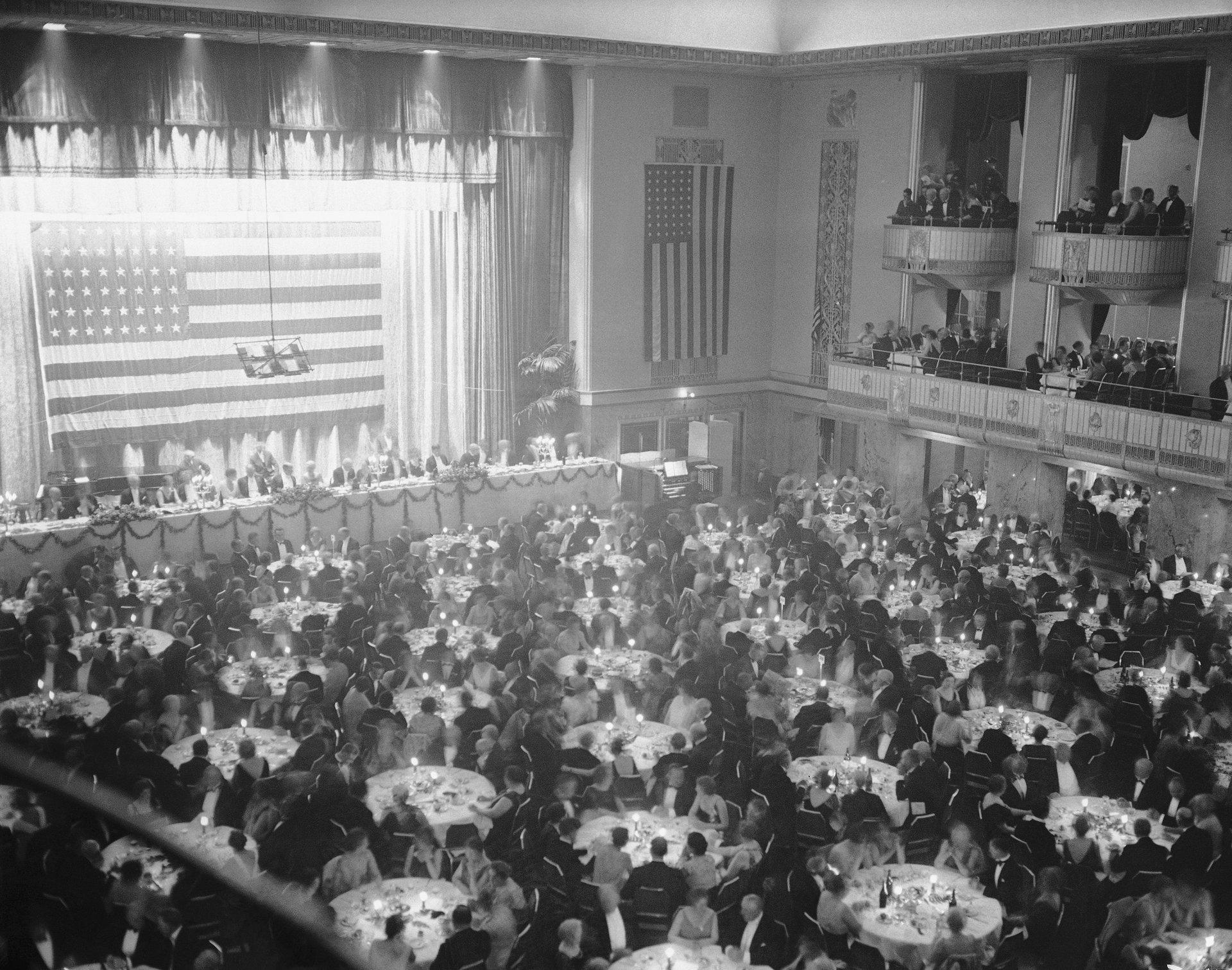
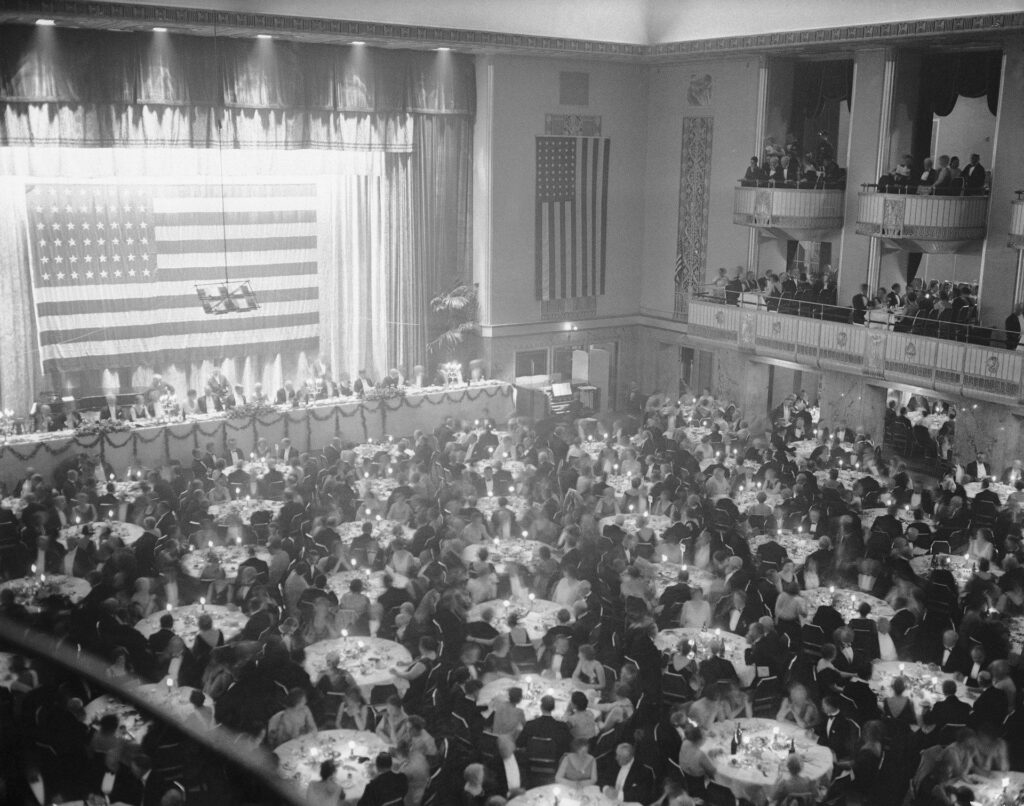
While researching Murrow’s immensely important role, I came across a speech honoring him by Archibald MacLeish, then the Librarian of Congress. MacLeish delivered it at a banquet at New York’s Waldorf-Astoria on December 2, 1941—just five days before the attack on Pearl Harbor.
His words remind us of what was at stake in that dangerous moment: not only the survival of nations, but the survival of the freedoms on which democracy depends. Among the most essential were the freedom to speak, the freedom to hear the facts and the freedom to judge the truth for ourselves.
It was vitally important then.
It is no less important today.
“There are some in this country, Murrow, who did not want the people of America to hear the things you had to say. There were some who did not wish to remember that the freedom of speech which this country is so proud of is a freedom also to hear—that freedom to hear is indeed the whole foundation and reason of freedom to speak. It is not to assure a man the delight of listening to his own voice that freedom of speech is guaranteed by the fundamental law of this Republic. It is to assure the people the chance to hear the truth—the unpleasant truth as well as the reassuring truth; the dangerous truth as well as the comforting truth.
“The right of free speech is guaranteed by a self-governing people because a self-governing people needs to know where it is—what we are up against.
“There are some in this country—not many but some—who do not want the American people to know what they are up against. There are some who attempt to stop the mouths of those who tell the American people what is happening in their world—who shout war-monger at those who tell them what is happening in other countries—who shout filthier words than that at those who have seen with their own eyes and who say what they have seen.
“But the American people themselves are not afraid to know what they are up against. They were not afraid twenty-five years ago or fifty years before that or ninety years earlier. They were not afraid when you, Murrow, told them the truth about London in the terrible winter of ’40–’41. So long as the American people are told—and told truly and told candidly—what they have to face, they will never be afraid. And they will face it.”
The danger today is not merely that some voices may be silenced. It is that truth itself may become so distorted, and demeaned that Americans no longer know what or whom to believe.
A self-governing people cannot remain free if it loses either the ability or the willingness to hear the truth.
Comments
Recent Commentaries
I Am Not a Politician, and I Have No Partisan Loyalties
October 2, 2026
A Man of Incorruptible Integrity
September 29, 2026

HUMAN VALUES: NOT SPECIFIED
September 23, 2026
You Can’t Do That.
September 21, 2026
I AM SICKENED
September 18, 2026
The Courage to Defend a Principle
September 17, 2026
The Better Angels Among Us
September 14, 2026
We Remember
September 11, 2026
Mister Roberts!
September 8, 2026
Where’s the Character
August 7, 2026
Read More Articles
The Latest... And Sometimes Greatest
It Was Important Then. It is Important Today
Freedom of speech in America is under attack, not only when people are denied the right to speak, but when lies, intimidation and the deliberate...
August 3, 2026
When Political Identity Replaces Ethical Judgment
The political and cultural landscape has become a minefield of conflicting beliefs, many now rooted less in public policy than in personal identity. One of...
July 31, 2026
Principles Matter.
A few nights ago, I was watching The Way We Were, a film I’ve seen more times than I can count. This time, a single...
July 28, 2026
All the President’s Men 2.0
“Politics had infiltrated every corner of government—a strong-arm takeover of the agencies by the Nixon White House.” —Bob Woodward and Carl Bernstein, All the President’s...
July 23, 2026
The Threat to November Is Already Here
“Cunning, ambitious, and unprincipled men will be enabled to subvert the power of the people and to usurp for themselves the reins of government.”—George Washington’s...
July 20, 2026
Jon Ossoff and the Conscience of Atticus Finch
I’ve written about Georgia Senator Jon Ossoff before, but after watching his questioning of Jay Clayton, President Trump’s nominee for director of national intelligence (DNI),...
July 17, 2026