Published: June 4, 2012
By Jim Lichtman
There he was, everybody’s favorite mayor (well, maybe noteverybody’s), New York’s own Michael Bloomberg staring down at me from a full-page ad in Saturday’s (June 2) New York Times with the bold headline, The Nanny.
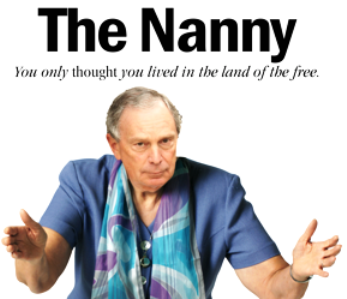
A fiscal conservative, Bloomberg is credited for turning New York’s $6 billion deficit into a $3 billion surplus. He’s in favor of abortion rights as well as embryonic stem-cell research. He’s also responsible for the ban on trans-fats from restaurants and smoking in public places. While New York’s major has enjoyed broad support from most New Yorkers, his latest initiative has met with more than a little push back.
Bloomberg’s latest proposed plan is to bar businesses covered by Health Department regulations from selling sugary drinks in cups larger than 16 ounces.
The Wall Street Journal printed an unscientific survey ofTwitter and Facebook messages. Surprisingly, of 1,000 posts, 64 percent were in favor of the ban, 29 percent against it. Among those in favor: “Sugar is poison. The deluge of non-food products in the food supply is making America obese and weak”; against: “It’s NOT [Bloomberg’s] decision to make my choice…”
“We are free Americans living in a market economy,” writes Paul Waldner in the New York Times, “How can a political leader who got rich in our system even begin to contemplate regulating the size of the container from which we consume? There are a thousand other ways to promote healthier lifestyles for New Yorkers without considering something so silly!” Richard Ruble wrote, “All the arguments against the mayor’s proposal are flat: this policy doesn’t restrict soda drinking; it just makes it more costly and inconvenient. Those who aren’t overweight are already paying higher insurance premiums for the expansive.”
The Center for Consumer Freedom that sponsored the Times ad, writes on its website, “Somewhere, Patrick Henry spins in his grave. Of course, these are the same sort of people who openly say we can’t be trusted to be adults.”
In defending his initiative on NBC’s Today Show Bloomberg said, “We’re not banning you from getting the stuff. It’s just if you want 32 ounces, the restaurant has to serve it in two glasses. That’s not exactly taking away your freedoms. It’s not something the Founding Fathers fought for,” Bloomberg added. “And all the studies show if the glass or the plate in front of you is smaller, you’ll eat less.”
Mayor Bloomberg pointed to the fact that after his ban on trans-fats “New York City has reduced the rate of childhood obesity by about 5 percent in recent years, and the city’s life expectancy is three years greater than the national average. In the case of full-sugared drinks, in moderation it’s fine, and all we’re trying to do is to explain to people that if you drink a little bit less you will live longer,” Bloomberg said.
When challenged with complaints about a “Nanny state,” Bloomberg responded, “Where did I hear this before? Wasn’t it [that banning public] smoking wasn’t going to work? Today it’s one of the best things we’ve ever done. Deaths from smoking dramatically coming down across the country, virtually every major city has adopted the smoking ordinances.”
The Today Show website also pointed out that “University of Pennsylvania’s bioethicist Art Caplan says the NYC mayor has science on his side. ‘Studies show that portion size is a big contributor to the obesity epidemic overwhelming America,’ says msnbc.com contributor Caplan, Ph.D., who cheers Bloomberg’s effort to draw attention to the causes of obesity. ‘That said, the effort to get people not to drink soda in bucket size containers is more symbolic than anything else.’ ”
Putting aside the legal aspect of the initiative, what are the ethical implications?
Is it fair to propose such a ban? What about the public good – doesn’t the mayor have a duty to advance the well-being of its citizens? But is it the mayor’s responsibility to define what is good and bad for us? Didn’t we have this argument with the nationwide prohibition of alcohol?
Tell me what you think? I’ll post my response later this week.
Comments

Recent Commentaries

A Light From Christmas Past – Part II
December 23, 2025

A Light from Christmas Past
December 22, 2025
Nothing Beside Remains
December 16, 2025
Finding Common Ground, and Why It Matters
December 15, 2025

What Dickens Meant Us to Remember
December 11, 2025

Looking for America’s Soul
December 8, 2025
Here We Are Again
December 5, 2025
The Steady Endurance of Leadership
December 1, 2025

Under the Wild Sky, We Gather
November 27, 2025

London, 1943.
November 25, 2025
Read More Articles
The Latest... And Sometimes Greatest
Faith in The Goodness of Ordinary People, Even in The Darkest Hours
During his years in wartime London, U.S. Ambassador John Gilbert Winant absorbed the suffering around him. He was known for walking the streets during the...
November 24, 2025
The Forgotten Statesman and the Freedom He Helped Preserve
John Gilbert Winant was one of the rarest of figures in public life: a three-term Republican governor from New Hampshire whose leadership wasn’t calculated but...
November 20, 2025
“What Is Essential Is Invisible to The Eye.”
That line from The Little Prince by French aviator and author, Antoine de Saint-Exupéry is the essence of the story and the essence of what...
November 17, 2025
The Move That Mattered Most
I’ve played chess about two dozen times, and every match feels less like a game and more like mental boot camp. It’s not difficult; it’s...
November 13, 2025
The Difference Between Right and Rights
“There’s a difference between what you have a right to do and what is right to do.” United States Supreme Court Justice Potter Stewart said...
November 10, 2025
Integrity and Edmund G. Ross
Moments of character often define a person—sometimes even a nation. I first came across Senator Ross’s story when reading President Kennedy’s Profiles in Courage. What...
November 6, 2025