Published: April 23, 2025
By Jim Lichtman
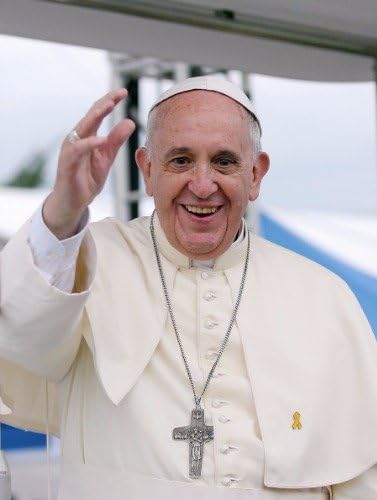
I liked Francis—a lot.
How could you not? He spoke plainly, with sincerity and purpose—and people listened. His words weren’t wrapped in rhetoric; they were rooted in truth.
In a time when power is too often confused with principle, Pope Francis led with something far more enduring… character.
From the start, Francis made it clear that his papacy would be different. He chose the name of a saint known not for might or majesty, but for humility and service. He rejected the lavish papal apartments and moved into a modest guesthouse. And he told his Church—and the world—that before we preach doctrine, we must practice compassion.
At every turn, Francis has asked us to focus not on who we can exclude, but who we’re failing to embrace. He has reminded the faithful that leadership without empathy is hollow. He didn’t come to redefine Catholic teaching; he came to redirect its tone—away from judgment and toward mercy. This is the kind of teacher I longed for in Catholic high school—someone who led not with intimidation, but with a quiet, compelling grace and intelligence that would inspire me.
When asked about gay priests, he replied—“Who am I to judge?” It wasn’t a talking point—it was a call to see people not as labels, but as lives worthy of dignity and respect.
Francis addressed climate change not as a scientist or politician, but as a moral leader. He made it clear that protecting the Earth isn’t just about policies—it’s about protecting people, especially the poor, who suffer most from environmental collapse. He called on all of us—believers and nonbelievers alike—to take responsibility for “our common home.”
He pushed for transparency inside the Vatican, taken steps to address corruption, and tried to ensure the Church practices the values it preaches. And while he’s been criticized for not acting quickly enough on clergy abuse, he has acknowledged failures, met with victims, and made efforts to repair trust—something many leaders never do. Francis knows change doesn’t come from issuing declarations. It comes from daily choices—small acts of kindness, moments of courage, words that heal instead of divide. That’s the example he’s offered, not just to Catholics, but to anyone who believes leadership should be rooted in integrity—a message and an action we all can be inspired to follow.
Francis reminded us that faith isn’t about being perfect. It’s about being present. It’s about showing up, reaching out, and doing the hard, human work of compassion.
I’ll miss him. I’ll miss his optimistic presence—and the way he made hope feel like a moral imperative.
And in his quiet strength, we find the kind of leadership the world needs now more than ever.
Comments

Recent Commentaries

Choreographer of Disaster
October 5, 2026
I Am Not a Politician, and I Have No Partisan Loyalties
October 2, 2026
A Man of Incorruptible Integrity
September 29, 2026

HUMAN VALUES: NOT SPECIFIED
September 23, 2026
You Can’t Do That.
September 21, 2026
I AM SICKENED
September 18, 2026
The Courage to Defend a Principle
September 17, 2026
The Better Angels Among Us
September 14, 2026

We Remember
September 11, 2026
Mister Roberts!
September 8, 2026
Read More Articles
The Latest... And Sometimes Greatest
Where’s the Character
In 1984, Wendy’s ran a television commercial featuring the redoubtable Clara Peller, staring at an enormous hamburger bun. Inside was a burger patty smaller than...
August 7, 2026
It Was Important Then. It is Important Today
Freedom of speech in America is under attack, not only when people are denied the right to speak, but when lies, intimidation and the deliberate...
August 3, 2026
When Political Identity Replaces Ethical Judgment
The political and cultural landscape has become a minefield of conflicting beliefs, many now rooted less in public policy than in personal identity. One of...
July 31, 2026
Principles Matter.
A few nights ago, I was watching The Way We Were, a film I’ve seen more times than I can count. This time, a single...
July 28, 2026
All the President’s Men 2.0
“Politics had infiltrated every corner of government—a strong-arm takeover of the agencies by the Nixon White House.” —Bob Woodward and Carl Bernstein, All the President’s...
July 23, 2026
The Threat to November Is Already Here
“Cunning, ambitious, and unprincipled men will be enabled to subvert the power of the people and to usurp for themselves the reins of government.”—George Washington’s...
July 20, 2026