Published: September 20, 2019
By Jim Lichtman
While trying to stay above the crisis-du-jour by this president, there are some matters that are just too vital to ignore.
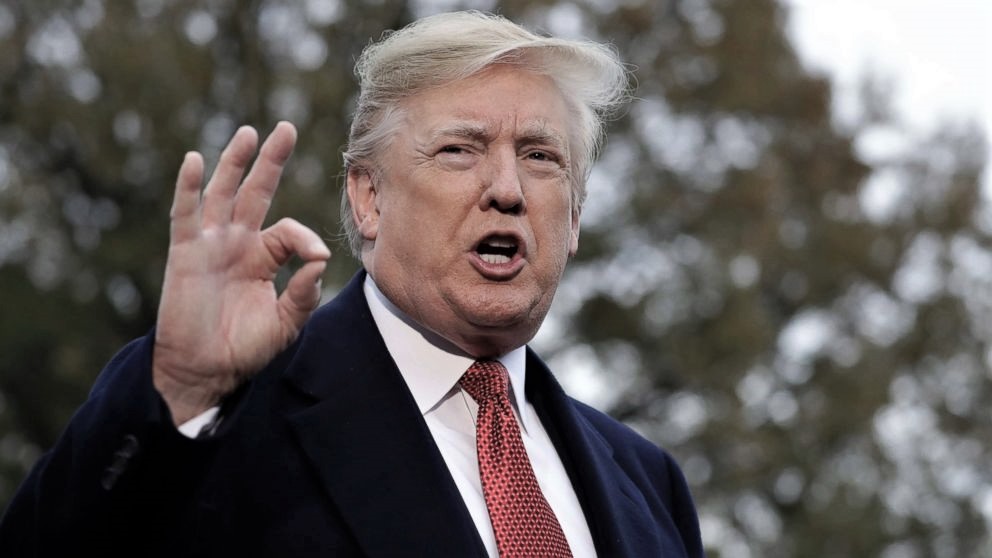
According to several media reports, a whistleblower in the intelligence community notified the Intelligence Community’s Inspector General (ICIG) of a serious issue involving communication between the president and a foreign leader.
“Michael Atkinson, the inspector general of the intelligence community,” The New York Times reports (Sept. 19), “told lawmakers he was unable to confirm or deny anything about the substance of the complaint, including whether it involved the president, according to committee members.”
While Atkinson was constrained from revealing the details of the incident, he did consider it an “urgent concern.”
“The controversy,” The Times continues, “first erupted a week ago, when Representative Adam B. Schiff, Democrat of California and the chairman of the House Intelligence Committee, revealed the existence of the complaint and disclosed that the acting director of national intelligence, Joseph Maguire, had blocked the inspector general from sharing it with Congress, as generally required by law. The inspector general deemed the complaint legitimate and opened an inquiry.”
In an updated story, a few hours later, The Times writes, “The Democratic chairman of the House Intelligence Committee, Representative Adam B. Schiff of California, demanded in a cryptic letter on Friday that Joseph Maguire, the acting director of national intelligence, turn over a whistle-blower complaint made to the inspector general for the intelligence agencies. …
“ ‘The committee’s position is clear — the acting D.N.I. can either provide the complaint as required under the law,’ Mr. Schiff said, “or he will be required to come before the committee to tell the public why he is not following the clear letter of the law, including whether the White House or the attorney general are directing him to do so.”
“The complaint involves conduct by someone ‘outside the intelligence community’ and does not involve intelligence activity under the supervision of Mr. Maguire, the general counsel for the Office of the Director of National Intelligence, Jason Klitenic, wrote in a letter on Tuesday to Mr. Schiff that was obtained by The New York Times. That stance signals a disagreement between the inspector general and the director of national intelligence over who would best investigate the complaint.
“The original complaint was submitted on Aug. 12 by a member of the intelligence community, according to officials briefed on the matter.
“Mr. Schiff said the law required that the complaint and the inspector general’s determination be shared with Congress within seven days.
“ ‘No director of national intelligence has ever refused to turn over a whistle-blower complaint,’ Mr. Schiff said…
The non-partisan inspector general’s office described the whistleblower complaint as both “credible” and “urgent.”
However, as an unclassified letter to four members of Congress makes clear, the Department of Justice contradicted the inspector general’s finding. As a result, the acting director of national intelligence said, “we determined that the allegations did not fall within the statutory definition of an “urgent concern” and that the statute did not require the complaint to be transmitted to the intelligence committees.”
Since when does the Director of National Intelligence go over the head of the Intelligence Community Inspector General (ICIG), and consult with the Department of Justice on a matter dealing with intelligence? Apparently, in the Trump Administration.
“Under the law,” The Times writes, “the complaint has to concern the existence of an intelligence activity that violates the law, rules or regulations, or otherwise amounts to mismanagement, waste, abuse, or a danger to public safety. But a conversation between two foreign leaders is not itself an intelligence activity.”
One of the chief duties of Congress is to provide oversight. That oversight includes the Executive Branch, federal agencies and governmental policies.
The Whistleblower Protection Act of 1989 protects federal employees from retaliation if, during the course of their work, they discover any activity which may violate laws, regulations, waste, fraud and abuse of authority, as well as a specific danger to public health and safety.
“We cannot get an answer to the question about whether the White House is also involved in preventing this information from coming to Congress,” Schiff said, adding: “We’re determined to do everything we can to determine what this urgent concern is to make sure that the national security is protected.”
Once again, we have an imperial president who finds the ways, means as well as the people to usurp Congress and do whatever he wants, whenever he wants absent any oversight or consequences.
As the Times reports, the whistleblower’s complaints “involved multiple acts by Trump.”
The fact that it involves the president and is described as “an urgent concern” by the inspector general (who was appointed by Trump) should be enough to have Congress, all of Congress, act.
“Credible” and “Urgent”…and Republicans continue to sit in silence and ignore the unprecedented actions of this president… to the detriment of the country.
Comments
Leave a Comment


Recent Commentaries
I Am Not a Politician, and I Have No Partisan Loyalties
October 2, 2026
A Man of Incorruptible Integrity
September 29, 2026

HUMAN VALUES: NOT SPECIFIED
September 23, 2026
You Can’t Do That.
September 21, 2026
I AM SICKENED
September 18, 2026
The Courage to Defend a Principle
September 17, 2026
The Better Angels Among Us
September 14, 2026

We Remember
September 11, 2026
Mister Roberts!
September 8, 2026

Where’s the Character
August 7, 2026
Read More Articles
The Latest... And Sometimes Greatest
It Was Important Then. It is Important Today
Freedom of speech in America is under attack, not only when people are denied the right to speak, but when lies, intimidation and the deliberate...
August 3, 2026
When Political Identity Replaces Ethical Judgment
The political and cultural landscape has become a minefield of conflicting beliefs, many now rooted less in public policy than in personal identity. One of...
July 31, 2026
Principles Matter.
A few nights ago, I was watching The Way We Were, a film I’ve seen more times than I can count. This time, a single...
July 28, 2026
All the President’s Men 2.0
“Politics had infiltrated every corner of government—a strong-arm takeover of the agencies by the Nixon White House.” —Bob Woodward and Carl Bernstein, All the President’s...
July 23, 2026
The Threat to November Is Already Here
“Cunning, ambitious, and unprincipled men will be enabled to subvert the power of the people and to usurp for themselves the reins of government.”—George Washington’s...
July 20, 2026
Jon Ossoff and the Conscience of Atticus Finch
I’ve written about Georgia Senator Jon Ossoff before, but after watching his questioning of Jay Clayton, President Trump’s nominee for director of national intelligence (DNI),...
July 17, 2026
Well written, as usual Jim.
“Crisis-du-jour”