Published: December 7, 2011
By Jim Lichtman
Have you had a talk with your son or daughter about bullying? Do they recognize the difference between good-natured teasing and behavior that crosses the line into bullying?
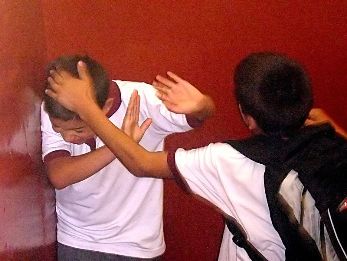
Every week we hear another tragic story involving bullying or hazing either by direct encounter or the high-tech version known as cyber bullying. “Insults, name calling, relentless teasing, and malicious gossip,” ethicist and teacher Michael Josephson says “often inflict deep and enduring pain.”
In 2010, The Josephson Institute of Ethics conducted the largest study conducted on what seems to be a growing epidemic – bullying. With the participation of more than 43,000 schools, the Institute revealed that “…half of all high school students (50 percent) admit they bullied someone in the past year, and nearly half (47 percent) say they were bullied, teased, or taunted in a way that seriously upset them in the past year.”
And when it comes to the new form of cyber bullying, Josephson does not mince words. “The difference between the impact of bullying today versus 20 years ago is the difference between getting into a fist fight and using a gun. The Internet has intensified the injury. What’s posted on the Internet is permanent, and it spreads like a virus – there is no refuge.”
The study also found “…that one‐third (33 percent) of all high school students say that violence is a big problem at their school, and one in four (24 percent) say they do not feel very safe at school. More than half (52 percent),” the Institute reported, “admit that within the past year they hit a person because they were angry. Ten percent of students say they took a weapon to school at least once in the past 12 months, and 16 percent admit that they have been intoxicated at school.
“ ‘The combination of bullying,’ Josephson says, ‘a penchant toward violence when one is angry, the availability of weapons, and the possibility of intoxication at school increases significantly the likelihood of retaliatory violence.’ ”
With both bullying and hazing –harassment, humiliation or abuse – on the rise, there is a national call for prevention through education.
Last year at a class in New Hampshire, when the subject of bullying came up, I asked how many of the 36 students had been bullied. Only two or three did not raise their hands.
“What can parents do?” the Institute asks. “Three online surveys to determine whether one’s child is being bullied, whether one’s child is a bully, and whether parents are doing all they can to prevent bullying can be found atcharactercounts.org/bully-quiz.”
If you’re a parent of a school-age child, take the first step to educate yourself.
Comments

Recent Commentaries
Mister Roberts!
September 8, 2026
Where’s the Character
August 7, 2026
It Was Important Then. It is Important Today
August 3, 2026
When Political Identity Replaces Ethical Judgment
July 31, 2026

Principles Matter.
July 28, 2026

All the President’s Men 2.0
July 23, 2026

The Threat to November Is Already Here
July 20, 2026
Jon Ossoff and the Conscience of Atticus Finch
July 17, 2026

Hearts and Minds
July 16, 2026

The Ethics of Belonging
July 14, 2026
Read More Articles
The Latest... And Sometimes Greatest
The Best of Us
“We choose to go to the Moon in this decade and do the other things—not because they are easy, but because they are hard.” When...
July 9, 2026
The Standard Washington Set
Much has been written about George Washington, our first American president: his command of the Continental Army, his leadership in the fragile birth of a...
July 6, 2026
Who We Were. Who We Are…
Today, America is 250 years old. This Fourth of July, amid deep national division, it seems worth asking a simple question: Which of our country’s...
July 4, 2026
Are We Still Worthy of What They Declared?
Conclusion: The Words That Made Us and Still Must. In December of 1776, the Revolution was not moving toward triumph. It was close to collapse....
July 3, 2026
Are We Still Worthy of What They Declared?
Part 2: Common Sense Are we still capable of that kind of clarity when it matters most? There was a moment in the birth of...
July 1, 2026
Are We Still Worthy of What They Declared?
For the most part, my high school history classes consisted of names, dates, documents, and battles. What I’ve learned since then — through historians like...
June 29, 2026