Published: February 12, 2026
By Jim Lichtman
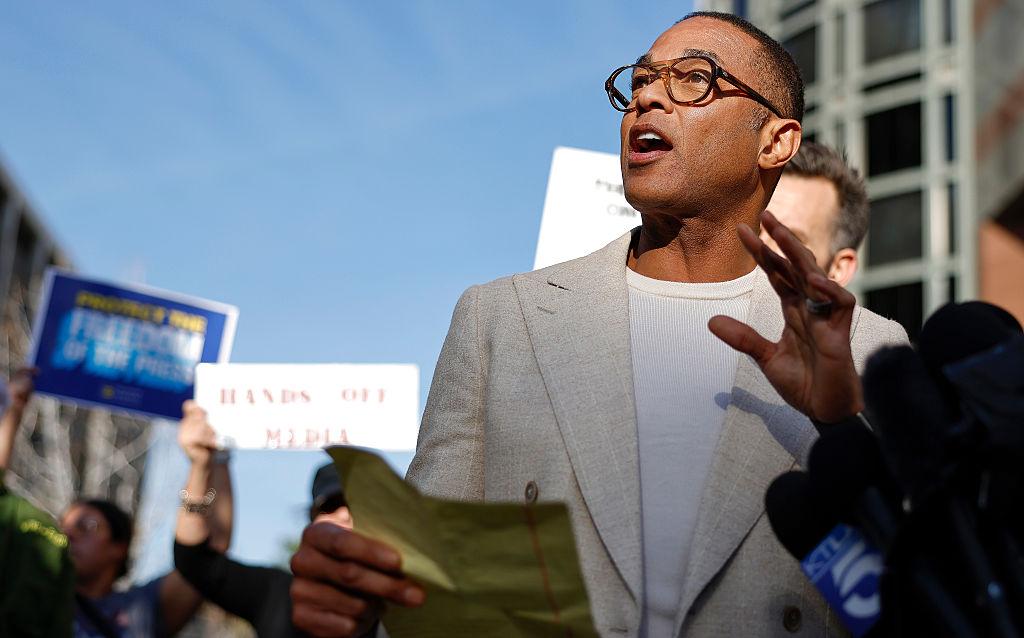
There are moments when a single arrest tells us more about the state of the country than a thousand speeches. The recent detention of Don Lemon while covering a protest inside a church is one of those moments—not because of who he is, but because of what it signals.
“I was walking up to the room, and I pressed the elevator button, and then all of a sudden, I feel myself being jostled and people trying to grab me and put me in handcuffs,” Lemon described.
When the act of observing, documenting, and reporting becomes grounds for federal intervention, we are no longer arguing about one case. We are testing the limits that protect a free society.
That test did not exist, at least not in this form, during Watergate. Bob Woodward and Carl Bernstein pursued a story that ultimately brought down a president. They relied on confidential sources. They published facts the White House desperately wanted buried. Richard Nixon despised them and sought to undermine their credibility. But even at the height of that constitutional crisis, the federal government did not arrest them for reporting. Journalism was adversarial, uncomfortable, and unwelcome, but it was not treated as criminal conduct.
That distinction mattered then. It matters more now.
Over time, the line has become clouded. In 2005, during the George W. Bush administration, Judith Miller was jailed for refusing to reveal a source in the Valerie Plame investigation. She was not accused of falsifying information or obstructing justice. Her offense was protecting a journalistic principle that had long been understood as essential to a free press.
Under the Obama administration, James Risen faced years of legal pressure for protecting a confidential source tied to national security reporting. Though he avoided jail, the message was unmistakable: journalists could be coerced into becoming investigative tools of the government.
Josh Wolf was jailed in 2006 for refusing to turn over unpublished video footage. He became the longest-jailed journalist in U.S. history at the time, not for participating in a crime, but for declining to convert reporting into evidence for the state.
More recently, reporters covering protests have been arrested at the scene, detained alongside demonstrators, and accused of participation simply by being present. Charges are often dropped quietly later, but the warning is delivered loudly and publicly. The damage to press freedom and public confidence… trust… is immediate. When witnessing becomes punishable, a free press cannot function.
This is the context in which the Lemon arrest must be understood. Authorities insist the case is about interference, not journalism. Lemon insists he was doing his job. That disagreement alone reveals how precarious the boundary has become.
When presence is treated as participation, and observation as obstruction, the work of reporting becomes vulnerable to the discretion of those being observed.
The question is not whether journalists are above the law. They’re not. The question is whether the law is being used to deter witnessing itself.
Watergate taught us that democracy depends on reporters willing to stand where power is uncomfortable. The moment the state begins to police that act of standing—before a story is written, before facts are disputed—it moves from accountability to intimidation.
Federal prosecutors unsealed civil rights charges alleging conspiracy and interference with religious worship, even as Lemon maintains he was reporting, not participating.
History has already warned us what happens when that shift goes unchallenged. The only question now is whether we are paying attention.
Comments

Recent Commentaries
November 4, 2026
October 20, 2026
Has America Lost Its Way?
October 16, 2026
All The President’s Targets
October 13, 2026
Integrity Doesn’t Require a Megaphone
October 12, 2026
WHOSE PURPOSE DOES THIS SERVE?
October 9, 2026
Choreographer of Disaster
October 5, 2026
I Am Not a Politician, and I Have No Partisan Loyalties
October 2, 2026
A Man of Incorruptible Integrity
September 29, 2026

HUMAN VALUES: NOT SPECIFIED
September 23, 2026
You Can’t Do That.
September 21, 2026
Read More Articles
The Latest... And Sometimes Greatest
I AM SICKENED
Tonight, protesters are surrounding the Kennedy Center, the living memorial to John F. Kennedy and the heartbeat of Washington’s cultural life. They are there because...
September 18, 2026
The Courage to Defend a Principle
In 1998, at the height of the Clinton-Lewinsky scandal, Secret Service Director Lewis Merletti was driving to work when a radio report stopped him cold....
September 17, 2026
The Better Angels Among Us
By all appearances, we are becoming less the land of the brave than the land of resentment. Every day is Groundhog Day: same arguments, same...
September 14, 2026
We Remember
On September 11, 2001, nearly 3,000 people were killed in terrorist attacks in New York, at the Pentagon, and aboard Flight 93 in Pennsylvania. More...
September 11, 2026
Mister Roberts!
One of my favorite movies is Mister Roberts, the 1955 comedy-drama set aboard the USS Reluctant in the Pacific during World War II. Henry Fonda...
September 8, 2026
Where’s the Character
In 1984, Wendy’s ran a television commercial featuring the redoubtable Clara Peller, staring at an enormous hamburger bun. Inside was a burger patty smaller than...
August 7, 2026