Published: October 28, 2026
By Jim Lichtman
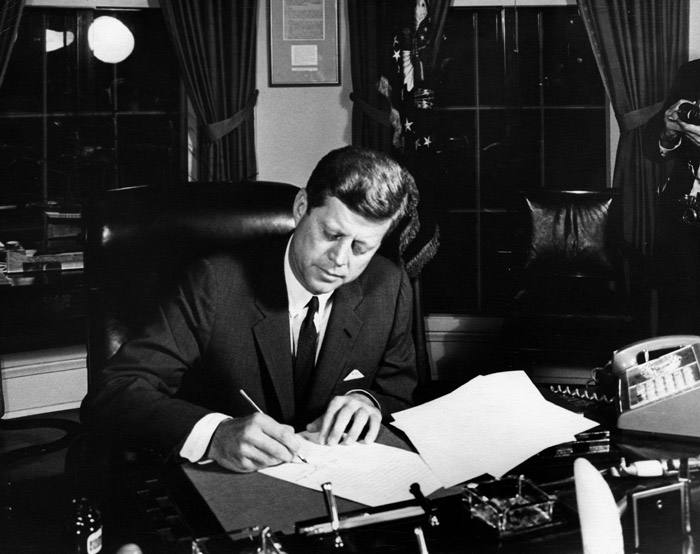
October 23, 1962: President Kennedy signs Proclamation 3504, authorizing the naval quarantine of Cuba. Photo: Kennedy Library
“I would like to say again that the United States is very much interested in reducing tensions and halting the arms race.” —President John F. Kennedy, October 27, 1962
“I express my satisfaction and thank you for the sense of proportion you have displayed and for realization of the responsibility which now devolves on you for the preservation of the peace of the world.” —Chairman Nikita Khrushchev, October 28, 1962
In the 24 hours between those two letters, a secret backchannel agreement between Kennedy and Khrushchev helped resolve the Cuban Missile Crisis. In exchange for the Soviet Union removing its missiles from Cuba, Kennedy agreed to withdraw American nuclear missiles from Turkey within six months. The arrangement was kept secret, allowing both leaders to step back from the brink of nuclear war without publicly acknowledging the concessions that made it possible.
Despite the deep ideological divisions between the United States and the Soviet Union, both men understood the potentially catastrophic consequences of further escalation.
As the Cuban Missile Crisis reached its most dangerous point, frustration, anger, fear, and mistrust tested the judgment of both leaders. Neither was willing to abandon his country’s interests. Neither could be certain of the other’s intentions.
But both understood something more important than their differences. They recognized that the consequences of refusing to find common ground were greater than the political risks of compromise.
Kennedy and Khrushchev did not suddenly become friends. Their differences remained as profound as ever. But at a moment when the consequences of mistrust could have destroyed millions of lives, they found something more important than agreement. They found the wisdom to respect one another’s responsibilities and the faith that the other would honor his word.
Ultimately, it was restraint, dignity, wisdom, and, I would argue, faith—not the need to demonstrate power—that prevailed.
Not faith that the other side was right. Not faith that their differences could be easily resolved. But faith that even an adversary could recognize a common humanity and act upon it.
The crisis before us is not one that threatens nuclear annihilation, but one that threatens the very foundation of our democracy: the respect, the dignity, and the mutual trust that allow us to live with our differences, resolve our disagreements, and remain united as a nation.
We have allowed political differences to become personal hostilities. Yet if two leaders representing nations divided by ideology, suspicion, and the threat of mutual destruction could find the wisdom to recognize their shared interests, surely we can find a way to live with our differences without treating one another as enemies.
That does not require us to abandon our convictions, excuse dishonesty, or remain silent in the face of injustice. It requires something more demanding: the willingness to defend our principles without surrendering our dignity, and to disagree without abandoning our respect for one another.
Kennedy and Khrushchev did not resolve their differences. They found a way to prevent those differences from destroying everything they had a responsibility to protect.
That is the lesson worth remembering.
We do not need to agree on everything to recognize what we share. We do not need to surrender our principles to respect those who hold different ones. But we do need the wisdom to recognize that our future depends on more than winning an argument.
It depends on faith in each other.
Comments
Recent Commentaries
The Speech That Never Happened
October 27, 2026
It Doesn’t Take a Rocket Genius to Recognize the Danger
October 22, 2026
November 4, 2026
October 20, 2026
Has America Lost Its Way?
October 16, 2026
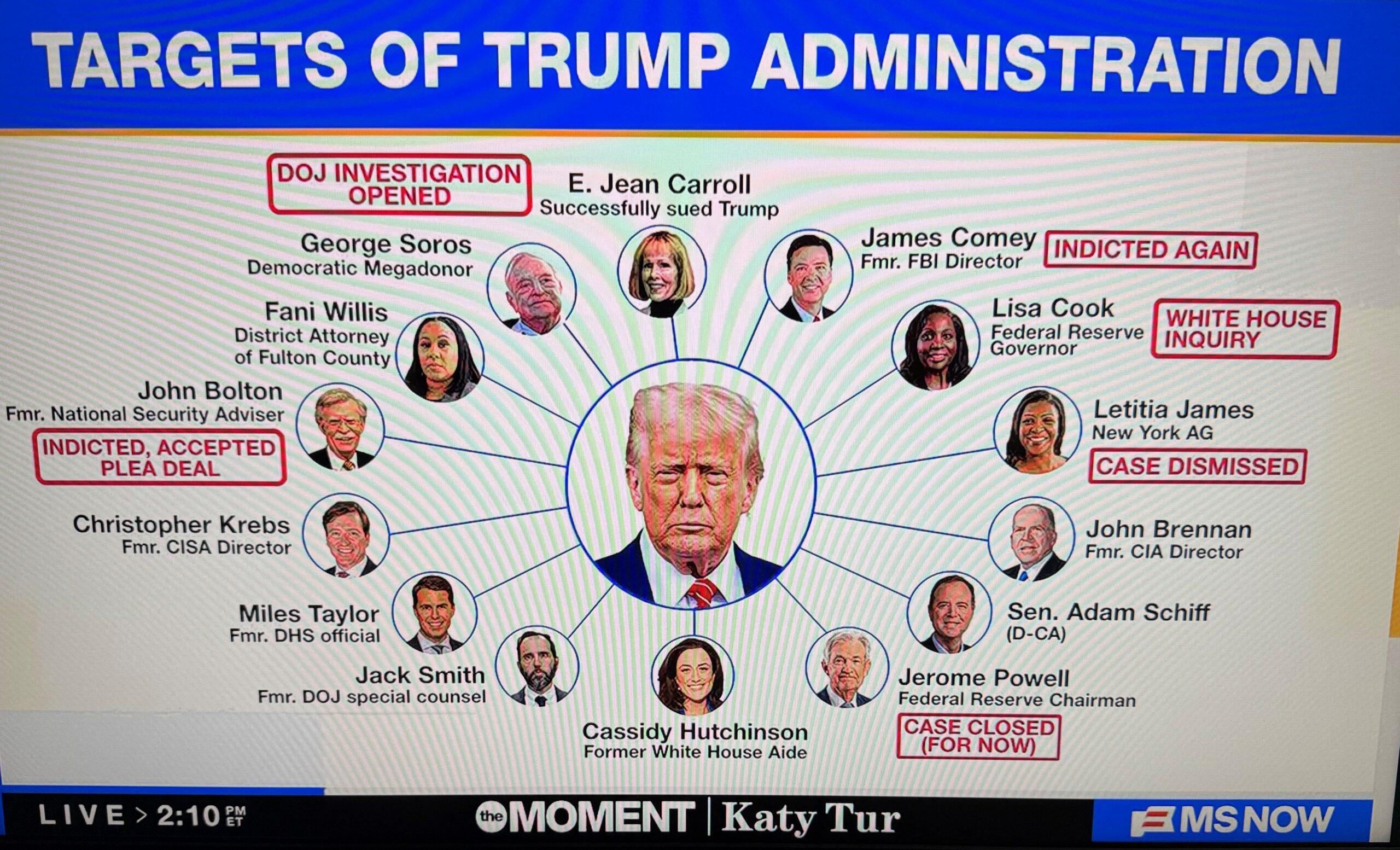
All The President’s Targets
October 13, 2026
Integrity Doesn’t Require a Megaphone
October 12, 2026
WHOSE PURPOSE DOES THIS SERVE?
October 9, 2026
Choreographer of Disaster
October 5, 2026
I Am Not a Politician, and I Have No Partisan Loyalties
October 2, 2026
A Man of Incorruptible Integrity
September 29, 2026
Read More Articles
The Latest... And Sometimes Greatest
HUMAN VALUES: NOT SPECIFIED
“We really do earnestly believe AI could kill all humans! I personally think it is >10% within the next decade.”—Evan Hubinger, Anthropic’s Alignment Science Lead,...
September 23, 2026
You Can’t Do That.
BREAKING: News organizations responded forcefully on Monday after President Trump barred CNN, MS NOW and Politico from the White House. They went to federal court—and,...
September 21, 2026
I AM SICKENED
Tonight, protesters are surrounding the Kennedy Center, the living memorial to John F. Kennedy and the heartbeat of Washington’s cultural life. They are there because...
September 18, 2026
The Courage to Defend a Principle
In 1998, at the height of the Clinton-Lewinsky scandal, Secret Service Director Lewis Merletti was driving to work when a radio report stopped him cold....
September 17, 2026
The Better Angels Among Us
By all appearances, we are becoming less the land of the brave than the land of resentment. Every day is Groundhog Day: same arguments, same...
September 14, 2026
We Remember
On September 11, 2001, nearly 3,000 people were killed in terrorist attacks in New York, at the Pentagon, and aboard Flight 93 in Pennsylvania. More...
September 11, 2026