Published: September 18, 2026
By Jim Lichtman
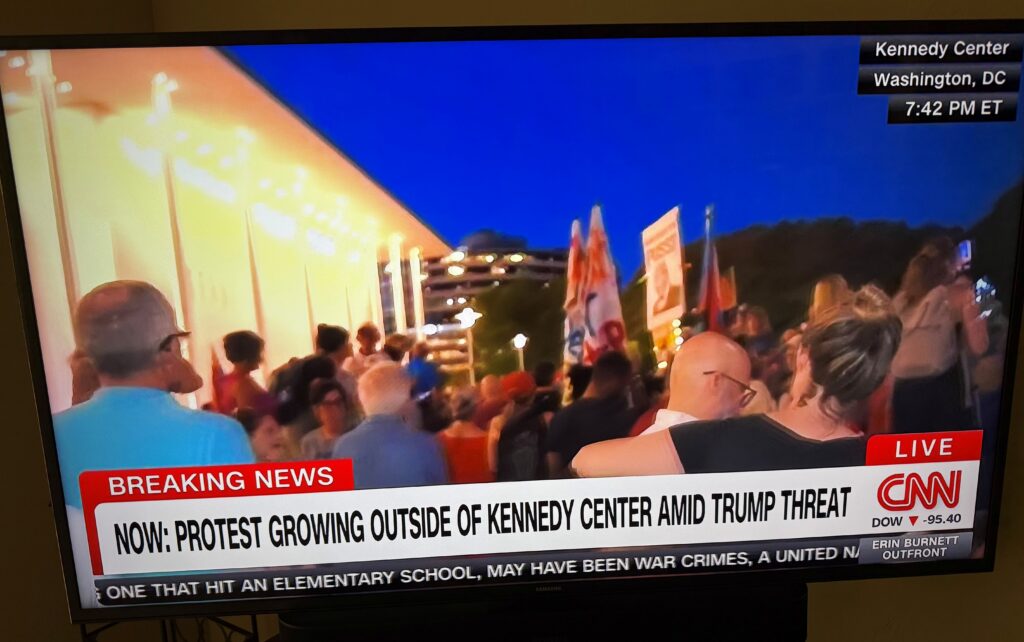
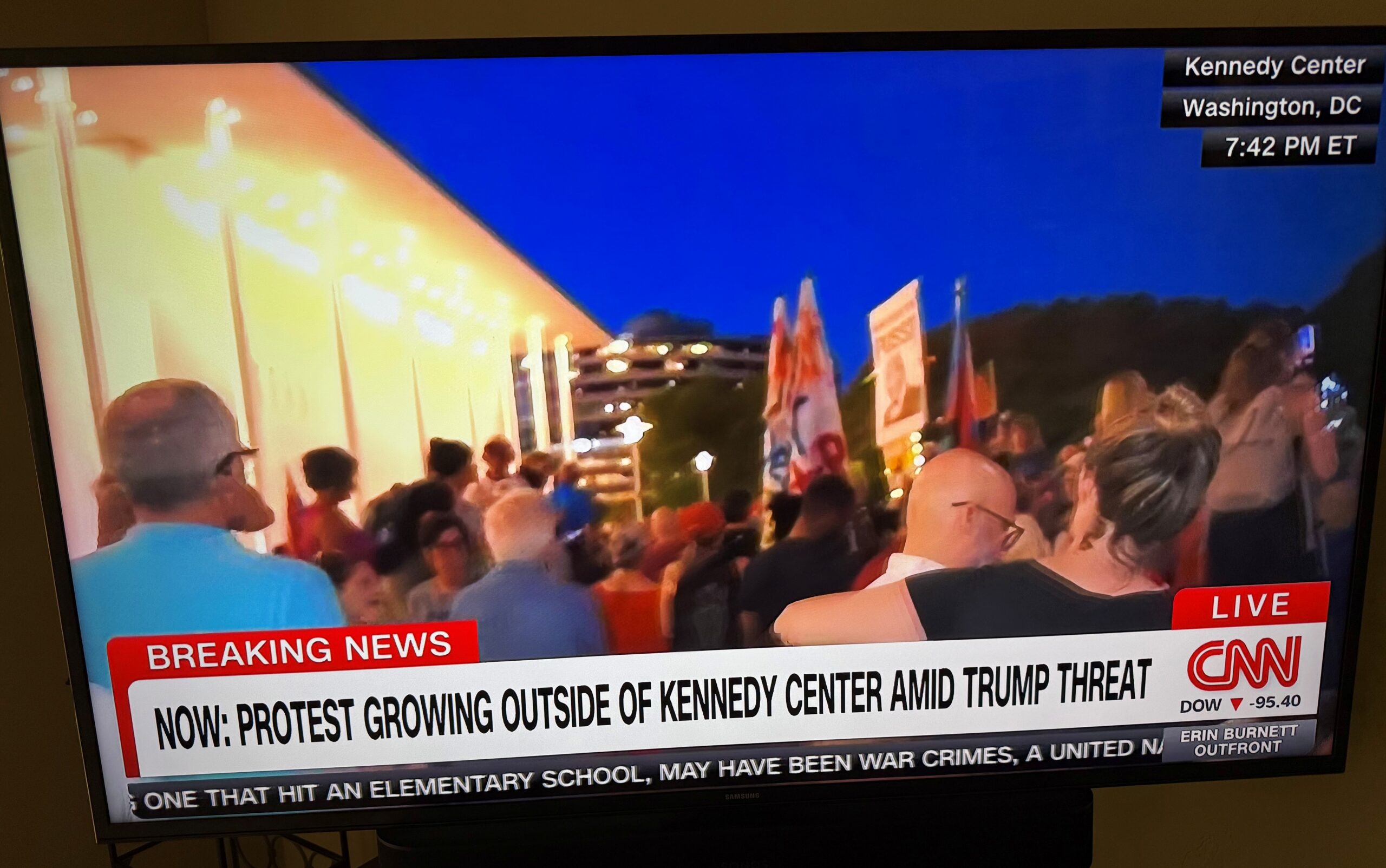
Tonight, protesters are surrounding the Kennedy Center, the living memorial to John F. Kennedy and the heartbeat of Washington’s cultural life.
They are there because Donald Trump has raised the possibility of demolishing it amid a legal battle over his effort to put his own name on the building. A federal judge has ruled that only Congress can change the Center’s statutory name and has ordered the administration to provide 30 days’ notice before taking steps toward demolition.
But there is a larger issue here, one that goes beyond whether any particular action is ultimately declared legal or illegal.
It is an ethical question.
Our Constitution divides power among three branches of government so that no one branch becomes dominant. Increasingly, disputes involving this administration follow another pattern: the president acts first, and Congress or the courts are left to determine afterward whether he had the authority to do it.
Consider Iran.
Trump began military operations against Iran without a new authorization from Congress. The administration argues that presidential authority as commander in chief permits the operations. Others in Congress have disputed that position. The Congressional Budget Office now estimates that the conflict cost the Defense Department approximately $38 billion through August 1, with additional costs continuing.
I am appalled.
Tonight, protesters are surrounding the Kennedy Center, the living memorial to John F. Kennedy and the heartbeat of Washington’s cultural life.
They are there because Donald Trump has raised the possibility of demolishing it amid a legal battle over his effort to put his own name on the building. A federal judge has ruled that only Congress can change the Center’s statutory name and has ordered the administration to provide 30 days’ notice before taking steps toward demolition.
But there is a larger issue here, one that goes beyond whether any particular action is ultimately declared legal or illegal.
It is an ethical question.
Our Constitution divides power among three branches of government so that no one branch becomes dominant. Increasingly, disputes involving this administration follow another pattern: the president acts first, and Congress or the courts are left to determine afterward whether he had the authority to do it.
Consider Iran.
Trump began military operations against Iran without a new authorization from Congress. The administration argues that presidential authority as commander in chief permits the operations. Others in Congress have disputed that position. The Congressional Budget Office now estimates that the conflict cost the Defense Department approximately $38 billion through August 1, with additional costs continuing.
I am horrified.
Consider tariffs.
Trump imposed sweeping tariffs without Congress enacting new tariff legislation, relying on emergency presidential authority. The central question again became whether a president could use statutory authority intended for one purpose to exercise power traditionally belonging to Congress.
Then there is the physical transformation of Washington: the White House ballroom project, Trump’s proposed monumental arch and changes or proposed changes involving federal landmarks and properties.
I am outraged.
The important ethical distinction is one I have written about for years:
“Can I do this?” is not the same question as “Should I do this?”
Law establishes the outer boundaries of permissible conduct. Ethics asks what we choose to do inside those boundaries.
Does a president exercise power with restraint? Does he respect institutions that existed before he arrived and will remain after he leaves? Does he recognize the difference between occupying public property and owning it? And when another branch of government has constitutional responsibility for a decision, should a president search for a way around that branch, or seek its consent?
There is a profound difference between presidential leadership and presidential ownership.
The White House does not belong to Donald Trump. Neither does the Kennedy Center, the Smithsonian, our federal parks or our national monuments. They belong to the American people. Every president is merely their temporary steward. And stewardship also means preserving accountability.
Which brings me to January 6.
I am disgusted that not only were January 6 defendants pardoned, but proposals have been raised that could provide financial compensation to people who claim they were unfairly targeted by the government.
Think about what this means.
Donald Trump pardoned around 1,500 people convicted for their actions on January 6. Now some of those same people may receive money from the government because of what happened to them afterward. In effect, they were financially rewarded for the attack.
And when government begins rewarding people it once held accountable for attacking the United States Capitol, an ethical line has been crossed. Wrongdoing becomes grievance. Grievance becomes entitlement. And entitlement becomes a check from the very government whose Capitol was attacked.
That is not accountability. That is government-sanctioned reward for attacking the government itself.
And it brings us back to the distinction at the heart of all of this.
A president may find authority in an old statute, an executive power or a gray area in the law and act without first seeking Congress’s approval. Whether that action was lawful can ultimately be decided by the courts.
Ethics asks something different:
How should presidential power be exercised? What respect is owed to institutions that belong not to the president, but to the country? And what example should government set when it comes to restraint, responsibility and accountability?
When America’s institutions, history and public property are at stake, “Nobody stopped me” is not a defense.
It is an indictment.
Comments
Recent Commentaries

Choreographer of Disaster
October 5, 2026
I Am Not a Politician, and I Have No Partisan Loyalties
October 2, 2026
A Man of Incorruptible Integrity
September 29, 2026

HUMAN VALUES: NOT SPECIFIED
September 23, 2026
You Can’t Do That.
September 21, 2026
I AM SICKENED
September 18, 2026
The Courage to Defend a Principle
September 17, 2026
The Better Angels Among Us
September 14, 2026
We Remember
September 11, 2026
Mister Roberts!
September 8, 2026
Read More Articles
The Latest... And Sometimes Greatest
Where’s the Character
In 1984, Wendy’s ran a television commercial featuring the redoubtable Clara Peller, staring at an enormous hamburger bun. Inside was a burger patty smaller than...
August 7, 2026
It Was Important Then. It is Important Today
Freedom of speech in America is under attack, not only when people are denied the right to speak, but when lies, intimidation and the deliberate...
August 3, 2026
When Political Identity Replaces Ethical Judgment
The political and cultural landscape has become a minefield of conflicting beliefs, many now rooted less in public policy than in personal identity. One of...
July 31, 2026
Principles Matter.
A few nights ago, I was watching The Way We Were, a film I’ve seen more times than I can count. This time, a single...
July 28, 2026
All the President’s Men 2.0
“Politics had infiltrated every corner of government—a strong-arm takeover of the agencies by the Nixon White House.” —Bob Woodward and Carl Bernstein, All the President’s...
July 23, 2026
The Threat to November Is Already Here
“Cunning, ambitious, and unprincipled men will be enabled to subvert the power of the people and to usurp for themselves the reins of government.”—George Washington’s...
July 20, 2026